Oftentimes in life we are a society that is rushed for time. We let the secular calendar and anxiety of life creep up on us like a thief in the night, taking away our sense of purpose and belonging in this world as human beings created in His image.
We are also an advanced human species having such luxuries with the false notion that we can be the masters of our own fate. We oftentimes forget or take for granted who is in charge of our true destiny as Christians. It is easy to think that we can plan and prepare for any outcome that may come our way and trust in our own self to be prepared. Sometimes we might try to look for signs, or question events in our life without seeing the small miracles of the Holy Spirit that are there for us in the quiet and stillness of our soul.
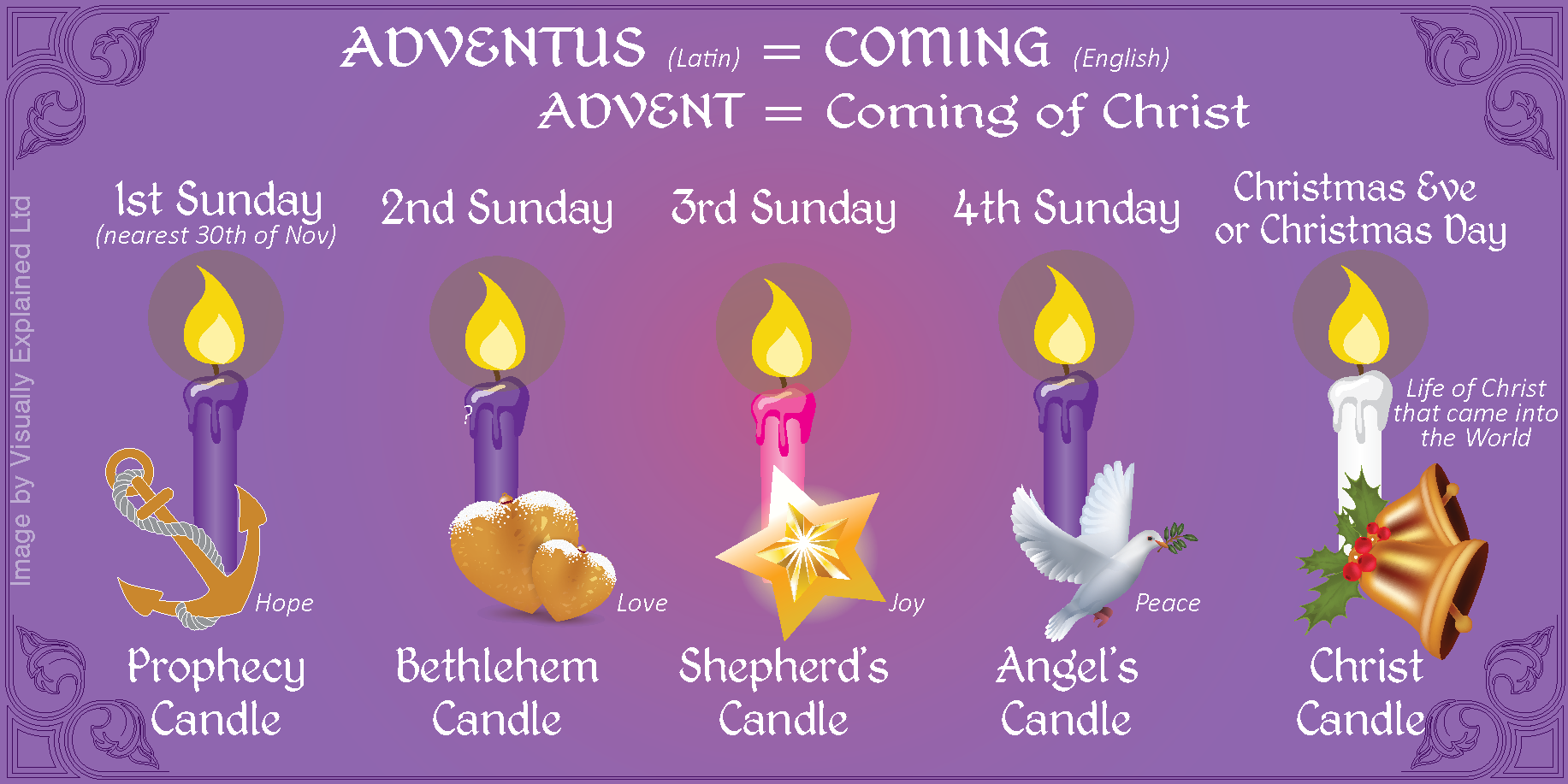
The advent season (Latin for coming) and advent wreath is a recent tradition coming from the medieval ages. Such a tradition used to symbolize the pagan sun god to return during the winter solstice. Christians utilize the symbolic wreath as a tradition in which the circular evergreen represents eternal growth and life for which God’s plan of salvation has no limit. The purple candles and vestments represent prayer, penance and a call to be ready for the royal King of kings to come. The lighting of each candle allows us to recognize God’s plan for salvation both in the first coming with the miracle of the Incarnation of His Son Jesus and the second coming for which He will come again (Hope of the world/Prophecy candle). The other respective candles symbolize Love (Bethlehem Candle); Joy (Rose for Shepherd’s candle); Peace (Angel’s candle); and an optional white candle for the light of Christ (Jn. 1:5).
During this Advent season let not the anxiety and secularism of Christmas as a season creep up on us. We should commit to not let our lives be one of “drowsiness” or “drunken stupor” and allow His coming to catch us like a trap and be surprised by His return. Luke’s gospel reminds us that we should always remain vigilant & prepared when the Son of Man might come again. For Jesus to truly come into our life this Christmas season we must empty our hollow shell to make our mangers of our heart ready to be filled with the Holy Spirit. We must get rid of the “flashy lights” and secular idols that clutter our soul. Being able to acknowledge our complete dependence on the mystery of a lowly baby born in a manger who came to save His people as God’s son made flesh for the world is contrary to our own definitions of independence. After all, this baby would come to save His people by becoming a sacrificial and saving victim for the sin of all mankind. In order to truly prepare for the mystery of this season, let us acknowledge our weaknesses and human fragility. Let us be awake and vigilant for coming tribulations and trials that may occur in our life.
We are a people of hope who have great faith that the light of Christ may illuminate the darkness of our very soul and of the world. Take hope, for this light of Christ Jesus is brighter than any secular “Christmas” light bulb. This season, may our soul and entire being recall the gifts of hope, love, joy and peace which are symbolic of Christmastime and the coming of Jesus, the word made flesh.
May the Lord bless us, protect us from all evil and bring us to everlasting life. Amen.
Who is the ruler and king of your life? Is it God, in the second person of the Trinity, King Jesus? Perhaps something in this earthly life separates us from our best self as adopted sons and daughters of God (Rom. 8:15, Gal 3:26)? If we recall, the greatest commandment that Jesus gave us while on earth when answering the teachers of the law, it is to “love the Lord your God with all your soul, mind and all your strength and to love your neighbor as yourself.” Such a simple didactic summarizing the totality of the law written upon our hearts should remind us of what a most wise and merciful ruler we have in Jesus.
Today the Catholic church recalls Jesus Christ as being the Lord and King of the Universe (both earth and heaven). The recognition of such a memorial within the liturgical calendar was first initiated by Pope Pius XI in 1925 to be celebrated in late October. Pope St. Paul VI later changed the liturgical commemoration of Christ the King to the Sunday before the start of the Advent season which is appropriate given the salvific gift that our King came to bestow on His people.
It is so easy to get caught up in the limited vision of life here on earth and forget our true calling as disciples of Jesus. Life can be messy and is filled with strife, anxiety, vice/sin, and a world that is far from perfect. Being able to prepare for the upcoming liturgical season of Advent that follows, where we enter into a penitential state of life for the preparation of the light and majestic glory to come to us with the coming of the kingly Christ child is one that reminds us of what today’s solemnity is all about. By reflecting on the first coming of Jesus as a lowly baby born in a manger is quite a different perspective compared to our typical image of earthly kings. After all, Jesus was not born to a wealthy earthly king in a castle crib, but to a carpenter from Nazareth, and to a lowly woman named Mary who was chosen to bear the new ark of the covenant.
This King of ours was met with resistance from the very start when earthly king Herod wanted to kill our King Jesus for his mortal quest for power without regard to the eternal life all of us have awaiting us in the kingdom of heaven. His crown was one of thorns being placed on his head. His rings were nails being driven into his hands and feet. Our king’s ultimate price was his having to shed his blood for the salvation for all of His creation for our King’s love is infinite with no earthly limitation.
On this day, let us humbly and prayerfully reflect on how we can ask Jesus to come into our life and be the ruler of our heart and very soul. May we be transformed by our King’s ruling benevolence and love He has to bring about peace and joy to his chosen people. As the composer, Father Martin B. Hellriegel, reminds us of with his liturgical song coming out before the rise of the third reich in Germany and World War II, we should be reminded of the following (https://aleteia.org/blogs/aleteia-blog/hymn-of-the-week-to-jesus-christ-our-sovereign-king/):
The lectionary reading from the Gospel of Mark for the 33rd Sunday of Ordinary time before the feast of Christ the King is a great foreshadowing of apocalyptical literature. As Mark’s gospel chapter 13 verses 24-32 indicate, no one knows the day, or hour for which the “great tribulation” will appear except for the Father.
Coincidentally, in the Book of Daniel, chapter 12, Michael the guardian angel and great prince will arise during a time of great distress. Those “who sleep in the dust of the earth shall awake; some shall live forever, others shall be an everlasting horror and disgrace (Dan. 12:2)”
We as Christians should not fear the second coming and final judgement. Anxiety and worry does no good unless our life is not rooted in knowing our loving and benevolent God. During the month of November where the Church recalls the saints in glory who have gone to heaven and those souls that have gone before us that may be awaiting heavenly paradise; we must take heart from Daniel’s passage where we are awake and fully conscious of our life here with God while on earth.
I oftentimes ponder that the final judgement will be one of choosing a false façade of those empty sins and temporal luxuries that are an allusion as compared to choosing that which is of God. We must always be ready to empty ourselves, acknowledge our shortcomings, and be prepared through prayer, charity and fasting for when the time will come. The last part of fasting not only includes food and nourishment for our bodies, but fasting from those actions that separate ourselves from the love of God and our neighbor or family. We can fast from technology that separates our relationship with others. We can fast from using unwise words that hurt others. We can fast from the seven deadly sins of pride, greed, lust, envy, gluttony, wrath and sloth.
Let us not worry about when the time will come, but be awake, and ready to recognize our most loving God when it is our time. May the Lord bless us, protect us from all evil and bring us to everlasting life. Amen.
The cycle of readings in scripture takes its selection from the new testament of Paul’s epistle to the Ephesians chapter 5 in regard to the symbolic relationship of a husband being head of his wife just as Jesus Christ is head of the church. As such, a husband’s role is to care for his spouse through selfless acts of love and acknowledgement just as the wife is to do the same.
“A man shall leave his father and mother and be joined to his wife, and the two shall become one flesh” is a great passage from Paul. The mystery of the hypostatic union of God becoming man in the person of Jesus is comparable of when man and woman create a life through a sacred act of love. The Sacrament of matrimony is also a covenant moment where the two become one in the eyes of God and the church.
It is oftentimes easy to let the newlywed experience become a thing of the past and let that love dwindle. The promises of fidelity, chastity and selfless sacrifice should always be the ultimate goals of any marriage. As a Christian married man, I have oftentimes fallen short in such commitments to my wife. It is only by ridding myself of the sins of pride, selfishness and other desires that weaken the marriage bond that make a marriage work. I take solace in acknowledging that Jesus is the perfect bridegroom example. The ultimate mission of marriage is to lead each other to heaven with our loving God. May the Lord bless all married couples as they seek to model the sacred gift that is symbolic of Christ being head of His church.
The nineteenth Sunday in Ordinary time continues to take the cycle of readings from John’s Gospel, chapter 6 with an excerpt from the Bread of Life Discourse. Last week, there was the story of the multiplication of the loaves. This week, we have the bold proclamation from Jesus revealing His divine nature in which he remarks “I am the bread that came down from heaven (Jn 6:41).
The old testament reading from the first book of Kings chapter 19 has Elijah the prophet giving up hope and wanting to perish under a broom tree for lack of hope. Strengthened by a hearth cake, a jug of water and appearance from an angel, Elijah is commanded to eat such nourishment, but decides to lay back down. Only with the prodding of an angel does he eat and drink again to miraculously venture out to Mt. Horeb for 40 days and nights.
The old phrase we are what we eat holds true for our reflection on the Eucharistic miracle every time we partake of Jesus’s body and blood made holy for our commemoration feast acknowledging the bread of life come down from heaven at every mass we celebrate. In some ways, the duty for us to go out on mission after receiving such life giving food is found with the prophet Elijah when he goes out on his journey after partaking on such holy food and water a second time.
Oftentimes, I am inclined to take such holy nourishment after receiving holy communion for granted without thinking about how such heavenly food that enters my body and very soul can transform my daily life and Christian mission. Just like Elijah, some days it is easy to just want to sit under a broom tree and “wait for the pangs of death.” However, our hope is not lost with the sacrament of the Eucharist where Jesus comes down and is truly present in the bread and wine that becomes His body and blood. We must always be ready to give thanks after receiving Jesus in the Eucharist, but also remember that to go forth and do the work of the church in our homes and communities is part of receiving such divine nourishment.
A good prayer that I have found helpful in my own journey after receiving the Eucharist is the Anima Christi (Soul of Christ).
May we always be ready to be thankful for such a gift we receive at every mass where heaven comes down to earth. After receiving holy communion, let such spiritual food empower and enkindle in us the mission to go forth and proclaim the good news by our thoughts, words and actions in our homes, communities and workplaces.
May the Lord bless us, and protect us from all evil this day. Amen.
Oftentimes in life we don’t have the full and complete picture and are oftentimes blinded by our human condition. I imagine that Peter, James and his brother John had no idea who Jesus really was as portrayed in the Gospel of Mark, chapter 9 verses 2-10 when being led up to the mountain only to see Jesus’s clothes become dazzling white.
Having Elijah and Moses appear alongside Jesus by symbolizing the prophets and the law respectively show us of the importance of such an occasion. Peter provides the classic reply and must have been dumbfounded at such an event as he remarks it is necessary to make three tents for Elijah, Moses and Jesus.
The cloud that comes down and casts a shadow over them with the Lord God’s voice saying “this is my beloved Son, listen to him” is a powerful statement that acknowledges our own limited human senses. How often do we take time out of our busy day to really listen to the Lord in prayer? Are we blinded by the distractions of the world where we fail to hear, see and discern that transfiguration moment acknowledging the need for God’s grace in our own life?
Let us ask the Lord to help us to acknowledge the Son of God and His saving presence on this day. The miracle of the Transfiguration and Jesus’s fully human and divine nature has been made manifest in our own life and eschatological plan of God’s saving grace for us. May we awaken our senses in prayer and conversation so that we may not be caught off guard.
The second letter to the Corinthians chapter 12 verses 7-10 today has a reflective image from St. Paul in which he acknowledges that God’s grace is sufficient for us despite our weaknesses and “beatings” from Satan.
In a sense, on this sabbath day and remembrance of our independence as a Nation, we should strive for this deep-seated reflection of God empowering us and our Nation with grace that should be fervently asked for in prayer each day. The Gospel passage from Mark chapter 6 verses 1-6 has an interesting paradox in which the people question the works of Jesus and Jesus’s response of “A prophet is not without honor except in his native place and among his own kin and in his own house.” The lessons from scripture teach us that we should never strive to live within our comfort zones in order to receive the graces and gifts from God. As an American nation in these great United States, oftentimes we become accustomed to certain luxuries and levels of comfort we take for granted, especially in our surroundings we know.
On this day, let us ask God to continue to not only bless our Nation, but give us the grace to go forth and proclaim the good news both within our community and beyond. Comfort and the status quo don’t coincide with the needed spiritual mission we should undertake in order to bring Jesus into not only our own hearts with our weakness, but outside of our homes in ministering to others. If the Son of God was looked with skepticism and lack of trust by those he grew up with in His home town of Nazareth, then we should take note to always be ready to not lose sight of our own spiritual mission despite earthly tendencies and feelings. by family, friends and neighbors. On the US currency is the caption “In God We Trust” that should always be on our hearts, minds and sleeves each day. Paul was fully aware of placing his trust in our Lord despite his previous life of sin and persecution of the Christian people. We should always be ready to fulfill our mission as Christians and as those who live within the increased secularization of our world and Nation to always be ready to answer the call to proclaim the good news to others whenever possible.
May the Lord bless us and protect us from all evil this day. May our United States of America continue to represent the ethical and moral obligation to the weak and impoverished. May we as citizens of the USA, but more importantly citizens who long for a place in Heaven who are made in His image with unalienable rights and duties endowed to us by our Creator seek to answer the call to mission and service no matter how difficult it may be.
Heart of Jesus, formed by the Holy Spirit in the womb of the Virgin Mother
have mercy on us
Heart of Jesus, one with the eternal Word
have mercy on us
Heart of Jesus, infinite in majesty
have mercy on us
Heart of Jesus, holy temple of God
have mercy on us
Heart of Jesus, tabernacle of the Most High
have mercy on us
Heart of Jesus, house of God and gate of heaven
have mercy on us
Heart of Jesus, aflame with love for us
have mercy on us
Heart of Jesus, source of justice and love
have mercy on us
Heart of Jesus, full of goodness and love
have mercy on us
Heart of Jesus, well-spring of all virtue
have mercy on us
Heart of Jesus, worthy of all praise
have mercy on us
Heart of Jesus, king and center of all hearts
have mercy on us
Heart of Jesus, treasure-house of wisdom and knowledge
have mercy on us
Heart of Jesus, in whom there dwells the fullness of God
have mercy on us
Heart of Jesus, in whom the Father is well pleased
have mercy on us
Heart of Jesus, from whose fullness we have all received
have mercy on us
Heart of Jesus, desire of the eternal hills
have mercy on us
Heart of Jesus, patient and full of mercy
have mercy on us
Heart of Jesus, generous to all who turn to you
have mercy on us
Heart of Jesus, fountain of life and holiness
have mercy on us
Heart of Jesus, atonement for our sins
have mercy on us
Heart of Jesus, overwhelmed with insults
have mercy on us
Heart of Jesus, broken for our sins
have mercy on us
Heart of Jesus, obedient even to death
have mercy on us
Heart of Jesus, pierced by a lance
have mercy on us
Heart of Jesus, source of all consolation
have mercy on us
Heart of Jesus, our life and resurrection
have mercy on us
Heart of Jesus, our peace and reconciliation
have mercy on us
Heart of Jesus, victim of our sins
have mercy on us
Heart of Jesus, salvation of all who trust in you
have mercy on us
Heart of Jesus, hope of all who die in you
have mercy on us
Heart of Jesus, delight of all the saints
have mercy on us
Lamb of God, you take away the sins of the world
have mercy on us
Lamb of God, you take away the sins of the world
have mercy on us
Lamb of God, you take away the sins of the world
have mercy on us
Jesus, gentle and humble of heart.
Touch our hearts and make them like your own.
Let us pray.
Grant, we pray, almighty God, that we, who glory in the Heart of your beloved Son and recall the wonders of his love for us, may be made worthy to receive an overflowing measure of grace from that fount of heavenly gifts. Through Christ our Lord. R/. Amen.
Today, in the Church, we look at the nuisances of the mystery of the Holy Trinity and reflect on our own ontological nature as being made in His image as human beings. While it is impossible to fully understand the mystery of the Trinity and God-head that are one in three, yet three in one through their filial relationship to one another; we can learn the lessons from scripture.
Paul’s epistle to the Romans chapter 8 verses 14-17 indicates that we are called to share in the adoption of the Spirit of God by being “heirs of God and joint heirs with Christ, if only we suffer with him so that we may also be glorified with him.” The mystery of Jesus’s hypostatic union of human flesh being joined together with God the Father is another mystery that bears some fruit. It is through the culmination of His passion, suffering and resurrection made manifest by His paying the ultimate sacrifice on a cross that reflects our own human creation mystery story. As human beings, we may recall the story of Adam and Eve in Genesis with the first and second creation stories. We know that our imperfect human nature and fall from His grace resembles our own mystery that should be sorted out. Paul does not shy away from the fact that the Christian life is one that is not easy with trial and tribulation being a given in order to share in that adoption of God the Abba (Father).
The Holy Trinity as expressly mentioned Matthew’s Gospel chapter 28 recalls the mission for the 11 disciples to go out to all nations “baptizing them in the name of the Father, and of the Son, and of the Holy Spirit.” In order for us to truly understand the mystery and divine nature of the three persons of the Holy Trinity, we should turn to ourselves to understand our place within the area of salvation history and revel in who we are as human beings. The image of the Holy Trinity mosaic as displayed at the Basilica of the National Shrine of the Immaculate Conception has an image of God the Father offering an outstretched hand to Jesus, His Son, with the image of the Holy Spirit pouring forth above them in the image of a dove.
In some sense, we must offer our outstretched hand to God the Father in times of trouble. We must always remember as Catholic Christians to never shy away from the sign of the cross as a mystery that is inclusive of our mission to partake in that mystery of His infinite and filial love as displayed with His Son who taught us what such a mystery was all about.
In Saint Pope John Paul II’s encyclical Dominum et Vivificantem Father Son and Spirit section number 9, we see that with this mandate to baptize others with the Trinitarian formula, “it gives sanctifying grace as a supernatural gift to man.” “Through grace, man is called and made capable of sharing in the inscrutable life of God.” (Retrieved May 30, 2021 https://www.vatican.va/content/john-paul-ii/en/encyclicals/documents/hf_jp-ii_enc_18051986_dominum-et-vivificantem.html).
Let us always try to acknowledge and be accepting of such graces that may come to us in our life and cherish the Sacrament of our own baptism and baptismal promises. We should never lose sight of the fact that through this great mystery of the Holy Trinity is the knowledge that the mysterious relationship of three persons in one is love made eternal for each and every one of us no matter what crosses we bear on this earthly realm.
Image retrieved from the Laudario of Sant’Agnese; Pacino di Bonaguida (Italian (Florentine), active about 1303 – about 1347); about 1340; Tempera and gold on parchment; Leaf: 44.4 × 31.8 cm (17 1/2 × 12 1/2 in.); Ms. 80a (2005.26); No Copyright – United States (http://rightsstatements.org/vocab/NoC-US/1.0/)
The popular praise and worship Gospel Song, Lord I Lift Your Name on High by songwriter Rick Founds encompasses the totality of God’s plan for salvation history in a great song that one can teach their young children, especially as we explore the mystery of Jesus’s Ascension into Heaven. Our end goal is of course to recall the mystery and miracle of Jesus’s ascent to go and be with His Father, which is also our ultimate goal while here on earth. Jesus did indeed come to the earth to show us the way to His Father God and “from the grave to the sky, Lord I lift your name on High” is a message that we Christians should always boldly proclaim on our life’s journey (Lord I Lift Your Name On High | Divine Hymns Contemporary Songs).
Florentine artist Pacino di Bonaguida’s image is a great reflection piece that portrays our own sense of mission as followers of Jesus with His apostles having their eyes fixed to heaven. Our own human condition reveals that same imagery as our ultimate eschatological and ontological goal as being made in the image and likeness of God is to always yearn for the day that we ultimately be in complete communion with God in heaven one day.
Our choice through our very will is to either praise His mighty works as exemplified in Psalm 47 in which “God mounts the throne amid shouts of joy” or to turn our eyes elsewhere toward those things in life that are not of God.
The optional lectionary reading from Ephesians chapter four proclaims our mission in which some our called through the grace of Baptism and our calling in life to be apostles, prophets, evangelists, pastors and teachers to equip holy ones to build up the body of Christ (Eph 4:11-12). The Good News from Mark’s Gospel, is a great Gospel passage that firmly states our sense of mission, purpose and urgency. In the Great Commissioning of the Apostles, Jesus the Christ states the following, “Go into the whole world and proclaim the gospel to every creature. Whoever believes and is baptized will be saved; whoever does not believe will be condemned” (Mk 16: 15-16).
By our very free will we have the option of having our body and soul glorified with our merciful God and Father in Heaven, or we can choose the path of condemnation and a potential life without God. It is our choice and responsibility to use His grace and His love which are gifts given to use and His love is unlimited no matter where we are at in life. It was by His ultimate sacrifice in which His blood was poured out for us as an expiation for the sin of all mankind by acknowledging we are finite creatures dependent on a higher power and higher calling. Our call of course is to always have our eyes fixed upon Heaven as our final destination on our journey as spiritual human beings.
Let us remember that no matter how difficult our life may be while here on earth, we must remember that Jesus, God’s Son made flesh for the world, gave His life over to Sin and defeated such destruction. He showed us the way as a reminder that we will never be abandoned and should not lose hope. His kingdom is both on earth and in heaven and one day we should anticipate His coming and most benevolent judgement. We are an Easter people and a path to mercy and salvation is open to us through the mission of the Church which is each one of us through our calling as a Christian people. We must be good stewards of His earthly kingdom, ushering in a call to conversion, repentance and action-filled relationships with our Lord. We don’t want to be caught off guard and not recognize the Son of Man when he comes again. It is through prayer, reading of scripture and the seven spiritual and corporal works of mercy that will more closely unite us with our beloved Lord as most in life truly yearn for His loving embrace.
As Saint John of The Cross proclaimed so eloquently in his writings”
As each soul nears heaven differences will dissolve to such a sublime extent that when the heart looks upon any object in this world it will cry ‘Beloved’ and passionately run into an embrace with me (Editor Starr, Mirabai (2008). Devotions, Prayers & Living Wisdom Saint John of the Cross. Boulder, CO: Sounds True Inc.).
What is the Spirit of truth that Jesus speaks about in John’s Gospel?
When he comes, the Spirit of truth, he will guide you to all truth. He will not speak on his own, but he will speak what he hears and will declare to you the things that are coming.” Jn. 16:13
The foreshadowing of the ascension of Jesus to Heaven and message to his apostles reveal a startling acknowledgement that we as a Christian people must always be watchful and ready, despite not having the existing sensory perception to distinguish His will at the present moment.
As Paul’s first letter to the Corinthians chapter 2 verse 14-15 acknowledges, “Now the natural person does not accept what pertains to the Spirit of God, for to him it is foolishness, and he cannot understand it, because it is judged spiritually. The spiritual person, however, can judge everything, but is not subject to judgment by anyone.”
We as a Christian people must always be ready to equip ourselves with prayer and spiritual armor to be on guard to await the times in our life when the Spirit of truth may speak to us. We must strive to be a spiritual person instead of a natural person per Paul’s classification of our end goal in his epistle to the Corinthians. It is oftentimes easy to get caught up in the distress and temptations of the messed up and fallen world we find ourselves in. For those that are hearing impaired that use hearing aids to listen to the sounds around us, we too must use our own spiritual “hearing aids” to listen to and prayerfully discern the Spirit of truth that may come to us when we least expect it. How can communication with our Lord occur if our spiritual ears, mind, heart and soul are not experienced in learning to be in communion with our God? Speaking to our Lord and listening to His voice each day through prayer, biblical and spiritual reading reflections and other acts of contemplation are needed so we are not caught off guard by our limited understanding of the spiritual realm. Prayer and the spiritual exercises of increasing the fortitude of our souls is oftentimes a lost art in our world today.
In many respects, what will the sound of the Spirit be like? Perhaps, it will be like Elijah’s experience in the reading of 1 Kings, chapter 19 in which our Lord is not present in a mighty wind, earthquake, or fire, but in a whispering sound?
As Jesus lets us know in John’s Gospel, the Spirit of truth will glorify Him and “take from what is mine and declare it to you” (Jn 16:15). Let us prepare for the graces and gifts that our Lord may provide us with this day and each moment we have while on earth. We must always be thankful for the gifts, relationships and moments we have each and every day despite our not being able to understand the Spirit of truth in our limited human understanding.
Come Lord Jesus and come Holy Spirit into my very being and senses this day so that I may be always attentive for the moment that your grace may empower me to comprehend the Spirit of truth.
Glory be to the Father, and to the Son, and to the Holy Spirit. As it was in the beginning, is now, and ever shall be, world without end. Amen.
The goal of Friends of the Holy Land is to secure a resilient and enduring Christian community in the West Bank, Gaza, Israel and Jordan. The pandemic has hit hard in this area as around 70% of Christians rely on tourism for a living. For a second year there have been no pilgrims visiting at Easter, in fact many in these vulnerable communities have been without income since March 2020. In response we have recently launched our Pentecost Challenge, a virtual pilgrimage from Bethlehem to Nazareth which allows participants to fundraise as they discover rarely visited Christian communities in the West Bank. You can find more information at: www.friendsoftheholyland.org.uk/pentecost
I was hoping that you would share news of this event among your network of friends and family. Perhaps you can get a team together? Participants will discover ancient Christian communities rarely visited. Also, if you click on the link below and provide your information, I will make sure to keep you up to date with our news. I hope we can see better times soon as we gradually emerge from lockdown through the summer.
I thought it important to use my friend Tom’s testimony who agreed to be a guest contributor to this blog site. God bless, Eric – The Street Evangelist.
In the Gospel for this past Sunday, we see that Jesus comes to the disciples as they are in a sense quarantined in fear of death! Jesus in His power comes to give them the strength of the Advocate, the Holy Spirit. He breaths on them and says receive the Holy Ghost! Jesus does not allow them to remain gripped by the fear and the threat of death. This however was a very true threat; the pandemic of martyrdom would eventually wipe out over 90% of Jesus’ first apostles.
Unlike with our current crisis the likelihood of them dying was almost guaranteed! The only cure for this martyrdom was to deny Christ and pinch incense to false Gods. The disciples were at first terrified by the possibility of loosing their lives. However, after this interaction with Jesus in the Gospel and the decent of the Holy Spirit at Pentecost the threat of death was not as concerning to the early church as saving the souls of the world.
These weak and doubting disciples were transformed into powerful pillars that stood not afraid to lay down their lives for the sake of the one that gave His life for all. Fast forward 2000 years and the church and its leaders are faced with a similar fear of death. What is our response? Do we shut down, abstain from mass, deny the faithful the sacraments? Surely now is time to rise up and face the Son. Let him breath on us!
Death where is your sting?
When we move to a place where we do not fear death because it has been defeated, only then will we truly operate as the glorious saints of old, ones that loved not their lives so much as to shrink from death. Those who love their lives will lose them, but those who lose their lives for His sake will find life eternally!
If you want to follow Him pick up your cross! Lose your fear and get infected by the Holy Spirit!
We can’t put our hope in the government, a vaccine, or doctors who won’t save our souls. We have to turn from our sin and fear, for the kingdom of God is truly at hand! Are you ready to stand courageous (Romans 8:18-19)? For I reckon that the sufferings of this time are not worthy to be compared with the glory to come that shall be revealed in us. For the expectation of the creature waiteth for the revelation of the sons of God
I found writing the last reflection piece in the evening such a wonderful way to use time I would otherwise have spent preoccupied with my future financial state of affairs, or anxiously mulling over my day after I had already completed a thorough nightly examen. Fr. Antonin-Gilbert Sertillanges profoundly asserts in The Intellectual Life that “To speak is to listen to one’s soul and to the truth within it. To speak alone and wordlessly, as one does by writing, is to listen and perceive truth with a freshness of sensation like that of a man who rises early morning and holds his ear to nature”1 and I would add “to God.” What is it about cultivating this intellectual life that is so appealing? After a year of really diving into our rich Catholic faith during the COVID-19 pandemic, I am convinced that in order to develop our relationship with God, we need to seek Him through not only what He has revealed to use through Divine Revelation but also to seek Truth through avenues like the beautiful works of His faithful. This should be one of our responsibilities in responding to the gifts we have been bestowed with. In my first reflection, I wrote about ways that we can be more open to receiving; I want to take this time now to write about what this should motivate us to do.
Responsibility to Seek the Truth
One of the marvelous things about the Catholic faith is that in addition to Sacred Scripture, we have the Sacred Traditions to draw from. St. Irenaeus once wrote “When, therefore, we have such proofs, it is not necessary to seek among others the truth, which is easily obtained from the Church. For the Apostles, like a rich man in a bank, deposited with her most copiously everything which pertains to the truth; and everyone whoever wishes draws from her the drink of life.”2 In addition to the teachings of the early Church Fathers, we also have contributions from saints, philosophers, theologians, religious, and more modern Catholic writers throughout our rich history that can nourish our hearts, minds, and souls; but only if we are receptive. Making the time to sit still, intentionally reflect and meditate, and truly open our hearts and minds to the Truth; can be a difficult endeavor in the noisy world we live in. But it can bear much fruit, allowing us to wield them as tools to mold a more humble heart and follow a more virtuous Christian lifestyle. It will also open our eyes to the wonders of God’s creation and his presence in everyone and everything around us. I remember diving into some of G.K. Chesterton’s works starting with Orthodoxy and then being totally engrossed in Dale Ahlquist’s The Complete Thinker: The Marvelous Mind of G.K. Chesterton, savoring each and every chapter line by line. Initially, I thought I was attracted to the wisdom and clarity of writing. I have come to believe that going past the superficiality of the style of writing, I was attracted to Truth and that this search has brought me closer to God.
How does one get started then? I am embarrassed to admit that I fit the stereotype of the Catholic who is fairly ignorant of Sacred Scripture. I have read through plenty of commentary about the Bible like for example the works of Professors John Bergsma and Peter Kreeft, but have skirted around the actual Word of God. It took me 36 years to finally make a serious attempt at reading through the Bible. This is not to say I have not tried to do so in years previous. Since the rekindling of my faith about 5 years ago, I have picked whichever books that interested me at the moment. This usually meant I stuck with the more relatable New Testament readings. I labored through these books using the Ignatius Study Bible, which was filled with insightful footnotes that linked to other parts of Sacred Scripture, included allusions to Sacred Tradition with quotes from the early Church Fathers, and also tied in teachings from the Catechism, remaining faithful to the Magisterium. I would also have weekly discussion meetings with our parish’s men’s group where we would go through a few chapters at a time. Surely, this period bore much fruit, but it felt like a slog at times, where I focused not so much on God’s Word and how it was speaking to me during the pertinent season of life, but became too much of a purely intellectual exercise. And in staying away from what I perceived was the less relatable Old Testament, I was also missing the big picture in seeing Sacred Scripture through the lens of Salvation History. With this conviction, this year I discovered Fr. Mike Schmidt’s The Bible in a Year podcast where he uses the The Great Adventure Bible timeline to go through the Bible in 365 days. In addition, since the birth of the Church a little over 2 millennia ago, we have at our disposal so many great spiritual works to deepen our faith and fuel our love for Christ. A great resource that compiles many of these works is Mike Aquilina’s A Year with the Church Fathers: Patristic Wisdom for Daily Living.
What I have discovered recently is that you may not be in the right stage to dive through some of these works. For example, I can say that currently in my state of life as a relatively new father, I am reading through many books that encourage me to step up into the role of leadership and embrace the true masculine role that God has called me into. Such books include Joseph’s Way: The Call to Fatherly Greatnessby Devin Schadt, St. Joseph and his World by Mike Aquilina, Leaving Boyhood Behind by Jason Craig, and Fire and Light: Learning to Receive the Gift of God by Fr. Jacques Philippe. On the other hand, there are a few books that I just could not enter into, but that I could imagine later enjoying as I spiritually mature in life – namely, the autobiographical works of St. Theresa of Avila and St. Therese de Lisieux. In addition to choosing well, Fr. Antonin-Gilbert Sertillanges also admonishes us to read little – to read intelligently, not passionately, that “the passion for reading which many pride themselves on as a precious intellectual quality, is in reality a defect; it differs in no wise from other passions that monopolize the soul, keep it in a state of disturbance, set up in it uncertain currents and cross-currents, and exhaust its powers.”1 This passage struck me deeply, as it came during a time when I was voraciously seeking out intellectual material to fill the time that was now available during my Exodus 90 adventure, when the ascetic practices freed me from previous attachments like social media. However, I soon found myself anxiously reading through Peter Kreeft’s philosophical Socrates’ Children and eventually with a copy of Plato’s Five Dialogues lying on my bookshelf, likely never to be read. Indeed, it is important that one reads to think, in other words “the reader, if in a certain way he must be passive in order to open his mind to truth and not to hinder its ascendency over him, is nevertheless called on to react to what he reads so as to make it his own and by means of it to form his soul.”1 It is important to realize that in seeking the Truth, we are not only responsible in finding opportunities to do so, but also in the way and method we employ to go about doing so.
Responsibility to Be Generous with our Neighbors
Our response to receiving gifts should be one of gratitude, and that gratitude should be reflected in our generosity with our neighbors. This notion was not received openly during my early adult years. I developed a habit of taking, amassing, hoarding – feeding the never-ending depths of my ego. A veritable Ebenezer Scrooge with avarice as my right-hand man, I entered into utilitarian relationships and thought only of how I would benefit. What a rude awakening I was in for when I entered into the role of husband and father, where space both physical and emotional was now shared. Enter our Catholic faith, and we are called into the sacrificial role as disciples of Christ and servants to our family. Mother Teresa once said that “I must be willing to give whatever it takes to do good to others. This requires that I be willing to give until it hurts. Otherwise, there is no true love in me and I bring injustice, not peace, to those around me.”3 To combat my inner selfishness, I had to work hard to develop the virtue of generosity. This does not mean carelessly throwing away money, which can lead into the vice of prodigality. In Dante’s Inferno, the greedy occupy the 4th circle of Hell, where they are encumbered by heavy weights and spend an eternity trotting along a circular path colliding and arguing with the spendthrifts before turning around and repeating the same at the other end.
What are some practical ways to exercise generosity? The answer to this question lies with the proper orientation of how we view our current resources. If we accept the truth that everything we have is ultimately from God, we then should view ourselves as being stewards of these resources. The resources include not only our material property but also our time and our talents. Ordered properly, the exercise of generosity should be willingly undertaken in a spirit of what we have borrowed and been given, rather than what we have achieved or produced ourselves. Again, this notion was difficult for me to accept because in my formative years, I was very proud of my achievements, many of which were done at the expense of people around me. But this search for more honor and more money left me unsatisfied, not at peace. I learned early on that volunteer experiences during my teenage and young adult years made me feel good in the moment, but it was not sustained because sometimes it was done with the wrong motive or was done from a place of comfort. I was chasing a feeling, and the opportunities to do so were far and few between. Reflecting over the past few years, I think some of the genuinely joyful moments were those when I made small sacrifices for those around me, when I said a little word of encouragement or went out of my comfort zone so as to make someone else more comfortable. I am reminded of the Little Way of St. Therese. We do not need grand gestures to live the holy lives of saints. Fr. Lawrence Lovasik writes that “the little acts of kindness, the little courtesies, are the things that, added up at night, constitute the secret of a happy day.”4 During my nightly examen, if I can identify a moment when I was generous, I consider it a day well spent. In addition to our time, we must too strive to be generous with our money, to tithe appropriately to our parish and help those who are less fortunate. And we must strive to be generous with our talents, to nurture the talents we possess so that we can build up the Kingdom of God. I would hope that my writing will be used for the glory of God, keeping in mind that despite the difficulty at times to get the words on paper, “To father some intellectual work is to sow a good and fruitful seed. Every work is a wellspring!”1
He is Risen!
The weeks leading up to Holy Week, culminating in the glorious Easter Sunday, have been such a blessing to me and my family. I have observed some changes for good but also realize that this is a work in progress. The virtuous life requires practice and a breaking of old habits. One of the core sins of mine is pride, the roots of which have grown deep. Developing the exercise of seeking Truth and generously giving has guided me towards the path of humility, whereby I can properly view my relationship to God and to Neighbor. These two exercises are by no means mutually exclusive either – in our habitual pursuit of learning, we enter into a depth that transforms us by its shaping of our moral lives and lives with others. Professor Zena Hitz points to Dorothy Day as a prime example of this transformation – “Her sympathy for human beings depicted in books has transferred into real people, not automatically – for…alternative paths were possible for her – but because of her hard thinking about her own life and the lives of others, thinking driven by her deepest desires.”5
I think of this process as a way to fortify my faith, so that in Christ I will not only survive but continue to thrive during the many inevitable trials of life. However, this requires much dedication, as St. Clement of Alexandria once wrote “Some people who think themselves naturally gifted don’t want to touch either philosophy or logic…[or] natural science. They demand bare faith alone – as if they wanted to harvest grapes right away without putting any work into the vine. We must prune, dig, trellis, and do all the other work…I say you’re truly educated if you bring everything to bear on the truth. Taking what’s useful from geometry, music, grammar, and philosophy itself, you guard the Faith from assault.”6 Let us therefore approach the Easter season with hope that God will grant us the grace to die to our old selves and be transformed into true soldiers of Christ.
Footnotes
Sertillanges, A.G. (1992). The Intellectual Life: Its Spirit, Conditions, Methods. Catholic University of America Press.
St. Irenaeus (c. 130-200 AD). Against Heresies.
Mother Teresa (1997). In the Heart of the World. MJF Books.
Lawrence, Lovasik (1962). The Hidden Power of Kindness. Sophia Institute Press.
Hitz, Zena (2020). Lost in Thought: The Hidden Pleasures of an Intellectual Life. Princeton University Press.
Aquilina, Mike (2010). A Year with the Church Fathers: Patristic Wisdom for Daily Living. Saint Benedict Press.
Oftentimes, as I ponder over the meaning of Good Friday when reflecting on the mystery of the cross as our instrument of salvation, I can’t help but think about the two that were crucified alongside with our Lord and Savior on that hilltop known as Golgotha or “Place of the Skull” in Hebrew. Luke’s Gospel, chapter 24 verses 39 to 43 has the image of both the impenitent and the penitent sinners being brought to justice alongside our Lord and Savior Jesus Christ.
How often do we view ourselves as that impenitent person that refuses to let our past go and learn how to forgive and love as Jesus did while on earth? How often do we refuse to let God’s grace transcend our very being and permeate our entire core? The penitent sinner in Luke’s Gospel asks Jesus to remember him when He comes into His kingdom. How often, do we lay down our own thoughts, desires, temptations and idols to follow Jesus more closely not only on Good Friday, but all days that our Lord has blessed us with while we are on this earth?
I oftentimes ponder if the Christians of today would recognize the Christians of the past? The Christianity of today is more simple in that one can pick and choose such tenets of faith to abide by that don’t necessarily require the same sacrifice of martyrdom as seen with the early Christian community. In order to be bold and proclaim the Good news of Jesus Christ on this day and all days, we must be willing to be like the individual hanging next to Jesus. We must be willing to lay down all of our fears, worries, misgivings, temptations, idols and other earthly possessions that hold us back to follow Jesus more closely. As disciples of Jesus, we must be willing to not only seek out the lost sheep, but also till the soil for the fruits of the earth that will bear forth life in His bountiful love.
Let us remember a hymn attributed to St. Thomas Aquinas on this day: “O Saving victim, opening wide the gate of heaven to man below! Our foes press in from every side: Thine aid supply, Thy strength bestow!” (Thigpen Paul Manual for Spiritual Warfare North Carolina: Tan Books, 2014, p. 214).
Today, let us draw near to the Lord and ask Him to give us the strength and the grace to turn to Him always and during our last hour, whenever that hour might be.
This week marks the greatest week in the history of the Christian church. From the Judeo celebration of Pesach marking the Exodus event, the Seder meal commemorates the paschal full moon starting on March 27 sundown and ending Sunday April 4 to the start of Holy Week this week. We see the plan of God’s salvation history and saving grace to the nations through the fulfillment of both the old testament and new testament in that great filial love between the Father and Son that brings forth the gift of the Holy Spirit on our churches this week.
Recent weeks have brought forth much tragedy with mass shootings, renewed debates in regard to man’s innate desire to defend oneself and other liberties. Nation states and global powers are more divided than they ever were before and as a Christian or other spiritual follower, one must question how we survive in such a world? The Hindi sage Sri Ramikrishna once remarked that we are like many paths leading to the same summit. In many respects, the culmination of salvation history has unfolded within the Christian milieu and tradition with the readings in the Catholic rite from Mark’s Gospel with Jesus’s entry into Jerusalem and His last trial and tribulation of asking His Father in the Garden of Gethsemane that He might not undergo the test. With Jesus, we not only see his full humanity, but also His full divinity in the fulfillment of our true eschatological self and dueling sense of being made in the image and likeness of God, yet turning against His will and being dependent on ourselves. The Jewish rabbinical texts from Genesis as seen with the creation story, the testing of Abraham, Noah, and killing of Abel by Cain leads us to believe that all is lost. However, the idea of “yetzer herah”, or evil inclination per the Hebrew transliteration speaks volumes for our human condition when Peter slices off the ear of the centurion for his continued doubts in our Lord’s ability to save us and transform our human condition and fragility.
We must always remember that Jesus’s message to His apostles and disciples of this present age can be seen with the passage from Johns gospel chapter fifteen, verses twelve and thirteen in that “the greatest commandment is to love one another as I love you. No one has greater love than this, to lay down one’s life for one’s friend.”
We must always be able to be open to change within our spiritual journey and look at the power of the cross and vanquishing of sin and death before looking to the mystery of the Resurrection and being brought to new life. With the gift of God’s grace comes great responsibility to transform not only ourselves, but the world we live in. How will you conquer the power that binds you this week in the crosses that you bear in this life?
We must remember that before we approach the miracle of the Resurrection of our Lord during the Easter season, we must remember to put aside our dependence in our human ego and pride and truly follow Him by being dependent on His love and transforming power as His gift of the paschal lamb come down from heaven in the second person of the trinity. Come and follow the Lord no matter what difficulties, anxieties or problems you have faced and He will give you rest. Pax Christi. Lumen Christi. Jesus I trust in You.
Come Holy Spirit into my heart and soul each and every day so that I may be radically transformed by your grace which is enough for me. Amen.
The reading from the book of the prophet Isaiah chapter 7 verses 10-12 has an interesting conversation between the King of Judah Ahaz and the Lord in which Ahaz decides to not follow through on his hearing of the Lord’s voice to ask for a sign for his people in which he remarks “I will not ask! I will not tempt the Lord!” Verse 14 of chapter 7 in Isaiah has a wonderful image about what will come for our salvation history in which the vision of Mary’s yes to the Lord is made manifest with the foreshadowing event in which “a virgin shall be with child and bear a son and shall name him Immanuel.”
In Luke’s Gospel, chapter 1 verse 26 we see where in the sixth month the messenger of God, Gabriel, is sent to Mary in the town of Nazareth. Mary was betrothed to a man named Joseph with lineage to the house of David. Obviously such a lineage and betrothal were sacred customs according to Jewish law. Mary is perplexed in the angel’s proclamation that she will be the theotokos or God-bearer and be with child since she had no relations with man (Lk: 1:34). Mary’s great fiat and yes to God’s work of salvation history is made manifest with the greatest statement of all time. “Behold, I am the handmaid of the Lord. May it be done to me according to your word” (Lk: 1:38).
Thomas Merton’s No Man Is An Island discusses the will of God in our lives in which he remarks that one can “judge the invisible reality of His will by the visible and sometimes contemptible signs which show us where His will is found” (Merton, Thomas. No Man Is an Island New York: Harcourt, 1983, p. 61). Today, as a church, we remember God’s plan for salvation history in our lives. While we may not see the signs granted to us by our God in our lives, they are there, oftentimes hidden from us due to our sin, shortcomings, and ways of the world as not being fully aware and open to His saving and perpetual grace in our lives. Today, let us be open to God’s grace that we might say yes to God and transform our very hearts and souls to do His will. Take courage and take heart for Mary is our example of casting aside all doubts and being radically dependent on where God’s will might be found. God bless and peace be with you.
A great friend and fellow Knights of Columbus, “Sir Knight” Isaac, passed away recently from my home parish that I attend due to Covid-19 complications. I have a relative that is a Benedictine monk that resides at the Cistercian Abbey in Subiaco and thought to myself that a mass remembrance memorial seemed like the appropriate condolence card to send. After all, as Catholics, we not only view the Mass as a simple memorial feast, but the living bread come down from heaven that nourishes our very bodies and souls. It is said that choirs of angels and saints come down to earth to rejoice in such a memorial service and miraculous sacrament in the Eucharist (which means Thanksgiving).
What do you say to a grieving widow? What do you say to family members whom lost their loved ones in an act of evil motivated by mental illness, and the plight of the world and the hate and vengeance being driven by Satan in our world seems to be prevailing each and every day? What do you say to a family member whom was denied admission to a hospital due to healthcare governmental safety precautions and measures where they could not grieve and say goodbye?
We are reminded in Holy Scripture in John’s Gospel that Jesus wept when his dear friend Lazarus died before performing the miracle to raise him to new life. We must remember that Jesus was not only fully God, but also fully human. A devoted servant of Jesus Christ and priest in my Diocese, Fr. Jacob, reminded me via social media that it is always important to have the image of Jesus with a smile on his face. Holy scripture proclaims Jesus stating a fondness for the inner beauty and innocence of the little children coming to Him. Dallas Jenkins’s The Chosen series reveals a very human, yet divine Jesus. We too must model that innocence and remember to have the love, the heart and the mind of Jesus in all that we do and all that we proclaim.
The book of Ecclesiastes Chapter 3, verse 4 reminds us that there is “A time to weep and a time to laugh; a time to mourn, and a time to dance…
Let us always remember to weep and to find joy in the simple moments in life. We must always remember that life is precious. When I opened this card, I cried, and then I laughed when remembering Isaac’s legacy and mission as a strong faith filled follower of Jesus that he was. After all, the Hebrew transliteration for the etymology of Isaac is “He laughs.” Go in peace good and faithful servants, and until we meet again in the arms of our creator. Amen.
fyi – my almost 7 year old daughter Abigail (Hebrew – my father’s joy) was holding the Ipad for this video blog (hence the reason I am leaving as is). Happy Feast of St. Joseph, spouse of the Virgin Mary. Grant, we pray, almight God, that by Saint Joseph’s intercession, your Church (and domestic church) may constantly watch over the unfolding of the mysteries of human salvation, whose beginnings you entrusted to his faithful care. Through our Lord Jesus Christ, your Son, who lives and regins with you in the unity of the Holy SPirit, one God, for ever and ever. Amen (from the collect of the mass for the day).
Fr. Jacques Philippe wrote that “it is vitally important to learn to receive, to receive one’s very own self along with everything from God. To the extent we learn to receive everything from God, we can give to others the best of ourselves.”1 Indeed, it is written into the nature of being Christians that we must sacrifice as Christ did, to give of ourselves generously and freely; but as St. Therese of Lisieux once said “The merit doesn’t consist in doing nor in giving a lot, but rather in receiving, in loving a lot.” This idea of learning to be a good receiver rather than merely a good giver, was something of a foreign idea to me. Growing up as a perfectionist with OCD tendencies and an extreme desire to please others, I relied heavily on my own ability to get things done myself, excluding others in my never-ending endeavor to garner praise for my achievements. My self-worth was tied to my productivity; however, in doing so, I fell into a selfish abyss. Only after rediscovering the value of relationships was I able to climb back onto the surface. The quest for joy and peace ever elusive became approachable as I entered into relationships. Entering into relationships challenged my natural tendencies – it required sacrifice, compromise, investment, reaching outside one’s comfort zone. But all this giving is only one side of the equation. It also required a dose of humility – to understand that we cannot thrive without the assistance of others, without the gifts of the Holy Spirit. I would like to take this time to elaborate on two specific ways I have adopted to nurture along this art of receiving.
Being Open to the Holy Spirit
I grew up a cradle Catholic and my initial experiences with prayer were that of rote memorization of the Our Father, Glory Be, and Hail Mary. During what I would call my desert wandering years, I would employ prayer when I sought for God’s help with pursuing my wants and desires. A professional crisis precipitated a renewal of my faith life, and I soon found myself at the door of the Sword of the Spirit charismatic movement in our Church. Admittedly, I entered the room cautiously and was a bit uncomfortable with the outpouring of praise during worship of our Lord. It took a surrender of my will to open my heart to the promptings of the Holy Spirit. And this Holy Spirit has emblazoned me with a courage that I thought I never could possess – a courage that welled up from the darkness that was social anxiety and public speaking phobia, allowing me to speak openly about my faith to my spiritual fraternity groups, to my patients in my medical practice, to complete strangers who are enrolled in Catechesis or Baptism class. Calling upon the Holy Spirit prior to these interactions and surrendering my expectations to the glory of God has been life-changing.
This is not to say that it is always clear whether the stirring of the heart can be attributed to the Holy Spirit. Discernment of the spirits requires a diligent practice of the faith and regular time in prayer. In this day and age, it is all so easy to become too comfortable with our way of life; to believe that it is by our own doing that we have achieved all we have around us. St. Paul exhorts us to “Rejoice always, pray constantly, give thanks in all circumstances; for this is the will of God in Christ Jesus for you.” (1 Thessalonians 5:16-18). What an exhortation! – to rejoice always even when there are trials and struggles, when the Evil One knocks at the door and seeks to steal our souls. I recently discovered Fr. Walter Ciszek’s story about his 23 agonizing years in the Soviet prisons and Siberian labor camps after having been convicted as a spy during WWII. In his response to his suffering and the problem of evil, he writes: “Mysteriously, God in his providence must make use of our tragedies to remind our fallen human nature of his presence and his love, of the constancy of his concern and care for us. It is not vindictiveness on his part; he does not send us tragedies to punish us for having so long forgotten him. The failing is on our part. He is always present and ever faithful; it is we who fail to see him or to look for him in times of ease and comfort, to remember he is there, shepherding and guarding and providing us the very things we come to count on and expect to sustain us every day.”2 We must therefore continually approach the Holy Spirit with an open, humble, obedient, and faithful heart. We must then exercise the virtue of prudence in putting into action what our intellect has reasoned to be good. Too often, I have failed to ask for help when needed. One fairly recent example involved removing Christmas lights that had been hung along my roof line by a professional who was no longer available. I had a ladder, legs, and a lofty sense of self-reliance; but what I did not have was stable grounding, a strong spotter (my 4 year-old), or a sufficient supply of humility. Ultimately, I made the prudent decision to call upon my Christian brothers for help, and my body was glad that I did. By opening ourselves up to the Holy Spirit and to our neighbors, I believe we can unlock the best version of ourselves so as to be a holy gift to others.
Embracing Leisure
The idea of receptivity can be most visible in the way we approach leisure. I have often struggled to truly relax and be refreshed when spending time away from work. This issue becomes even further magnified when it comes specifically to vacation; my productivity mode would continue to operate and what typically has happened is that I will tire and frustrate my family to no end, dragging everyone mindlessly from one activity to another. I still very vividly recall specifically doing so during my European honeymoon. Nothing screams stupidity like deciding against sleeping and instead coaxing my exhausted wife to humor me by joining me on a late-night subway train in Barcelona, in order that I fulfill a desire to capture a quick snapshot of a half-lit Guadi-inspired building. I am struck with the following words of Dr. Michael Naughton – “When we take by force those things that should only be received, we violate the divine image within us.”3 This overvaluation of work comes at a tremendous cost in our relationship with others; but also more importantly, it can lead us down a dangerous path where we may begin to think we can control our destiny and can write our own moral laws rather than embrace the natural moral law that has been given to us by God.
So how can we cultivate this sense of leisure? Two ways are through silence and through feasting. In the very loud and distracted world we live in, silence is very difficult to maintain. Silence can be found in experiencing nature in solitude. Developing a sense of awe for the beauty around us is a wonderful way to practice leisure. But we cannot always escape into environments of silence. Interior silence is also very necessary. To this effect, Cardinal Robert Sarah wisely states “Our world no longer hears God because it is constantly speaking, at a devastating speed and volume, in order to say nothing.”4 I am currently going through Exodus 90 and the one practice that is most difficult for me to maintain is the 15-minute silent prayer time, a time to be spent in quiet adoration in the presence of our Lord. How easy it is for my mind to drift off to things that need to be attended to; perhaps my body’s tendency to fall asleep during this time is the repose that my mind and soul really yearns for. In the same vein as developing a relationship with Christ, silence is also critically important in our conversations with others; as Jesuit moral theologian James Keenan puts it, allowing ourselves to “enter into the chaos” of another being is how one can truly love them in a merciful way.
When it comes to the topic of feasting, our Catholic faith gives us the wonderful opportunity to rejoice throughout the year, whether it is through the various feast days or indeed through each and every Sunday. Approaching the Sabbath as a day of feasting and celebration of the marvel of God’s creation did not come easy to me. Like many, it was the day you caught up on homework or chores, the anxiety-ridden day before the start of another stressful week. Once again, it was all about my doing, my productivity, my striving; rather than true rest, true leisure, true reception. It necessitated much planning beforehand, but incorporating nature walks and family-prepared dinners have been instrumental in creating this time and space for true rest. As I reflect on the times when I am most present and not worried about what I ought to be doing, I think about the times when my wife and I would host dinner parties – how our bodies and minds would synchronize as we served all those who have gathered. The isolation brought on by the COVID-19 pandemic has been tough for us as a family because it truly has robbed us of moments where festivity would thrive. We look forward to the day when friends and family can all commune together without fear, to once more joyfully celebrate the goodness of life.
Year of St. Joseph
I have taken this year to consecrate my life to St. Joseph, this year 2021 that Pope Francis has called to be the year of St. Joseph; in commemoration of the 150th anniversary of the declaration of St. Joseph as Patron of the Universal Church (Apostolic Letter “Patris corde”). In regards to the theme of receptivity discussed in this reflection, we can look to St. Joseph as the model of humility, who was willing to step out of the limelight so that the glory could be due to God and reverence given to our Blessed Mother. He allowed God to use him as part of the Divine Plan; and in so doing, as Fr. Donald Calloway puts it “the greatness of St. Joseph is that he was willing to become a homeless wanderer out of love for God and Mary.”5 As I strive to become the husband and father that God has created me to be, I earnestly beseech the intercession of St. Joseph, that I may be led in the ways of holiness by the Holy Spirit; and that at the end of my time in this world, I may attain a happy and holy death and reside in eternal repose and festive celebration within the Kingdom of Heaven.
Joseph Most Just, Pray for Us
Joseph Most Prudent, Pray for Us
Footnotes
Philippe, Jacques. Fire & Light: Learning to Receive the Gift of God. New York: Scepter Publishers, 2016.
Ciszek, Walter. He Leadeth Me: An Extraordinary Testament of Faith. New York: Image, 2014.
Naughton, Michael. Getting Work Right: Labor and Leisure in a Fragmented World. Steubenville, Ohio: Emmaus Road Publishing, 2019.
Sarah, Robert. The Power of Silence: Against the Dictatorship of Noise. San Francisco, California: Ignatius Press, 2017.
Calloway, Donald. Consecration to St. Joseph: The Wonders of Our Spiritual Father. Stockbridge, MA: Mairan Press, 2020.
On March 17, the Christian church recognizes the feast of St. Patrick whom was a 4th century bishop and missionary (slave that was captured and brought to the Irish isle) and brought his experience of Christianity to the Celtic peoples (see more about the life of Patrick: Who Was St. Patrick? – HISTORY) at the History channel).
When we think of St. Patrick’s day, our secular thoughts oftentimes turn to green beer, chasing leprechauns and finding pots of earthly treasure at the end of the rainbow. We wear green laden apparel and are in search of the “lucky” 4 leaf clover. However I encourage us to examine the Celtic cross and the nature of the Trinity. The circle represented the sun god for the Celtic peoples as well as the Romans. For us Christians, the circle represents eternity through God’s continuous plan of salvation history as it relates to our eschatological journey to one day become saints in heaven. The green of the Irish isle represents the growth and continuous love of God in our life. Of course, we must not forget the mystery of the Trinity. In a short summation, the filial love of the Father and the Son that brings forth the types of graces received by the Holy Spirit (sanctifying & actual grace see CCC 1996… Catechism of the Catholic Church – Grace and justification (vatican.va) are great gifts for us to behold. Grace, of course comes from the Latin gratia meaning quality, favor or thanks. Let us ask for the intercession of St. Patrick to pray for us and hope that we might become saints in heaven one day living with our merciful and loving Father. The breastplate prayer of St. Patrick is a good prayer to behold and some of the inspiration can be found from Paul’s letter to the Ephesians in putting on the armor of God. May the “luck” of the Irish Christian culture be upon you this day…
I arise today Through a mighty strength, the invocation of the Trinity, Through belief in the Threeness, Through confession of the Oneness of the Creator of creation.
I arise today Through the strength of Christ’s birth with His baptism, Through the strength of His crucifixion with His burial, Through the strength of His resurrection with His ascension, Through the strength of His descent for the judgment of doom.
I arise today, through The strength of heaven, The light of the sun, The radiance of the moon, The splendor of fire, The speed of lightning, The swiftness of wind, The depth of the sea, The stability of the earth, The firmness of rock.
I arise today, through God’s strength to pilot me, God’s might to uphold me, God’s wisdom to guide me, God’s eye to look before me, God’s ear to hear me, God’s word to speak for me, God’s hand to guard me, God’s shield to protect me, God’s host to save me From snares of devils, From temptation of vices, From everyone who shall wish me ill, afar and near.
I summon today All these powers between me and those evils, Against every cruel and merciless power that may oppose my body and soul, Against every knowledge that corrupts one’s body and soul; Christ to shield me today Against poison, against burning, Against drowning, against wounding, So that there may come to me an abundance of reward.
Christ with me, Christ before me, Christ behind me, Christ in me, Christ beneath me, Christ above me, Christ on my right, Christ on my left, Christ when I lie down, Christ when I sit down, Christ when I arise, Christ in the heart of everone who thinks of me, Christ in the mouth of everyone who speaks of me, Christ in every eye that sees me, Christ in every ear that hears me.
I arise today Through a mighty strength, the invocation of the Trinity, Through belief in the Threeness, Through confession of the Oneness of the Creator of creation.
The most profound statement in all of the Gospels and in Christian tradition can be summed up with the reading from John’s gospel today that proclaims “God so loved the world that he gave his only Son, so everyone who believes in him might have eternal life” (Jn. 3:16). The old testament reading from 2 Chronicles chapter 36 reminds us that God’s messengers and prophets were often mocked and despised due to the continuous nature of man’s fall from grace with “infidelity upon infidelity.” From the Assyrian to the Babylonian captivities, one may question how God could allow such atrocities to occur? However, as Psalm 137 verse 6 notes, our tongue should be silenced if we forget the Lord.
The gospel passage from John chapter 3 prepares the way for our Christian call to discipleship. Do we compartmentalize our faith and simply check off certain boxes in life? Are we like the Pharisee Nicodemus whom visits Jesus under the cover of darkness because our fortitude and courage to acknowledge Jesus as our Lord and Savior may not be popular or appear to be countercultural by today’s standards? Perhaps, we are like the ancient Israelites who hear the message, but refuse to let it take hold in our hearts? Whatever the case may be, our resolve should be to expose our fragility and brokenness from sin to the light of God. We should commit ourselves daily to strive to live in the light of Christ so that our “works may be clearly seen as done in God” (Jn.3:21).
As our entrance antiphon notes, “Rejoice, Jerusalem” for we are reminded that we our illuminated by His grace and love each and every day, and each moment God gives us on this earth should be one for rejoicing. As Thomas Aquinas once reflected in looking at the dichotomy between being a contemplative to that of our call to apostolic mission, he stated in the Summa Theologiae that it is “better to illuminate than merely to shine…” (ST II-II, q. 188, a.6). How will we radiate the light of Jesus Christ in our troubled and dark world this day?
The Gospel reading from Luke chapter 11, verses 14-23 speaks of Jesus having cast out a demon from a mute man. Once the demon was cast out, the mute man spoke to the crowds and were amazed. Naysayers and skeptics who saw the miracle were puzzled and asked if it was by the power of Beelzebul that Jesus cast out the demon from the mute man. Jesus boldly proclaims that “if Satan is divided against himself, how will his kingdom stand?” “Whoever is not with me is against me, and whoever does not gather with me scatters” is the message we can take away from this passage. After all, how often do we forget to put our trust and unity in God for not only the trials in our life, but for the good works and gifts we receive?
Jesus’s message to us this day is to not let the divisions of this present day age and time separate us from the love of God. After all, it is Satan and His works that wish to separate our families and our society. We must be strong and always acknowledge through word, action and deed that our foundation comes from God. As Psalm 95 proclaims, let us not harden our hearts to the voice of the Lord. A good prayer for us to remember when in doubt and when being tempted to follow that which is not of the Lord is the Litany of Trust…Jesus, I trust in you.
In the Gospel of John of the second chapter, verses 13-25, we see a very human Jesus that is quite angry for the temple being used as a marketplace for the exorbitant sale of sacrificial offerings. In Leviticus 14:22 we see that a poorer person can purchase 2 turtledoves or pigeons which are more affordable where one is used as “a sin offering and the other as a holocaust.” Strangely enough, in John’s Gospel, Jesus tells those who were selling doves to “take these out of here and stop making my Father’s house a marketplace.” Foreshadowing to Psalm 69:10 in regard to zeal for one’s house is mentioned as it relates to John’s Gospel. Of course, the second cleansing of the temple during Passion week as mentioned in Matthew’s gospel chapter 21 is quite a bit different. Remarkably, what we can learn from this passage and from Jesus’s righteous anger is that we too should be angry with events that don’t show the love and compassion of the Father. Jesus knows full well that human nature is flawed, thereby relying on that which is not perfect and dependent on God. Jesus knows our own human condition too well in his justified response in which he drives out the money changers from the temple so as to show us the need to purify our own houses of worship not only in our churches, but also in our homes. How often do we have preconceived thoughts and ideas of how things should look according to our own false sense of what we think God would want versus what we want?
Let us remember the words from the book of Psalms, 51:11-12: “Turn away your face from my sins; blot out all my guilt. A clean heart create for me, God; renew in me a steadfast spirit.” Let us always be ready to come before the Lord with a sense of humility, righteous anger and dependence. May we always have the mindset to be open to the transformation of the new temple that is the Son of God, Jesus Christ, our savior. In Him alone will our zealous human nature be overturned so that the humility and love of God our Father take hold in the new temple dedicated to His saving grace.
The cross is the great paradox of being a Christian disciple. It is through the cross, which is an instrument of suffering, pain and sacrifice that we will come to new life with a merciful and loving God. As Jesus proclaims in Matthew’s Gospel, anyone that wishes to follow Jesus “must deny himself, take up his cross and follow me” (Mt. 16:24). Christianity oftentimes focuses on the “feel-good” aspect where self-sacrifice and giving of oneself are not always mentioned in performing the mission and acts as Christian disciples in a 21st century world. We have an age where information and service of food and goods delivery are instantaneous and leads to immediate gratification. What are your crosses in life, and how can you take up new crosses in order to have the heart, and mind of Jesus? As St. Paul states in his letter to the Romans, one must “not conform yourself to this age but be transformed by the renewal of your mind, that you may discern what is the will of God, what is good and pleasing and perfect” (Rom. 12:2). It is through the blood of Jesus Christ and His example of taking up the cross that we will rid ourselves of all that separates us from His love. How will you take up your cross this day and follow Him more closely?
Anima Christi
Soul of Christ, be my sanctification. Body of Christ, be my salvation. Blood of Christ, fill all my veins. Water of Christ’s side, wash out my stains. Passion of Christ, my comfort be. O good Jesus, listen to me. In Thy wounds I fain would hide, N’er to be parted from Thy side, Guard me, should the foe assail me. Call me when my life shall fail me. Bid me come to Thee above, With Thy saints to sing Thy love, World without end. Amen. (Retrieved from: The Anima Christi – Prayers – Vatican News)
Oftentimes, I find that if I don’t start my day in prayer, or include prayer in my day; the problems of the world and life in general can become quite messy. It is important to quiet ourselves when we pray and give all of our troubles and worries to God. Prayer will bring us joy, peace and the ability to face any challenge that comes our way. “Pray about everything, worry about nothing.” Phil. 4:6.
In the 14th century, Italian author Dante Alighieri wrote his Inferno, Purgatorio and Paradiso political allegory revealing the vile acts of those nefarious individuals living during his time. His various nine circles of Hell represented an increased level of wickedness and strife ranging from the following: those in limbo who were unbaptized Christians and virtuous pagans, lustful individuals, gluttonous individuals, greedy sinners, wrathful sinners, heretical sinners, violence and malicious sinners, those who commit fraud and those who commit treachery. Such a poem, while unlikely in terms of the reality of Hell, is nevertheless our call as Christians to realize that such a place is real. The cycle of readings from the lectionary today come from Deutoronmy 9:4-10; Psalm 79 and Lk 6. The old testament reading speaks of a great and awesome God who keeps His merciful covenant to those who love Him and observe His commands. The writer from Deuteronomy acknowledges that the God from the old testament is one of compassion and forgiveness. The psalmist notes that we should be pardoned from our sins. Meanwhile, the Gospel from Luke asks us to “stop judging” so we will “not be judged” and to “stop condemning” so we “will not be condemned.”
Why does a merciful God allow bad outcomes to occur is the question asked by many. When one sees such destruction and violence, especially toward the pure and innocent, even the most devout faith going Christian has to ponder such issues. These are all great questions to ask ourselves while on our faith journey. Ultimately, tragedy is the great paradox of God’s mercy and love. Would we question such matters if the world were perfect and we were still living in a garden of Eden with a God that had provided all the necessities of life? In a sense, the stain of original sin and our concupiscence or ability to choose that which is contrary to our unordered reasons and desires not of a dependence on God is why tragedy occurs. In the Judeo theology, the concept of yetzer hara, or an evil inclination of humanity that goes against God’s will is seen in such rabbinical texts. Overall, I have contemplated such visions of Heaven, Hell and judgement whenever the time comes through deep contemplative prayer and meditation. I truly believe that when we go before the throne of God to make our choice, we may be left with a choice that is an empty façade of our ability to choose the idols we worship here on earth. The seven deadly sins of pride, greed, lust, envy, gluttony, wrath, and sloth may resemble our choice to become dependent on God’s love and mercy, or dependent on our disordered desires to turn away from an infinite love versus a temporal love. Heaven, on the other hand, replaces those temporal idols with a greater infinite love as in 1 Jn. 4:8. The author states that those “without love does not know God, for God is love.” Let us start prayerfully turning to God now in our daily encounters before we are not able to recognize who God is when we shall be unable to recognize Him once we pass away from this earthly abode. Pax.
Today marks the second Sunday of Lent and the readings in the Catholic Church come from the Gospel of Mark, chapter 9 verses 2-10. The transfiguration moment that startled Peter and the disciples had to be a powerful moment to behold. The combination of the old testament and fulfillment of the new testament as portrayed with the appearance of Elijah, Moses and Jesus together was an awesome experience that the human persona could not yet understand. The fulfillment of the prophetic line as represented with Elijah and the code of law as represented by Moses see the culminating spiritual manifestation event come to fruition with Jesus’s transfiguration and anointing of the Holy Spirit as represented in Mark’s gospel. Jesus’s clothes become intensely white where “no fuller on earth can bleach them” and the “cloud overshadowed them.” At what point in our lives do we recognize the stain of sin that blurs our vision and prevents us from seeing not only how to forgive ourselves, but how to forgive others? Will we recognize our Lord should the Holy Spirit come to us, or will we simply let such an event pass by? What will you do today to recognize that moment of transfiguration in your life, and will you be like Peter, not quite alert, but ready to make three tabernacles, or booths for any visitors that may come your way? Don’t lose sight of the moment and the fact that we must always be ready and prayerfully alert for when we might expect an unexpected visitor.
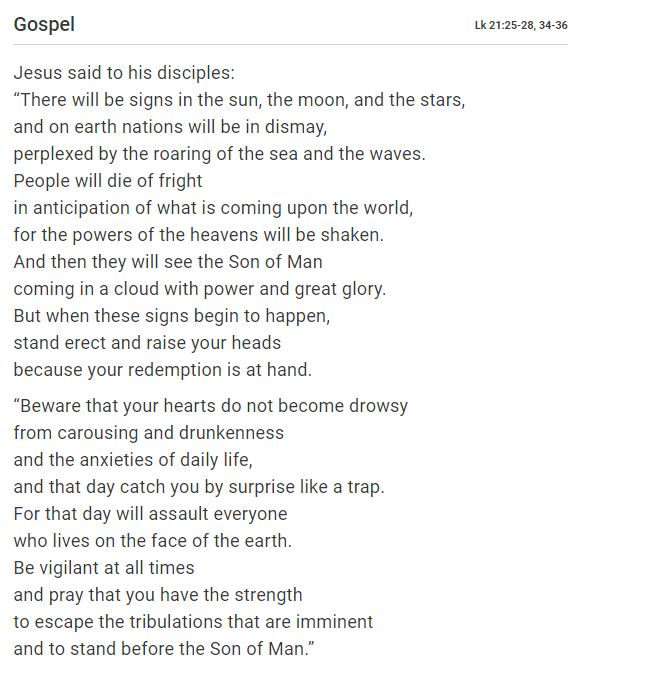
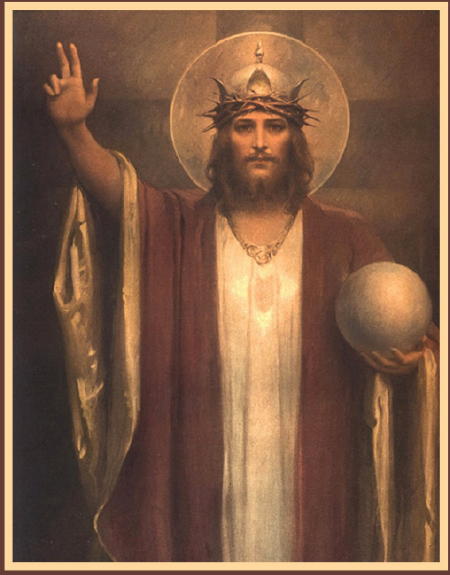


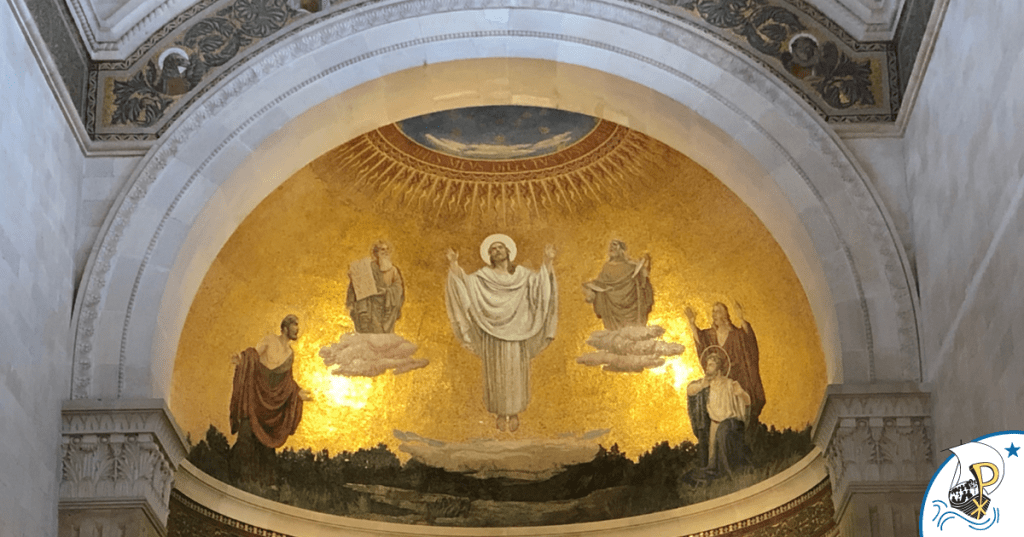
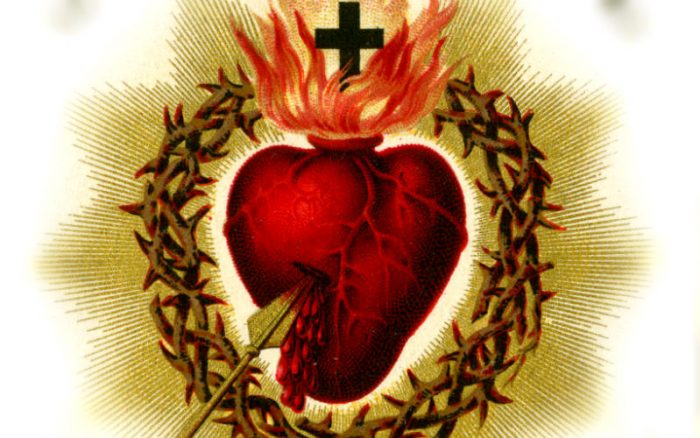
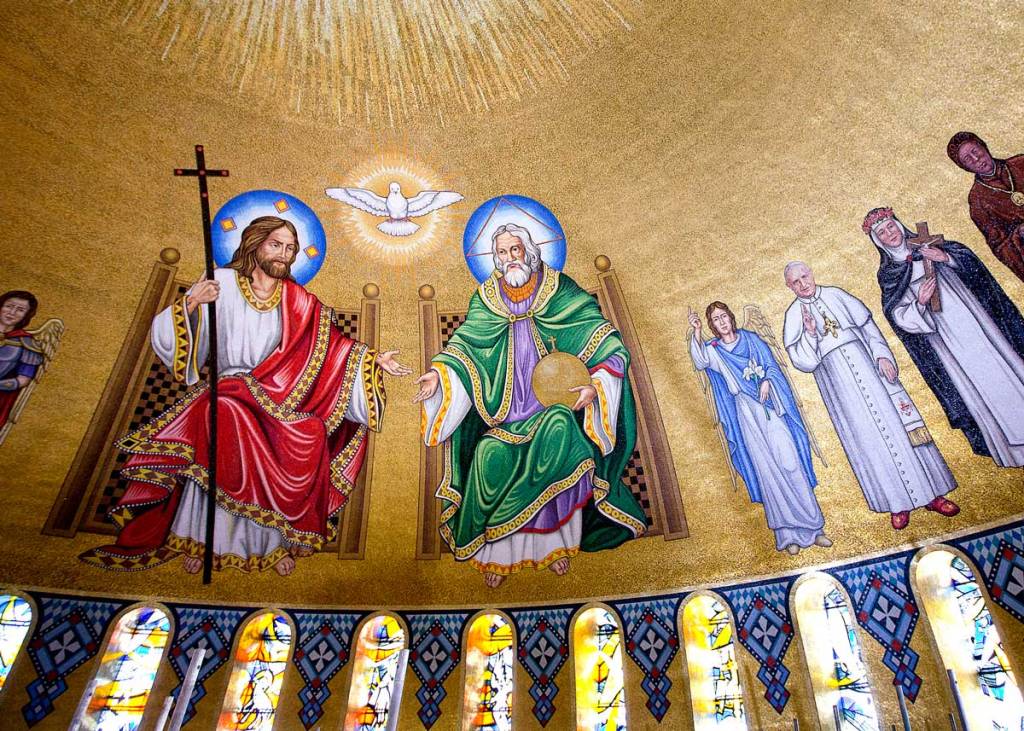
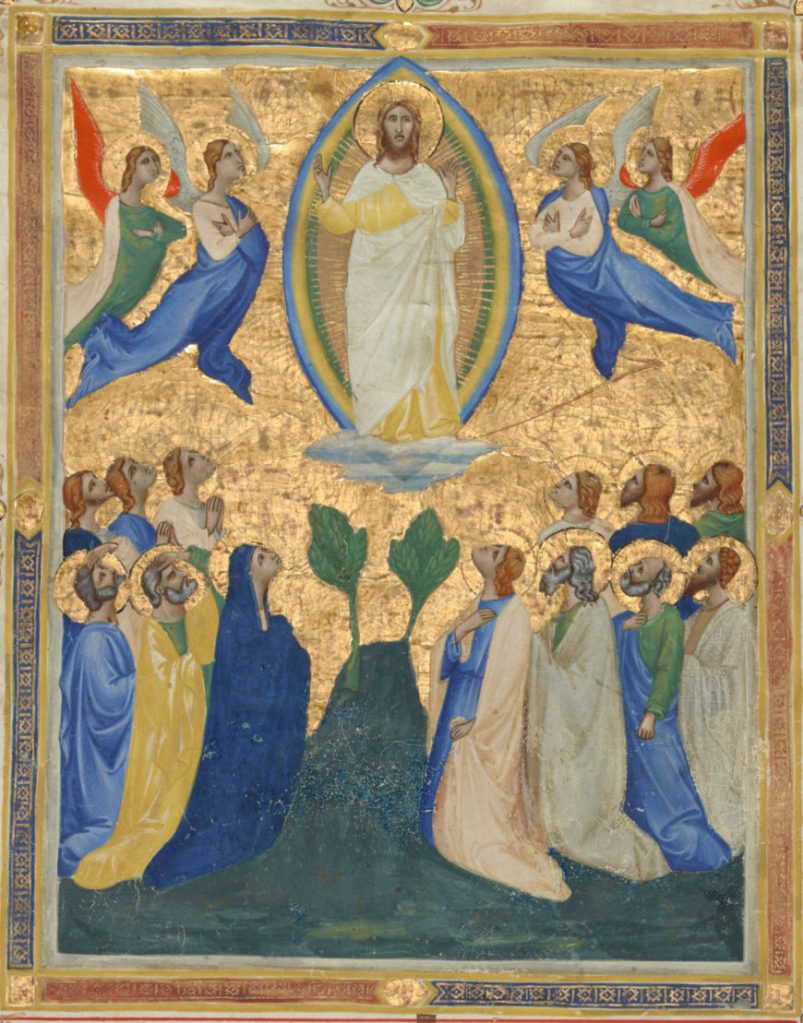


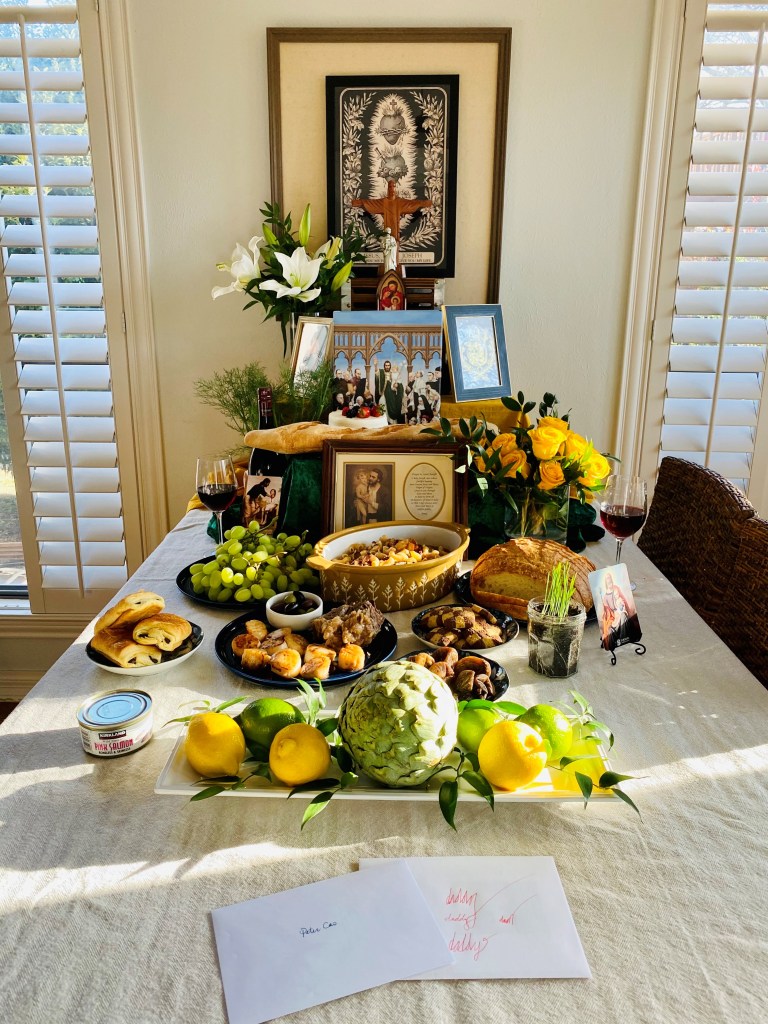


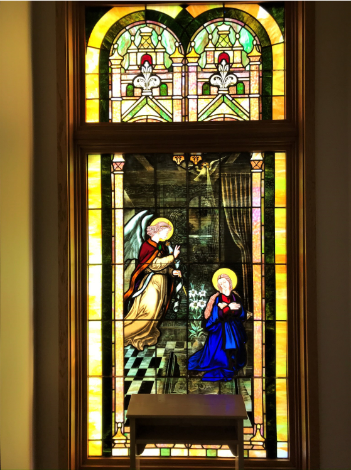
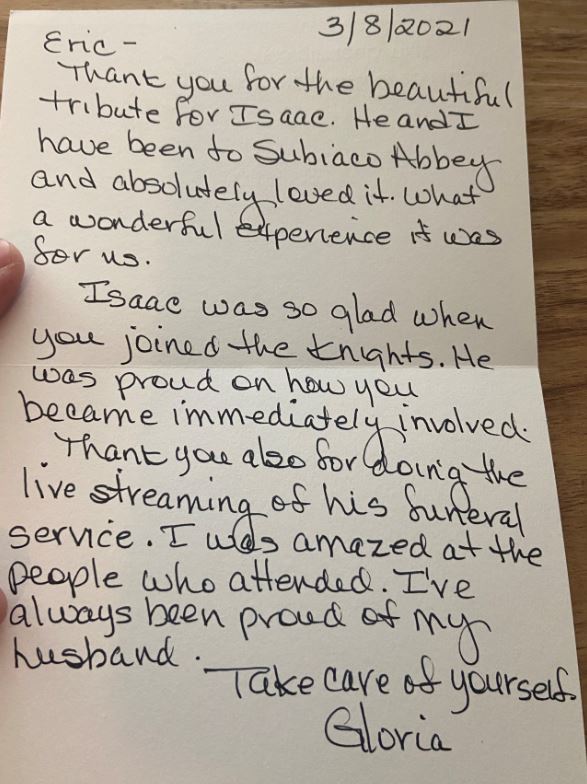



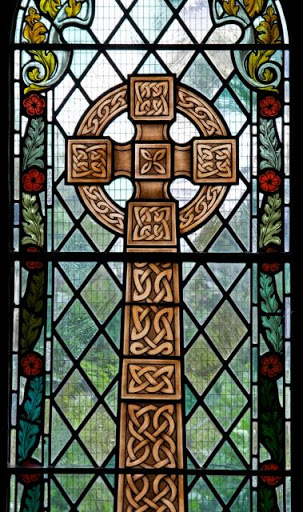


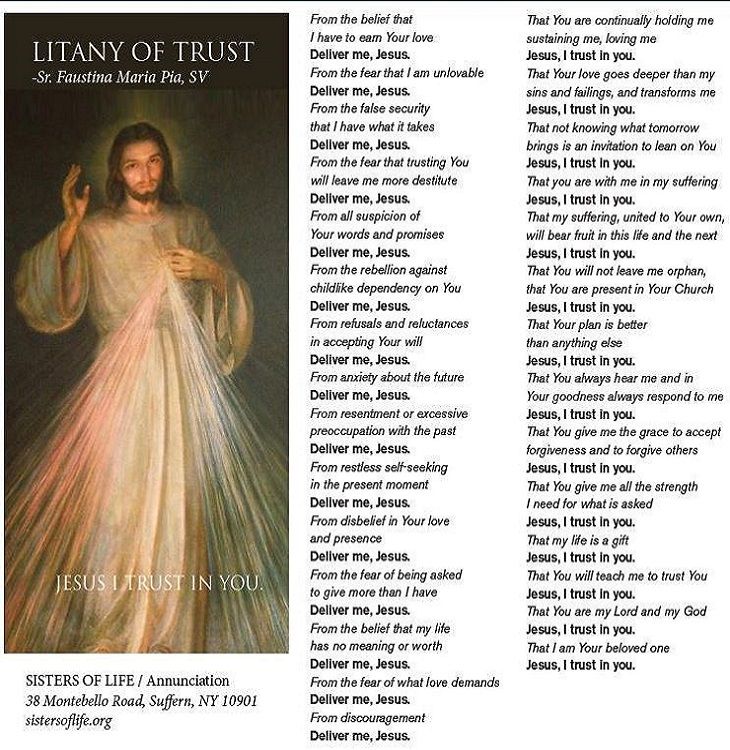

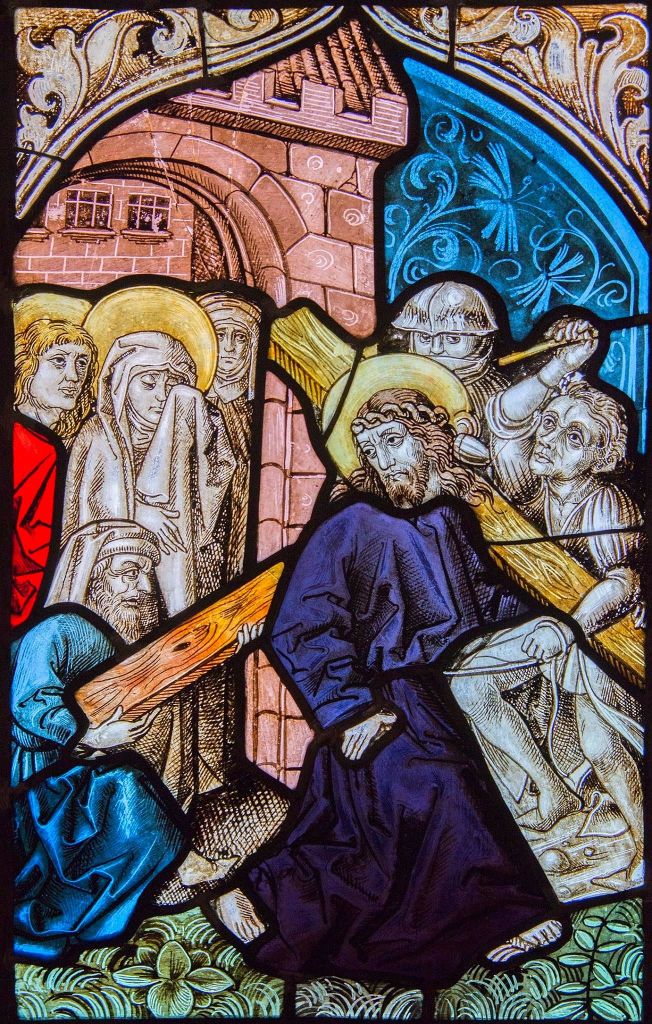


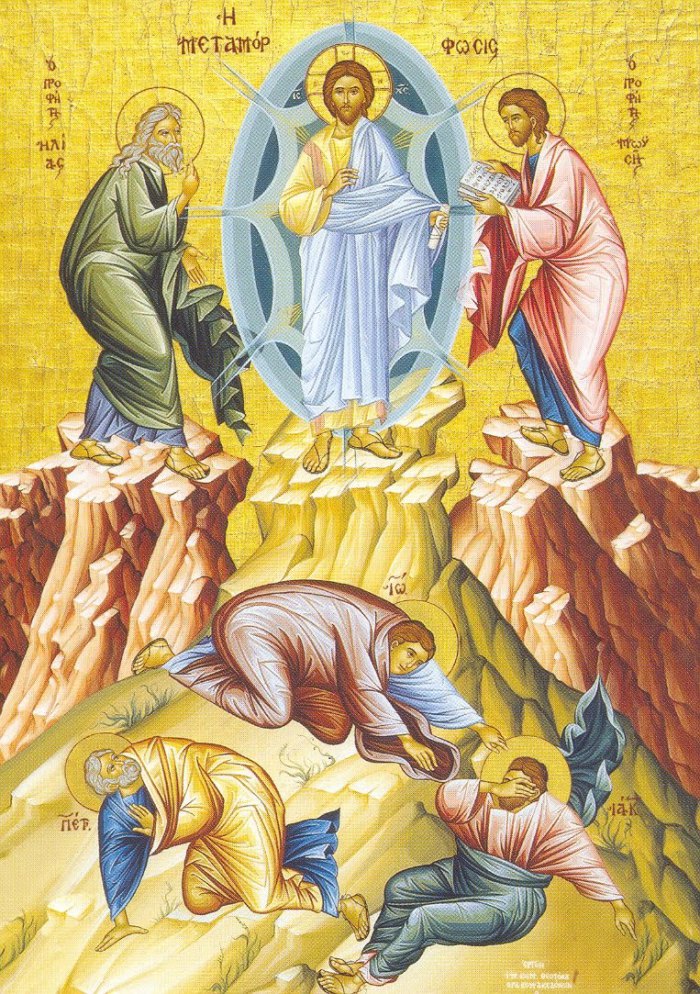
 StreetEvangelist