On the evening of that first day of the week, when the doors were locked, where the disciples were, for fear of the Jews, Jesus came and stood in their midst and said to them, “Peace be with you.” When he had said this, he showed them his hands and his side. The disciples rejoiced when they saw the Lord. Jesus said to them again, “Peace be with you. As the Father has sent me, so I send you.” And when he had said this, he breathed on them and said to them, “Receive the Holy Spirit. Whose sins you forgive are forgiven them, and whose sins you retain are retained.”
Today’s liturgical commemoration and feast of Pentecost reminds us of that great event in which the Holy Spirit imparted upon the disciples the mission to be sent as witnesses of faith and fortitude to the world.
John’s gospel bestows the gift of the Sacrament of Reconciliation upon the disciples per this outpouring of the Holy Spirit from Jesus during the Easter resurrection experience. This passage reminds us that the Holy Spirit doesn’t allow us to sit idly by out of fear. The wounds that Jesus shows to his disciples remind us of our wounds caused by sin and turning away from God’s love. These wounds can be forgiven and cast aside with the peace that the Holy Spirit brings about. The Spirit of God, the 3rd person of the Trinity, brings about the glorification of God the Father & God the Son to His church for God’s plan of salvation. Other words for the Holy Spirit are the Paraclete, the Advocate, the Divine Consoler, and Comforter.
Acts 2:1-11
When the time for Pentecost was fulfilled, they were all in one place together. And suddenly there came from the sky a noise like a strong driving wind, and it filled the entire house in which they were. Then there appeared to them tongues as of fire, which parted and came to rest on each one of them. And they were all filled with the Holy Spirit and began to speak in different tongues, as the Spirit enabled them to proclaim. Now there were devout Jews from every nation under heaven staying in Jerusalem. At this sound, they gathered in a large crowd, but they were confused because each one heard them speaking in his own language. They were astounded, and in amazement they asked, “Are not all these people who are speaking Galileans? Then how does each of us hear them in his native language? We are Parthians, Medes, and Elamites, inhabitants of Mesopotamia, Judea and Cappadocia, Pontus and Asia, Phrygia and Pamphylia, Egypt and the districts of Libya near Cyrene, as well as travelers from Rome, both Jews and converts to Judaism, Cretans and Arabs, yet we hear them speaking in our own tongues of the mighty acts of God.”
The celebration of Pentecost or Hag Shavuot (festival of the weeks) for the Jewish faithful occurs 50 days after Passover in which a sheaf offering is made. Such a commemoration is one of three festivals marking the occasion for the beginning of the wheat harvest in which the first two loaves of bread made were presented at temple (https://www.britannica.com/topic/Shavuot). It is fitting that the Holy Spirit would come upon the disciples during this time. In both the gospel of John and the book of Acts, the imagery of the Holy Spirit as Breath from Jesus and Wind remind us of the Hebrew word ruach and pneuma. Just as God the Creator breathed life in us with the account in Genesis, so too does the power of the Holy Spirit breathe life into us as a Church.
The disciples were called to be the first fruits of the harvest of the Holy Spirit that brought life to the early church as Jesus’s fulfillment of the law and sign of God’s new covenant to us. It is much like the miracle of a plant or flower that requires good soil, water and sunlight to grow. The Holy Spirit is that key ingredient that helps us to grow. The Holy Spirit is with us for each sacrament celebrated and with us during those other moments in which we as church are going out doing the will of the Father & Son.
While we might be like the early devout Jews in the account from the book of Acts questioning such a miracle, we must revel in the noise from heaven. Oftentimes we have the tendency to let the noise of the world and of the evil one impede our Christian call to go forth and be sent. Our tongues may not be tongues of fire to our brothers & sisters because we don’t allow the Holy Spirit to come rest upon us. We are good at casting judgement and complaining about various matters that don’t resemble the Holy sound of God’s spirit. The sounds that come forth from our own tongues may be negative and displeasing sounds that don’t help us grow as a Church community. We must ensure that our words, our breath or pneuma is one that brings life to our brothers and sisters. It is quite easy to be a skeptic and cynic these days and think that our voice is the only one that matters. On the contrary, the Holy Spirit unites us all to understand the gift that our Lord bestows upon us on this Pentecost Sunday. As St. Paul reminds us: “For in one Spirit we were all baptized into one body, whether Jews or Greeks, slaves or free persons, and we were all given to drink of one Spirit.” (1 Cor. 12:13).
St. Catherine of Siena was born in Siena, Italy in the 1347. From an early age Catherine’s love of God was apparent. She once cut her hair short and fasted in order to avoid marriage as she was in love with Jesus the Christ. Instead of joining the convent, she joined the Third Order of St. Dominic which allowed her to minister to the world. At around the age of 21 she had what she describes as a mystical marriage to Christ (https://www.catholic.org/saints/saint.php?saint_id=9).
Excerpt from one of St. Catherine’s letters to Stefano Maconi:
Dearest son in Christ sweet Jesus: I Catherine, servant and slave of the servants of Jesus Christ, write to thee in His precious Blood: with desire to see thee arise from the lukewarmness of thy heart, lest thou be spewed from the mouth of God, hearing this rebuke, “Cursed are ye, the lukewarm! Would you had at least been ice-cold!” This lukewarmness proceeds from ingratitude, which comes from a faint light that does not let us see the agonizing and utter love of Christ crucified, and the infinite benefits received from Him. For in truth, did we see them, our heart would burn with the flame of love, and we should be famished for time, using it with great zeal for the honour of God and the salvation of souls. To this zeal I summon thee, dearest son, that now we begin to work anew.
I send thee a letter that I am writing to the Lords, and one to the Company of the Virgin Mary. See and understand them, and then give them; and then … And talk to them fully concerning this matter that is contained in the letters, begging each of them, on behalf of Christ crucified and me, that they deal zealously, just so far as they can, with the Lords and whoever has to do with it, that the right thing may be done in regard to Holy Church, and the Vicar of Christ, Urban VI. It weighs upon me very much, for my part, that it should please them to have confidence in this matter, for the honour of God, and the spiritual and temporal profit of the city. Do thou be fervent and not tepid in this activity, and in quickening thy brothers and elders of the Company to do all they may in the affair of which I write. If you are what you ought to be, you will set fire to all Italy, and not only yonder. (http://www.domcentral.org/trad/cathletters.htm#2StefanoMaconi)
Saint Catherine of Siena had very little formal education, yet the Holy Spirit and her Christian witness allowed her to challenge church leaders to rise to greatness and unite.
Emmaus on the Road (Les pèlerins d’Emmaüs en chemin) – James Tissot (public domain) retrieved from https://commons.wikimedia.org/wiki/File:Brooklyn_Museum_-The_Pilgrims_of_Emmaus_on_the_Road(Les_pèlerins_d%27Emmaüs_en_chemin)_-_James_Tissot.jpg
I recently attended an ACTS (https://www.actsmissions.org/about) retreat that rekindled my relationship with our Lord. It is good for us as Christians to periodically disconnect from the world and go out on a spiritual pilgrimage to let the flame of the Holy Spirit burn bright in us.
Interestingly enough, the readings from this 3rd Sunday in Easter reminds us of our own interior struggles with recognizing the risen Lord in our midst. It is easy to become distracted and worry about the trials of the day without recognizing the beauty that surrounds us and Jesus walking alongside us on that same road to our own Emmaus.
“Now that very day two of them were going to a village seven miles from Jerusalem called Emmaus, and they were conversing about all the things that had occurred. And it happened that while they were conversing and debating, Jesus himself drew near and walked with them,but their eyes were prevented from recognizing him.” (Luke 24:13–15-16).
This conversation debate experience between the disciples show how we can get sidetracked on our earthly pilgrimage and fail to recognize the Lord Jesus in our midst. One of the great things about attending such a spiritual retreat is the disconnection from cell phones and time pieces that inhibit our ability to seek our Lord in prayer each day. The disciples were no doubt confused, fearful and most likely were debating what they had heard about the Easter miracle of the resurrection on the road to Emmaus. Their blindfolds of life prevented them from recognizing Jesus in their midst.
“One of them, named Cleopas, said to him in reply, “Are you the only visitor to Jerusalem who does not know of the things that have taken place there in these days?” “And he replied to them, “What sort of things?” They said to him, “The things that happened to Jesus the Nazarene, who mighty in deed and word before God and all the people.” how our chief priests and rulers both handed him over to a sentence of death and crucified him. But we were hoping that he would be the one to redeem Israel; and besides all this, it is now the third day since this took place.” (Lk. 24: 18-21).
The name Cleopas means glory of the father or son of a renowned father from the Greek (https://bible-history.com/links/cleophas-1174). Sometimes our hope and anticipation of what should happen is not always what does occur according God’s divine will. We must continuously humble ourselves daily in order to understand that our desires don’t always match up with the desire of God. In our own journey on our road to Emmaus, do we recognize Jesus in our midst or are we distracted because we aren’t grounded in a good prayer life? Let us humbly approach the Lord this day in prayer and ask His Holy Spirit to dwell in us so that we may see the risen Christ this day.
For those that are Catholic Christians we have the opportunity to commune with our Lord Jesus at every mass and can spend time with Him in Holy adoration. Luke’s gospel reminds us of this first Eucharistic miracle where Jesus was truly present:
And it happened that, while he was with them at table, he took bread, said the blessing, broke it, and gave it to them. With that their eyes were opened and they recognized him, but he vanished from their sight. Then they said to each other, “Were not our hearts burning [within us] while he spoke to us on the way and opened the scriptures to us?” So they set out at once and returned to Jerusalem where they found gathered together the eleven and those with them who were saying, “The Lord has truly been raised and has appeared to Simon!” Then the two recounted what had taken place on the way and how he was made known to them in the breaking of the bread. (Lk. 24 30-35).
If your prayer life and relationship with our Lord is weak, take action now. Get away and turn off the distractions. Commit to the Lord times during the day where you can enter into conversation with Him to allow the risen Christ Jesus to walk along side you on your own journey.
As Psalm 16:11 reminds us, “You will show me the path to life, abounding joy in your presence, the delights at your right hand forever.” May that joy be with you as you allow His presence to dwell with you.
Mercy is one of those words that holds a certain esteem for the definitions according to Merriam Webster resembles a sacred complexity. One of the definitions is that mercy is “a blessing that is an act of divine favor or compassion.” Let us reflect on the definition and sacred aspect of Mercy as Christians this week in which the Son of God showed mercy to us that have fallen away from His grace each time we sin against God and our fellow man/woman.
In the 1930s, a young humble Polish nun Sister Faustina, who was in the convent of the Congregation of Divine Mercy was reported to have received various visions or mercy experiences as mentioned in Diary of Saint Maria Faustina Kowalska. In 2000 Saint Pope John Paul II proclaimed Sr. Faustina a Saint and moved the liturgical season of the second Sunday of Easter a day of divine mercy. In the Gospel reading from John’s gospel chapter 20 verses 19 thru 31, it tells the story of the doubting Thomas called Didymus. The apostles and Thomas are debating about the Lord’s appearance from his resurrection experience. Thomas states that he must not only see the nail marks in his hands and see the wound in his side, but he must touch them to believe. After Thomas’s experience at seeing Jesus appear and His invitation to not only see His wounds, but to put his hands into the nail marks of Jesus is a profound encounter in which Thomas states, “my Lord and my God!” Jesus’s mercy and appearance to Thomas shows of our mission as Christians to reach out to those lacking faith, hope or belief. It means nothing to carry our crosses and avoid the near occasion of sin without mercy. It means nothing to attend church more than others, to pray more than others, to act more influential than others without the needed quality of mercy. The divine healer and our Lord Jesus cared for the outcast, cured the sick & bore the weight of sin for all mankind displays the level of mercy needed for us as Christian disciples. We must bring the message of mercy to those that need it in our troubled world. As Saint Pope John Paul II states in his encyclical Dives In Misericordia, “The more the human conscience succumbs to secularization, loses its sense of the very meaning of the word “mercy,” moves away from God and distances itself from the mystery of mercy, the more the Church has the right and the duty to appeal to the God of mercy “with loud cries” (https://www.vatican.va/content/john-paul-ii/en/encyclicals/documents/hf_jp-ii_enc_30111980_dives-in-misericordia.html).
We must acknowledge that mercy is part of the Divine Will for His creation and heed the words from St. Pope John Paul II to always proclaim a message of mercy to those that need it.
As we continue this Eastertide until Pentecost we are reminded that the celebration continues. We have the joy of His resurrection alive in our hearts. We are reminded from the Gospel of Matthew that the disciples ran to tell others the good news:
Then they went away quickly from the tomb, fearful yet overjoyed, and ran to announce this to his disciples Mt. 8:8).
In Mark’s Gospel chapter 16 verse 9, the evangelist indicates that Jesus “appeared first to Mary Magdalene, out of whom he had driven seven demons.” In John’s Gospel chapter 20, we have the image of Mary appearing early outside of the tomb while still dark before the other disciples. We know that Mary holds an important status for Christian salvation history as presented in the story of Jesus’s appearance to her before the others. Simon Peter and the other disciple were only able to view the burial clothes, but did not quite have a sense of what occurred. Mary, on the other hand, does not leave but stays weeping and mourning for our Lord. Two angels appear to Mary and state” Woman, why are you weeping?” Her reply is classic based on our limited perceptions of God’s will in which she replies “they have taken my Lord, and I don’t know where they laid him” (Jn 20:14). After such a moment, Jesus appears to her and questions her weeping. Mary for a second time does not understand and assumes such a character is a gardener with her reply “Sir, if you carried him away, tell me where you laid him, and I will take him.” The third occurrence Jesus just has to state her name for her human nature to see the divine person of Jesus in which her reply is “Rabbouni” or teacher.
It is remarkable that Mary of Magdala is the ultimate message bearer of this Easter miracle. Jesus sends her on the church’s first mission to proclaim the good news to the other disciples in which he states “go to my brothers and tell them, ‘I am going to my Father and your Father, to my God and your God’” (Jn 20:17). Mary, although a person with a troubled past and a sinner like all of us, is a remarkable saint to reflect on. Culturally speaking, Jesus gives such an important task to a woman which was not reflective of the time period’s societal decorum. During this time period, women did not possess the same stature as the male dominated society. Secondly, Mary’s revelation of seeing our risen Lord and her encounter at the tomb shows us that possessing a deep love for our Lord can only come from someone that wears one’s emotion on their sleeve. We must soften our hardened hearts and become dependent upon His great agape love to not only weep when necessary, but also to stay vigilant in our faith at all times. Mary’s deep faith and love for our Lord is something for us to consider this day as we try to stand watch and seek the risen Lord who shows us the way to our Father.
Let us be like Mary where we open our hearts and very being to the Lord’s invitation to go and tell others that we have seen the risen Lord. This risen Lord Jesus is not some mystery, but is alive and well. Every time we turn away from our weaknesses and transgressions and weep for Jesus to come to us during those difficult and sad times in our own life is the risen Jesus there for us. From the communion antiphon from today:
Col 3: 1-2
If you have risen with Christ, seek the things that are above, where Christ is seated at the right hand of God; mind the things that are above, alleluia.
The Greek Orthodox greet one another during the Easter season with the phrase Christos Anesti! (Christ is risen). The response is Alithos Anesti (truly He is risen).
During this Easter season we recall the defeat of sin and death and the glorious resurrection of Christ Jesus our Lord. Just as the penitent thief on the cross next to Jesus said “Jesus, remember me when you come into your kingdom” may we too have that same hope. From our creed we proclaim, “I look forward to the resurrection of the dead and the life of the world to come.”
Catechism of the Catholic Church, Second Edition
Our hope in Jesus Christ our Lord has come to fulfillment for He has conquered death & vanquished our sin & rose from the grave. While we may at times lose hope, and fall into sin, we have the promise that we too may have life eternal if we turn to our Lord. As Pope St. John Paul II once proclaimed, “we are an Easter people and Alleluia is our song” (https://www.vatican.va/content/john-paul-ii/en/angelus/1986/documents/hf_jp-ii_ang_19861130.html).
Let us rejoice today for Jesus shows us the hope for eternal life if we place our trust in Him! Let us roll away our own stones that block the love for our God to shine in our life. Let us go rejoicing and spread the good news for today Jesus Christ is risen today, He is truly risen!
The prayer after holy communion in the missal:
Look upon your Church, O God, with unfailing love and favour, so that, renewed by the paschal mysteries, she may come to the glory of the resurrection. Through Christ our Lord.
This week begins Holy Week. With the entrance of Jesus into Jerusalem and the crowd waving palm branches proclaiming Hosanna in the Highest!
How quickly does this narrative change with the words of Jesus, Eloi, Eloi, lema sabachthani from Psalm 22:1 meaning my God, my God why have you forsaken me? David’s prophecy from psalm 22:16 is fulfilled in that “Dogs have surrounded me; a band of evil men has encircled me, they have pierced my hands and my feet.”
What will you do this Holy Week to recall the great sacrifice our Lord Jesus has made for us, the poor sinner? This sacrificial gift is available to all, but ours is a choice in which we can choose not to accept God’s grace & forgiveness. We may recall the repentant sinner next to Jesus being crucified on the cross in which he says “Jesus, remember me when You come into Your kingdom” (Lk. 23:42). Unlike the repentant man, the unrepentant sinner asks Jesus for something else that many of us may be more inclined to ask for “Are you not the Messiah? Save yourself and us” (Lk. 23:39). How easy is it for us to question the ways of the Lord. We are reminded from Matthew’s gospel that “Not everyone who says to me, ‘Lord, Lord,’ will enter the kingdom of heaven, but only the one who does the will of my Father in heaven” (Mt. 7:21). It is easy just to give lip service to God, but not have a personal relationship with Him in our prayer life. Perhaps we just punch our worship time card and leave everything at the doors of the church? This Holy Week is different where we are called to be attentive. We are called to reflect on the paschal mystery in which Jesus the Christ suffers and dies for us so that we might have life everlasting through His defeat of sin & death.
Perhaps you are like the colt in which Jesus rode into Jerusalem not knowing the reason for your work, but faithfully performing your task? Maybe you are like one of the people in the crowd proclaiming Hosanna in the highest having much fervor only to run away later like Peter when times are tough?
Jesus’s washing of his disciples feet before the Eucharistic meal is a reminder for us of the need to continually turn away from sin and toward the Father’s love in the person of Jesus. We may be like Simon Peter and too proud for the Lord to wash our feet in which we say, “Master, are you going to wash my feet?” (Jn. 13:6). This command on Maundy Thursday (mandatum for command) reminds us of Jesus’s words “You call me ‘teacher’ and ‘master,’ and rightly so, for indeed I am. If, I, therefore, the master and teacher, have washed your feet, you ought to wash one another’s feet” (Jn. 13:13-14).
As you await the tomb to be opened to celebrate the day of resurrection, will you roll away your own stone for the Holy Spirit to dwell? During this Holy Week let us reflect on our Lord’s great gift of sacrifice and put to death those obstacles that prevent us from becoming closer to Him in prayer, act & deed.
Set aside some prayer time this week. Ask our Lord to remove those weaknesses that interfere with your desire to become closer to Him in prayer. Journey with our Lord Jesus by reflecting on the passion narratives in the gospel. Perhaps, you may wish to meditate on the last words of Christ https://weare.franciscan.university/seven-last-words-of-jesus/?
Today marks what used to be known as Passion Sunday in the pre 1969 church calendar reminding of Jesus’s upcoming suffering & his hiding from those that wished to stone him. The gospel account recalling the death and raising of Lazarus from John 11:1-45 reminds us of the need to put to death those earthly desires and temptations that separate us from God’s love. Many churches may begin to place veils on crosses and other images this Sunday.
John’s gospel informs us that Lazarus is the brother of Mary who anointed Jesus with perfumed oil and dried his feet with her hair (Jn. 11:2). John’s gospel account recalls the following: “So the sisters sent word to him, saying, “Master, the one you love is ill.”Jesus heard this he said, “This illness is not to end in death, but is for the glory of God, that the Son of God may be glorified through it.” (Jn. 11:3-4). Clearly such an event foreshadows Jesus’s own death and glorification that is about to come. The first reading from scripture from the prophet Ezekiel reminds us of the following “You shall know that I am the Lord when I open your graves and make you come up out of them, my people!” (Ez. 37:13).
If we haven’t been doing well during our Lenten journey, it is not too late to more fully enter into contemplation those things in our life that decay our souls and make us dead to God’s love and our fellow man. There can’t be an Easter without a Lenten trial. We are reminded of our Lord’s human nature when he weeps for his friend Lazarus (Jn. 11:35). Jesus also weeps during his entry into Jerusalem (Lk. 19:41). Such a moment reminds us of God’s great love and care for us in carrying the weight of our inequities and sin on the road to Calvary.
The second reading from Paul’s letter to the Romans reminds us that we are more than mere creations with bodily desires. “But you are not in the flesh; on the contrary, you are in the spirit, if only the Spirit of God dwells in you. Whoever does not have the Spirit of Christ does not belong to him.” “But if Christ is in you, although the body is dead because of sin, the spirit is alive because of righteousness.” (Rom. 8:9-10).
Let us more fully reflect on those things in our life that extinguish the flame of the light of Jesus & the Holy Spirit that wishes to dwells in us as we prepare for the upcoming Holy Week. Just as the body of Lazarus laid in the tomb, so too our own bodies may remain lifeless when we don’t have the Spirit of Christ on our earthly journey. Perhaps as a Catholic, you haven’t been inside of a confessional in a long time and need to return? The church welcomes you to this sacrament of healing and here is a good resource: https://thelightison.org/guide-to-confession/. Maybe your prayer life isn’t what it should be? Start small each day and ask the Lord to deepen your relationship with Him. Meditating upon the stations of the cross may be a good practice to do as well during this remaining Lenten season https://www.ewtn.com/catholicism/library/short-meditations-on-the-stations-of-the-cross-4260.
Just as Lazarus came out of the tomb at the Lord’s call, will we do the same for the Jesus who weeps for us? Perhaps we should place a veil on our own crosses which symbolize the darkness, transgressions and moments we turn away from our Lord. The veiling of holy images and statues remind us of the beauty of patiently awaiting for the Lord to roll away our own stones of our tombs during this time of preparation and anticipation. How will we be a sign of hope and resurrection to others on this Lazarus Sunday?
Baptismal Card from my grandparents on the day of my baptism The Baptismal candle is lit from the Easter paschal candle signifying new life in Christ Jesus and our Lord’s overcoming the darkness of the tomb. Catacombs of Marcellinus and Peter retrieved from https://en.wikipedia.org/wiki/Catacombs_of_Marcellinus_and_Peter
43 years ago, I was baptized into the Christian fold. It is interesting to note that I was baptized only one month after I was born. Such a monumental occasion is cause for celebration. Only recently did I learn that some celebrate this occasion as a baptismal birthday. Such a tradition is appropriate given this sacrament of initiation at which we become a new creation in Christ Jesus (2 Cor. 5:17).
The Catechism of the Catholic Church states the following:
1265 Baptism not only purifies from all sins, but also makes the neophyte “a new creature,” an adopted son of God, who has become a “partaker of the divine nature,” member of Christ and co-heir with him, and a temple of the Holy Spirit. 1266 The Most Holy Trinity gives the baptized sanctifying grace, the grace of justification…” Furthermore, 1271 states “Baptism, therefore constitutes the sacramental bond of unity existing among all who through it are reborn.” (CCC 2nd Edition, USCCB, 3211 Fourth St, NE, Washington DC, 2019, 2020).
It is no wonder why such a sacrament is such an important milestone and why some celebrate the occasion as a “birthday” since we become a new creature per the reference to St. Paul’s epistle to Corinth.
We are reminded in the Gospel that Jesus, the light of the world, was also baptized. In Matthew’s gospel, John the Baptist says to Jesus, “I need to be baptized by you, and you are coming to me?” Jesus in his reply says “Allow it now, for thus it is fitting for us to fulfill all righteousness” (Mt. 3:14-15). Furthermore, this symbolic action by John the Baptist demonstrates Jesus’s mission of redemption to us as God’s son. Matthew describes the Holy Spirit coming down upon Jesus in the following manner: “After Jesus was baptized, he came up from the water and behold, the heavens were opened and he saw the Spirit of God descending like a dove coming upon him.” (And a voice came from the heavens, saying, “This is my beloved Son, with whom I am well pleased” (Mt. 3:16-17). Jesus did not need to be baptized, but did so for our benefit (https://www.catholic.com/qa/why-jesus-chose-to-be-baptized).
The upcoming Easter season reminds us of our baptism day where we renew our baptismal promises. It is a good time to reflect upon these promises made each year which are done on the Easter vigil. If we were infants, our parents and godparents made these promises. If baptized as older adults, these proclamations of faith were made. It’s a good time for all to reflect on these baptismal promises, and perhaps on our Christian birthday anniversary in which the introductory rite celebrant reminds us of the following at the rite of child baptism:
“Your families have experienced great joy at the birth of your children, and the Church shares your happiness. Today this joy has brought you to the Church to give thanks to God for the gift of your children and to celebrate a new birth in the waters of Baptism.”
Let us recall these baptismal promises on the anniversary of our baptism and at the upcoming Easter vigil as a good reminder of who we are:
Do you renounce Satan? And all his works? And all his empty show?
Do you renounce sin, so as to live in the freedom of the children of God?
Do you renounce the lure of evil, so that sin may have no mastery over you?
Do you renounce Satan, the author and prince of sin?
Do you believe in God, the Father almighty, Creator of heaven and earth?
Do you believe in Jesus Christ, his only Son, our Lord, who was born of the Virgin Mary, suffered death and was buried, rose again from the dead and is seated at the right hand of the Father?
Do you believe in the Holy Spirit, the holy catholic Church, the communion of saints, the forgiveness of sins, the resurrection of the body, and life everlasting?
A Crucifix that is in our bedroom An icon reproduction in our home
Like many Catholic Christians, most have a crucifix hanging in their homes to remind them of that great sacrifice that Jesus the Christ, God’s only begotten son, made for us on Calvary.
My mom always used to teach us to “offer it up” in dealing with our struggles and sacrifices. Life is far from perfect and I always pondered the deeper meaning of this phrase. The Catechism of the Catholic Church teaches us an important lesson. The cross is the unique sacrifice of Christ, the “one mediator between God and men” [1 Timothy 2:5]. But because in his incarnate divine person he has in some way united himself to every man, “the possibility of being made partners, in a way known to God, in the paschal mystery” is offered to all men (618)
In other words, we are all part of that mystical body of Christ sharing in His redemptive suffering. Paul’s letter to the Galatians further reminds us that “I have been crucified with Christ; it is no longer I who live, but Christ who lives in me…who loved me and gave himself up for me” (2:20).
Furthermore, Saint Pope John Paul II reminds us of this term, “offer it up” when he reminds us of the following: “In bringing about the Redemption through suffering, Christ has also raised human suffering to the level of the Redemption. Thus each man, in his suffering, can also become a sharer in the redemptive suffering of Christ” (Salvifici Doloris, 19)
A good prayer to recite during Lent when praying before the crucifix is the following prayer:
Behold, O kind and most sweet Jesus, I cast myself upon my knees in Your sight, and with the most fervent desire of my soul I pray and beseech You that You would impress upon my heart lively sentiments of Faith, Hope, and Charity, with true repentance for my sins, and a firm purpose of amendment, while with deep affection and grief of soul I ponder within myself and mentally contemplate Your five most precious Wounds; having before my eyes the words which David in prophecy spoke concerning Yourself, O good Jesus: “They have pierced my hands and feet; they have numbered all my bones.”
Today, let us offer it up to our Lord as we await with joyful anticipation the resurrection day.
In the Gospel of Matthew we read where Jesus enters the desert to be tempted by the devil after 40 days and nights of fasting. Jesus’s first temptation is to turn the stones into loaves of bread. Jesus rebukes Satan by saying, “one does not live by bread alone, but by every word that comes forth from the mouth of God” (Mt. 4:4).
It is easy for us to give in to our earthly desires. Man is not perfect. We are reminded of another instance in scripture where Jesus’s disciples could not keep watch when they were in the garden at Gethsemane. After Jesus returned from prayer he says to Peter, “you could not keep watch with me for one hour?…the spirit is willing but the flesh is weak” (Mt. 26:40-41). We too have those moments where we give in to our earthly desires. Jesus gives us the roadmap to be courageous against such adversity by turning to God’s word in holy scripture to nourish another facet of our being, that of our soul.
While food and drink may temporarily relieve our bodily desire of hunger & thirst, our souls are constantly hungering for truth. Even Jesus’s closest disciples that were in his presence fell short and let their earthly flesh take hold when falling asleep. It is the divinity of Jesus, however, that has enabled us to do something greater in conquering the temptations of this world to be fed by His eternal word that nourishes our souls and of that moment in which we receive Him in holy Eucharist. Jesus reminds us that “I am the bread of life; whoever comes to me will never hunger, and whoever believes in me will never thirst” (Jn. 6:35). We must always strive for that spiritual food that will truly satisfy us.
In the second temptation of Jesus , the devil tempts our Lord by asking that he throw himself down from the parapet of the temple and asking angels to save him. Jesus boldly reminds the devil that you shall not put the Lord your God to the test” (Mt. 4:7). How often do we approach God in our own life only to treat God as if He were some genie from a lamp granting us wishes? We are reminded of the storm on the Sea of Galilee in which Jesus allowed Peter to walk on water only to have him sink due to his fear of the wind. Jesus tells Peter, “O you of little faith, why did you doubt?” (Mt. 14:31). Oftentimes we are like Peter in which we let our fears blind us from the signs that are already there if only we have the eyes of faith as promised to us by the resurrection.
The last temptation of Jesus is one of pride and power. The devil promises Jesus all the kingdoms of the world if only he kneel before him and do him homage. Jesus boldly proclaims “Get away Satan! The Lord your God shall you worship and him alone shall you serve.” (Mt. 4:10). We all have that temptation to seek those earthly possessions and riches that grant us a temporary happiness. Even Jesus’s disciples had this temptation when they asked Jesus “who is the greatest in the kingdom of heaven?” (Mt. 18:1). Jesus tells his disciples that “whoever humbles himself like this child is the greatest in the kingdom of heaven” (Mt. 18:4). We too must have the innocence and humility of a child for God’s endless love which is the most prized possession we could ever have.
Together, let us ask for God’s divine intervention in battling those temptations that separate us from God’s love. Let us boldly proclaim this day, be gone Satan!
May the Lord bless us, protect us from all evil and bring us to life everlasting. Amen.
As we prepare for another Lenten journey, we may be pondering about what it is we will give up in order to walk alongside our Lord during these next 40 days.
While we may fast and abstain from meat on Ash Wednesday and on Fridays with one meal and two light meals, the church doesn’t require much from us in terms of what we must give up. Such a season reminds us of the necessity to give alms to the poor, enter more deeply in prayer and conduct acts of penance. While we can certainly give up items such as chocolate, coffee, or our favorite television shows, one has to ask what are we gaining by giving up such luxuries?
The first reading from the prophet Joel on this Ash Wednesday reminds us to return to the Lord with full hearts. “Rend your hearts, not your garments…” says the prophet (Jl. 2:13). In Matthew’s gospel, Jesus reminds us not to be like the hypocrites in giving alms in blowing a trumpet (Mt. 6:2). Jesus reminds us to not make our prayer a big production and instead instructs us to “go to your inner room, close the door, and pray to your Father in secret” (Mt. 6:6). Such an action is one where our hearts must be inclined toward an interior change. Empty words of prayer are meaningless without conversion of one’s heart.
This Lenten season we should be asking ourselves what can be gained in furthering our relationship with our Lord. As John the Baptist reminds us, He must increase; I must decrease” (Jn. 3:30). How will we decrease and humble ourselves so that an increase can be made with growing our relationship with Jesus? Here are some suggestions for this Lenten season for gaining a more deeper relationship with our Lord:
Spend more time in prayer and meditate upon the scripture or daily readings together as a family and the readings before mass.
Celebrate the Sacrament of Reconciliation & make a 40 day commitment to avoid that one repeated sin
Conduct an act of kindness in your family or community and tithe to a local charity with not only money, but your time as well.
Get involved with a faith sharing group
Reach out to a neighbor and invite them to dinner
Read a spiritual book or learn about a spiritual component of our faith
Start a spiritual prayer journal of where you are at now and where you hope to be at the end of 40 days in preparation for the Paschal Triduum
A good prayer to start this Lenten season from Dynamic Catholic is the following:
“God of goodness and mercy, Hear my prayer as I begin this Lenten journey with you. Let me be honest with myself as I look into my heart and soul, noticing the times I turn away from you. Guide me as I humbly seek to repent and return to your love. May humility guide my efforts to be reconciled with you and live forever in your abundant grace. Transform me this Lent, heavenly Father. Give me the strength to commit myself to grow closer to you each day. Amen.” https://www.dynamiccatholic.com/lent/prayers-for-lent.html#ash-wednesday
Matthew’s gospel of Jesus asking us to love our enemies is a difficult task for many. To love our enemies and pray for those that persecute us (Mt. 5:44) is something we don’t typically consider when we have been hurt or been served an injustice. It’s a lot easier to resort to the old law of an eye for an eye (Ex. 21:24). I myself have let such animosity dwell in my heart for a wrong done to me by someone, oftentimes holding a grudge or resentment.
Sometimes our enemy might be the person that cuts in front of us in traffic. Perhaps our enemy is the wrong that someone has done to us in our own household? Our enemy might even be our own self and inability to move past our transgressions and seek God’s love. We must remember that it is God that has loved us first (1 Jn.4:19). It is God’s love that enables us to love thy enemy and pray for those that have trespassed against us. After all, prayer is that great communication between ourselves and our God that changes even the most hardest of hearts. When we let go of the hate we have for even the most egregious wrong done to us can love and mercy transform our hearts and possibly those of our enemies as well.
The following text from Matthew’s gospel is a beautiful image to ponder:
“That you may be children of your Heavenly Father, for he makes his sun rise on the bad and the good, and causes rain to fall on the just and the unjust” (Mt. 5:45).
St. Thomas Aquinas’s contribution to philosophy and theology in the 13th century church laid the foundation for medieval Scholasticism to flourish. The writings of old ideas from those philosophers such as Aristotle were not necessarily incompatible with the universal truth of our holy and one God who is the author of all truth.
Labeled the dumb ox for his humility by his peers, it was under the training of Albert the Great that he would become an influential doctor of the church (https://clarifyingcatholicism.org/articles/the-life-of-thomas-aquinas-scholasticism-and-higher-education/). Thomas Aquinas’s hymns and liturgical prayers for Eucharistic adoration are profound. One of my favorite hymns taken from the verses of his Pange Lingua Gloriosi Corporis Mysterium is the Tantum Ergo used at benediction during Eucharistic adoration:
Tantum ergo Sacramentum Veneremur cernui: Et antiquum documentum Novo cedat ritui: Præstet fides supplementum Sensuum defectui. Genitori, Genitoque Laus et iubilatio, Salus, honor, virtus quoque Sit et benedictio: Procedenti ab utroque Compar sit laudatio. Amen.
Down in adoration falling, Lo! the sacred Host we hail; Lo! o’er ancient forms departing, newer rites of grace prevail; faith for all defects supplying, where the feeble senses fail. To the everlasting Father, and the Son who reigns on high, with the Holy Ghost proceeding forth from Each eternally, be salvation, honor, blessing, might and endless majesty. Amen.
John Chrysostom: On the Birthday of our Savior Jesus Christ, a Sermon
[Translated by Bryson Sewell]
I see a strange and novel mystery: shepherds sound all around my ears, not piping a barren tune, but singing a heavenly hymn. Angels are singing, archangels are dancing, the cherubim are hymning, the seraphim are glorifying, all are celebrating, since they see God upon the earth, man[2] in Heaven. [I see] the one who is on high lower because of His plan,[3] the one who is below on high because of His love for humanity. Today Bethlehem resembled Heaven: in place of stars it received angels hymning, in place of the sun it contained the righteous One[4] without confining [Him].[5] And do not ask how: for where God wills it, nature’s order is overcome. For He willed it, He had the power, He came down, He saved – all things follow upon God.[6] Today, He who Is[7] is born, and He who Ιs becomes what He was not. For being God, He becomes human, though He did not cease from being God. For He hasn’t become human by separating[8] from His divinity,[9] nor again has He become God by advancing[10] from a human. But, being Word, because He could not suffer [as Word], [11] He became flesh, His nature[12] remaining unchanged. But when, on the one hand, He was born, Jews denied the strange birth, and Pharisees misinterpreted the divine Books, and scribes spoke what was in opposition to the Law. Herod[13] sought the [child] who was born, not in order to honor Him, but to destroy Him. For today they saw [that] all things [were] opposed [to them]. For the psalmist says, “it was not hidden from their children for another generation.”[14]For kings came, in astonishment at the heavenly King, for He had come upon the earth without angels, without archangels, [M. 387] without thrones, without dominions, without powers, without authorities, but walking a foreign and untrodden path, He came forth from an uncultivated[15] womb, neither leaving His own angels deprived of His authority, nor having ceased from His own divinity in His incarnation with us. But kings came to worship the heavenly King of glory, while soldiers [came] to serve the commander-in-chief of power; women [came to see] the one who was born from a man, in order that He might change the woman’s grief[16] into joy; the virgins [came to see] the child of the virgin, because the Creator of milk and breasts, who makes the fountains of breasts to produce naturally flowing streams,[17] received a child’s nourishment from His virgin mother; the infant [came to see] the one who became an infant in order to furnish praise from the mouths of infants; the children [came to see] the child who produced witnesses because of Herod’s madness; the men [came to see] the one who was incarnated and healed the woes of slaves;[18] the shepherds [came to see] the good shepherd, who lays down His life for the sheep; the priests [came to see] the one who became the high priest in the order of Melchizedek; the slaves [came to see] the one who took the form of a slave in order to honor our slavery with freedom; the fishers [came to see] the one who makes hunters of people from among fishers; the tax collectors [came to see] the one who appointed an evangelist from among the tax collectors; the prostitutes [came to see] the one who offers His feet to the tears of prostitutes; and, that I may speak but briefly, all sinners came to see the lamb of God who takes upon himself the sin of the world, Magi accompanying,[19] shepherds praising, tax collectors speaking the good news, prostitutes bearing perfume, Samaritans thirsting for the fountain of life, the Canaanite woman with undoubting faith. Since everyone else, then, is exulting, I too want to exult, I want to dance, I desire to celebrate. But I dance, not by striking a lyre, not by shaking a thyrsus, not with flutes, not by lighting torches, but, in place of the musical instruments, I bear[20] the swaddling-clothes of the Christ. For these are my hope, these my life, these my salvation, these my flute, these my lyre. And so I come bearing these, so that, after receiving [the] power of words by their power, I may say together with angels, “Glory in the highest be to God!,”[21] and with shepherds, “And peace on earth, and good will among men.”[22] Today, the one who was inexplicably begotten from [the] Father is born from a virgin, inexpressibly for my sake. But at that time, on the one hand, He was begotten from the Father before [the] ages, as the one who begot [Him] knows. But today, against nature, He was born again, as the grace of the Holy Spirit understands. And His birth on high[23] is real, and His birth below not false, and He was begotten as God from God, and truly the same one was born a human from a virgin. On high He alone is the only begotten from the Only, below the same one, alone, is the only begotten from [the] only virgin. For just as in the case of His birth on high it is impious to conceive[24] of a mother, so also in the case of His birth below it is blasphemous to conceive[25] of a father. The Father begot [Him] without change, and the virgin bore [him] without corruption. For God did not submit to begetting with fluxes,[26] for He begot [Him] in a manner fit for God. And the virgin didn’t submit to corruption when she was giving birth, for she gave birth after a spiritual manner. And so His begetting on high has no explanation, nor does His [M. 388] coming forth in later times endure to be investigated unduly. For today I know that, on the one hand, the virgin gave birth, and today I believe that God begot [Him] out of time. I have learned to honor the manner of the birth with silence, and I have undertaken[27] not to inquire unduly with words. For in the case of God, one ought not to give attention to the nature[28] of the deeds, but to believe in the power of the one who brings [them] about. For there is a law of nature, whenever a woman, after being joined in marriage, gives birth. But when a virgin, after giving birth, without experience in marriage, again appears as a virgin, the deed is beyond nature. Consequently, then, let that which is in accord with nature be investigated, but let that which is beyond nature be honored with silence, not as something that ought to be avoided, but as something inexpressible and worthy of being honored with silence. But grant me pardon, I beg you, if I want to end my sermon in the introduction. For since I am lowly in respect of the inquiry of those who are greater, I do not know how and where I shall turn the rudders of my words. For what am I to say, or what am I to speak? I see the woman giving birth, I perceive the [child] who was born, yet I do not comprehend the manner of the birth. For nature is overcome, and the boundary of order is overcome, where God wills [it]. For the deed did not occur in accord with nature, but the miracle is beyond nature. For nature was nullified, and the will of the Master brought [it] to pass. Oh the unspeakable grace! The only begotten before [the] ages, the intangible and the simple and the incorporeal entered into my contemptible and visible body. Why? So that, by being seen, He might teach, and that by teaching He might lead us to what is not seen. For since humans consider[29] the eye more trustworthy than the ear, they doubt what they do not see, and for this reason He endured to present a spectacle of Himself to their eyes through the body, so that He might destroy their doubt. And He is born from a virgin who is ignorant of the matter. For she did not help bring about what occurred, or contribute to what was done, but she was a mere instrument of His inexpressible power, only knowing what she learned from Gabriel when she asked, “How will this happen to me, since I do not know a man?”[30] And he says, “Do you wish to understand this? The Holy Spirit will come upon you, and the power of the Most High will over shadow you.”[31] And how was He with her, and then only a little later from her? [It is] just like when an artist finds great material, He fashions a most beautiful vessel. In this way, too, Christ, when He found the body and soul of the virgin holy, fit out a living temple for Himself, framing the person in the virgin in the manner He willed and, after entering into it, He came forth today, feeling no shame for the ugliness of the nature. Nor did it bring hubris to Him to wear His own work. And the thing that was fashioned gave a harvest of greatest glory, since it was a garment of the artist. For in this very way, in the first molding, it was impossible to frame the human before the mud came into his hands. In this way also it was impossible for the perishing vessel to be altered unless it became [the] garment of the one who made it. [M. 389] But what am I to say, or what am I to speak? For the miracle strikes me senseless. The Ancient of days has become a child, He who sits on a high and lofty throne is placed in a manger, the intangible and simple and uncompounded and incorporeal One is turned about by human hands, He who tore the bonds of sin asunder is entwined in swaddling-clothes, since He will this. For He wants to make dishonor honor, ill-repute to put on glory, the boundary of hubris to show the way of virtue. And so He enters my body so that I might contain his Word. And after receiving my flesh, He gives me His own Spirit, so that by giving and receiving He might procure the treasure of my life. He receives my flesh to sanctify me, He gives me His spirit to save me. But what am I to say, or what am I to speak? “Behold, the virgin will conceive.”[32] No longer is it said that it will happen, but it is wondered at that it has occurred. For it occurred among Jews, among whom it was also spoken, yet it is believed by us, among whom it wasn’t professed. “Behold the virgin will conceive.” The written character belongs to the synagogue, but the possession belongs to the church. The former[33] discovered the writing-tablet, the latter[34] discovered the pearl. The former dyed the wool, the latter put on the purple robe. Judea bore Him, and the world received Him. The synagogue reared and suckled Him, and the church held him and enjoyed the fruit of the harvest. The branch of the grape-vine is with the former, and the grape-cluster of truth is with me. The former gathered in the grape-cluster, and the gentiles[35] drink the mysterious drink. The former sowed the seed of the grain in Judea, and the gentiles harvested the crop with the sickle of faith. The gentiles piously clipped the rose, and the thorn of unbelief remained over for Jews. The nesting flew away, and the senseless [parents] lie near the nest. The Jews interpret the foliage of the written character, the gentiles cull the fruit of the Spirit. “Behold, the virgin will conceive.” Tell me, O Jew, tell me, finally, to whom did she give birth? Have confidence in me, as if with Herod. But you do not have confidence [in me]; I know why: because of the plot. For you spoke to him[36] that he might kill Him. Yet you do not speak to me, lest I should worship Him. To whom did she give birth? Whom? The Master of nature. And even if you are silent, nature cries aloud. For she gave birth, just as the one who was born wanted to be born. It was not permitted by nature, but, as the Master of nature, He introduced a foreign manner of birth in order that, even though He became human, He should not be born as a human, but is begotten as God. Today He came forth from a virgin who overcame nature and passed over marriage. For it was fitting for the ruler[37] of holiness to come forth from pure and holy offspring. For He is the one who, long ago, formed Adam from virgin earth, and from Adam formed woman without a wife.[38] For just as Adam produced a woman without a wife, in this way also today the virgin gave birth to a man without a husband.[39] For He is a human, he says, and who will recognize Him? For since Womankind owed a favor to humankind, since Adam, without a wife, produced a woman, [M. 390] for this reason today the virgin gave birth without a husband, paying off the debt owed to men on Eve’s behalf. For, lest Adam should become arrogant (since he produced a woman without a wife), for this reason the virgin also gave birth to a man without a husband, in order that by the shared miracle[40] He might show the equality of nature. For just as He removed the rib from Adam and in now way lessened Adam, in this way also He formed for Himself a living temple in the virgin, and He did not dissolve her virginity. Even after the removal of the rib, Adam remained whole. And the virgin, too, after the infant came forth,[41] remained uncorrupted. For this reason He didn’t fashion a temple for Himself from some other place, nor did He fashion and put on another body, lest He should seem to insult the dough[42] of Adam. For since the human, after being deceived, became a tool for the Devil, for this reason He recovered him who had been overthrown as a living temple, in order that, on account of the relationship[43] with his Maker, He should remove him from the Devil’s acquaintance. Nevertheless, even though He became a human, He is not born like a human, but is begotten as God. For if He came forth from a common marriage, like me, He would be considered a lie by the many. But as it stands it was for this reason that He is born from a virgin, and even being born He keeps the womb unchanged and guards her virginity without loss, in order that the unusual manner of the conception should become an agent of a great faith for me. And so if a Greek or a Jew asks me whether the Christ, being God in accordance with nature, has become human against nature, I will say, “Yes,” calling as a witness of the argument the undefiled seal of her virginity. For in this way God is overcoming the order of nature. In this way He is the potter of the womb, and the originator of virginity, because He kept the manner of His birth undefiled, and inexpressibly built a temple for Himself, in the manner He desired. Tell me then, O Jew, did the virgin give birth, or not? If on the one hand she did give birth, confess the unusual birth.[44] If she did not give birth, why did you deceive Herod? For you told Herod, when he was inquiring where the Christ was born, that it was in Bethlehem of Judea. Did I know the village or the place? Did I know the worth of the one being born? Didn’t Isaiah mention Him as God? For he says, “she shall bear a son, and they shall call His name Immanuel.”[45] Did you not, senseless enemies, relate the truth? Didn’t you, scribes and Pharisees, the strict observers of the Law, teach us all the things concerning Him? Did we know the language of the Hebrews? Didn’t you interpret the Scriptures? And after the virgin gave birth, and before she gave birth, lest it seem that you interpret what is said as a favor to God, did you not, when asked by Herod, bring in Micah the prophet as a witness, in order that he might ratify your word? For he says, “And you, Bethlehem, house of Ephrathah, in no way are you least among the leaders of Juda; for from you shall come a leader who will shepherd my people Israel.”[46] The prophet spoke “from you” well. For He came forth from among you and He came into the world. For He who Is is advancing, “but he who is not”[47] is created, or is becoming. For Ηe both was, and was before, and always was. But, on the one hand, He always was as God, managing [M. 391]
the world. But today Ηe came forth, on the one hand as a human, shepherding His people, while also as God, saving the world. Oh good enemies! Oh philanthropic accusers! Who, unawares, made known God born in Bethlehem, who pointed out the Master hidden in a manger, who unwillingly revealed the one lying in a cavern, who, not willing it, were benefactors,[48] who, desiring to conceal, revealed [Him]. Did you see your unlearned teachers? They do not understand what they teach; though they hunger, they offer nourishment; though they thirst, they give water; though they are poor, they enrich. Come, then, let’s hold a festival, come, let’s celebrate. For the manner of the festival is foreign, since the word of the birth is also novel, for today the temporal bond was broken, the Devil was put to shame, the demons fled, death was broken, Paradise was opened, the curse was destroyed, sin has gone out of the way, error has been driven off, truth has returned, the word of piety was spread about everywhere and ran. The citizenship of those above was planted in the earth, angels have fellowship with humans, and humans speak confidently with angels. Why? Because God came to earth, and man in heaven. All things have become mixed-up. For He came to earth, while being whole in heaven. And, being whole in Heaven, He is whole upon the earth. For being God, He became human, while not denying that he was God. Being the impassible Word, He became flesh – for the sake of dwelling among us, He became flesh. For He did not become God, but He was [God]. For this reason He became flesh, so that a manger should receive Him whom Heaven could not contain. For this reason He was placed in a manger, so that He who nourishes all might receive a child’s nourishment from a virgin mother. For this reason the Father of the coming ages holds fast to the virgin arms as an infant at the breast, in order that He might become accessible to Magi. For the Magi came today, and, after they made a beginning in denying the tyrant, Heaven boasts, revealing its own Master by a star, and the Lord, sitting upon the body of a light cloud , hastens to Egypt, to one appearing to flee Herod’s plot, but in truth fulfilling what is spoken by Isaiah, “For on that day Israel will be third among the Assyrians, and among the Egyptians my people will be blessed in the land which [the] Lord of hosts blessed, saying, ‘My people in Egypt, among the Assyrians, and in Israel will be blessed.'”[49] What do you say, O Jew? Has the first become third? Were the Egyptians and Assyrians placed before, and the firstborn in Israel counted afterwards? Yes. The Assyrians will reasonably be first, since they worshipped Him first through the Magi. And the Egyptians are after the Assyrians, since they received Him when fleeing Herod’s plot. And Israel is counted last, since they recognized Him after the ascension from the Jordan through the Apostles. And He entered into Egypt, shaking what had been made by human hand in Egypt, but not indiscriminately, when He closed off the gates of Egypt by the destruction of the firstborns. It is for this reason that He came in today as the firstborn, so that He [M. 392]
might put an end to the grief of the ancient gloominess. And Luke the Evangelist witnesses that the Christ is called the firstborn, saying, “She gave birth to her firstborn son, and wrapped Him in swaddling clothes and laid Him the manger, because there was no place for them in the inn.”[50] Therefore He entered into Egypt in order to put an end to the grief of the ancient gloominess, in place of whips imposing joy, instead of night and darkness giving [the] light of salvation. At that time the water of the river was profane because of the slaughter of the unripe infants. And so He who long ago had turned the water crimson entered into Egypt, and He made the river’s streams to produce salvation, after He purified their defilement and profanity by the power of the Spirit. The Egyptians were in an ill plight, and in their madness denied God. And so He entered into Egypt and filled up God-loving souls with the knowledge of God. And He permitted the river to raise witnesses more endurable than crops. But, on account of the brevity of time, I wish to end my sermon here. And thus I shall end, having completed my sermon, that, the Word, being impassible, became flesh, His nature remaining unchanged. What am I to say, or what am I to speak? I see a craftsman and a manger, and an infant, and swaddling clothes, a virgin’s birth lacking the necessities, all things cleaving to beggary, all things full of poverty. Did you see wealth in great poverty? How He, being rich, became poor? How He had neither a couch nor a bed, but was cast upon a dray manger? Oh poverty, fountain of wealth! Oh immeasurable wealth, bearing the pretence of poverty! He lies in a manger, and He shakes the world; He is entwined in swaddling-clothes, and He will tear the bonds of sin asunder; He hasn’t yet let out an articulate voice, and He instructed the Magi – and moved them to conversion. What am I to say, or what am I to speak? Behold, the infant is entwined in swaddling-clothes, and lies in a manger. Mary is also present, a virgin and a mother. Joseph, too, was present, a father in name. He is called a “husband;” she is called a “wife” – lawful names that lack a union. Understand [this] with me only as far as words are concerned, but not deeds. He[51] was only betrothed, and the Holy Spirit overshadowed her. And so Joseph, confused, did not know what to call the infant. He did not dare to say [that the infant came] from adultery, he couldn’t pour down blasphemy against the virgin, and he didn’t endure to say that the child was his own. For he knew well that he new neither how or from where the child was born – and for this reason a message from Heaven was given to him in his confusion about this matter through the voice of am angel: “Do not be afraid, Joseph. For what is born from her is from the Holy Spirit.”[52] For the Holy Spirit overshadowed the virgin. And why is He born from a virgin, and keeps her virginity undefiled? Because, long ago, the Devil deceived Eve while a virgin; for this reason Gabriel shared the good news with Mary while a virgin. But Eve, when she was deceived, on the one hand, gave birth to a word[53] [that was the] cause of death. But, in contrast, after Mary was told the good news, she bore the Word[54] in flesh, the agent of our eternal life. Eve’s word pointed out a tree, through which she thrust Adam from Paradise. [M. 393] But the Word from the virgin pointed out the Cross, through which He led the bandit[55] (representing Adam) into Paradise. For since the Greeks didn’t believe, or the Jews, or the children of heretics, that God begot [Him] without change and without suffering, for this reason today, coming forth from a body liable to suffering, He maintained the body that was liable to suffering as impassible, in order to show that just as He didn’t dissolve her virginity after He was born from the virgin, in this way also God, His holy substance[56] remaining without flux or change, begot God in a manner fit for God as God. For since humans, after forsaking Him, carved images in human form which they served to the assault of the Creator, for this reason today the Word of God, being God, was seen in human form, so that He might break the lie and secretly bring worship[57] to Himself. And so, let us give glory to Christ, the one who, from pathless ways, made a way, together with the Father and the Holy Spirit, now and forever, and into eternity.[58] Amen.
As the church prepares to celebrate the current liturgical commemoration of Hallowtide, we are reminded of our own eschatological end goal. Those saintly men and women that have gone before us are “witnesses who have preceded us into the kingdom” according to the Catholic Catechism of the Catholic Church 2683 and Hebrews 12:1. As St. Paul reminds us in his epistle to the Hebrews, “let us rid ourselves of every burden and sin that clings to us and persevere in running the race that lies before us.”
Let us be cognizant of what these three days symbolize for us in the Christian tradition:
the Church Militant on earth warring against the powers of hell (All Hallows’ Eve)
The Church Triumphant sharing in the glory of Christ in heaven (All Saints)
the Church Suffering in purgatory being purified from the effects of sin (All Souls)
The Church Militant and Church Triumphant, A. Firenze fresco/ Santa Maria Novella (1365) Andrea di Bonaiuto retrieved from Wikimedia Commons
As the great musical artist Lois Armstrong reminds us of with his jazz rendition of When The Saints Go Marching In, we too should strive for the eternal phrase on our lips of “Oh Lord, I want to be in that number.”
As the apparition of Mary, mother of God reminds us of with the Fatima revelation and popular prayer after the rosary decade, let us too boldly proclaim; “O my Jesus, forgive us our sins, save us from the fire of hell. Lead all souls to Heaven, especially those who are most in need of your mercy.”
For us church militant awaiting the liturgical commemoration of All Saints Day, it may be good practice to fast or offer penance for our own transgressions this day despite the temptation to partake of candy and other sweet treats. At least for part of the day such an occasion should be remembered with a sense of preparation as done with Advent & Lent for our goal as Christians is to strive for sainthood in which all of us should want to be counted within the elect members partaking of the beatific vision.
All Souls Day should be recalled with a visit to a cemetery, columbarium or a homemade Dia de los muertos altar where we recall those that have gone before us that they may sit before the throne of God with all those saintly figures.
Image courtesy of an altar decorated at a nearby church
How will you recall this Hallowtide? Tempus Fugit, Memento Mori (Time Flies, Remember Death).
May all the saints and holy men & women of God be united with us during our earthly pilgrimage this day. Amen
As we approach the changing seasons of the year and head into the upcoming liturgical commemorations of All Saints & All Souls Day, how do we approach viral contagions in light of our celebration of the Divine Liturgy?
The Covid pandemic and fear from such a viral contagion separated us from the traditions of the Divine Liturgy of the Mass. Such anxiety while filled with good intentions regarding the safety and general welfare of our physical body didn’t address the well-being of our souls. The spiritual desire to be physically connected with our brothers and sisters in Christ Jesus was a yearning many felt when the Act of Spiritual Communion prayer by St. Alphonsus Liguori was not enough during a period of lockdown. The lockdown and isolation was difficult for many individuals and families where the home became the domestic church. I recall seeing the joyful expressions on many faces of my fellow churchgoers when they were able to return to worship. Unfortunately, we are not a people of isolation and require those physical grace filled encounters we receive in the sacramental life to help nourish our souls. The General Instruction of the Roman Missal describes the sign of peace during the mass in this manner…
It seems that some are fearful to shake the hand of our neighbor next to us in the pew without putting sanitizer on our hands. I myself recalled that deep anxiety and fear of catching something from our neighbor by making a habit of using hand sanitizer before receiving holy communion. My interior conscience and lack of giving an outstretched hand at the sign of peace conflicted with my desire to see my neighbor for who they were as a human being created in His image. I am reminded of Jesus and other saintly figures that saw the inner God given soul of the human condition versus the label of the earthly sickness or disease someone had. Such an example is seen within the isolated leper colonies who were seen as outcasts for the longest time throughout history.
Mt. 8: 1-3 When Jesus came down from the mountain, great crowds followed him. And then a leper approached, did him homage, and said, “Lord, if you wish, you can make me clean.” He stretched out his hand, touched him, and said, “I will do it. Be made clean.” His leprosy was cleansed immediately.
The other synoptic gospels describe this cleansing of a leper experience in Mark’s gospel chapter 1 and Luke’s gospel chapter 5. How can we overcome such fear in our life and seek to go beyond the human condition of illness, disease and turmoil to focus on the spiritual welfare and inner peace of our spiritual communities and homes of worship?
First off, we should be thankful for God’s gift of developing in us our immune system and body’s natural ability to heal itself. Of course, those among us that have weakened immune systems should take extra precautions, but not to the extent that they become a habit where we fail to acknowledge the dignity of the human being instead of a microbial annoyance.
Psalm 91:5-6 reminds us not to fear disease.
“You shall not fear the terror of the night nor the arrow that flies by day. Nor the pestilence that roams in darkness, nor the plague that ravages at noon.”
When attending the holy sacrifice of the mass and seeing liturgical ministers utilize hand sanitizers, I can’t help but think of the old adage, “what would Jesus do?” Would Jesus have used hand sanitizer in his words to the apostles at the last supper?
Mt. 26:26-28 While they were eating, Jesus took bread, said the blessing, broke it, and giving it to his disciples said, “Take and eat; this is my body. Then he took a cup, gave thanks, and gave it to them, saying, “Drink from it, all of you, for this is my blood of the covenant, which will be shed on behalf of many for the forgiveness of sins.
Life happens & we must ask for God’s grace & benevolence to comfort us when we are sick or have an illness. The divine healer, Jesus the Christ, is always prepared to show us His mercy when we ask for healing strength. We are reminded of St. Francis and his vanity in his younger days in wanting nothing to do with those with a skin disease until God’s grace changed his view with his encounter with someone with leprosy (https://www.vatican.va/spirit/documents/spirit_20001103_tom-da-celano_en.html). Perhaps, saintly figures like Saint Damien of Molokai, the Belgian priest and missionary who tended to the leper colony, thereby contracting and succumbing to the disease himself (https://www.ewtn.com/catholicism/saints/damien-of-molokai-539) might place doubt and fear for us earthly vessels destined for a higher purpose? When we cast aside our earthly limitations & fragility to focus on God’s love during the Divine Liturgy will we find ourselves in a better place.
This Sunday evening for the 29th Sunday of ordinary time, my family and I had an amazing encounter with the Holy Spirit. Typically, as with most of our fellow Catholics, we usually sit in the middle section or back of church out of sight and do tend to go through the motions. Instead, we ventured to the third pew with an up close encounter with a large hanging crucifix displaying a large corpus of Jesus. Such a reminder of Jesus having given his life for our transgressions was needed this day as previously all three of us had gone to the Sacrament of Reconciliation the day prior.
The Holy Spirit was definitely working through me as I was in my element going through all the reverent motions with prayer hands and was attentive and listening to every word and action. I could also sense the priest was enlivened by the Spirit with his homily. The first reading was about Moses and the aspect of prayer from Exodus chapter 17 in which the prayerful Moses had to have his hands raised to the heavens in order to be successful against the ruthless Amalek for an Israelite victory. Of course, if his hands dropped, Amalek had the better of the fight, but if his hands were raised by Aaron & Hur, Joshua had the victory. The Gospel of Luke chapter 18 reminds us of the duty to pray without ceasing and the parable of the merciful judge and the widow.
The greatest aspect of this experience was from the reflection from the second letter of Paul to Timothy. Paul states that “All Scripture is inspired by God.” The priest at mass reminded us that the Greek for inspired translates to breath and exhalation in English. He stated that when we attend mass, we should be reverent and attentive not only to the holy reception of communion, but to the readings and the Word of God that exhales the Holy Spirit into our hearts and minds in listening to holy scripture. Oftentimes, I have been one of those Catholics that have gone through the motions, let my mind wander and simply punched the Holy Communion time card without giving it second thought. Today’s experience was different and definitely coincidental as I reminded my family in the car ride to church that going to mass was a heaven come down to earth experience. To say the least, the priest definitely seemed to be speaking to us personally with an up close view that made the hair on my neck tingle.
While the Liturgy of the Eucharist and the reception of Holy communion is certainly the climactic part of our worship experience in receiving Jesus’s body & blood, the homilist reminded all of us that we should not be late in arriving to listen to the proclamations of the words from scripture being read. After all, Jesus is the Word and logos come down from heaven (Jn. 1) & our ears, minds & hearts should be fed with His word & breath as well. The exhalation of God’s word is present with us during the Liturgy of the Word just as it is present with the internal reception of the holy communion and the two are not mutually exclusive. Both parts of the liturgy are equally important for a proper encounter with the Divine Godhead.
Nevertheless, no matter what your troubles or concerns of the day are, sit up front and reverently allow the Spirit to work through you and your family for the mass. It is so easy to want to sit in the middle or the back of church for fear of little children not behaving, or because we are thinking about a Sunday sports game or grocery list to be taken care of after church. It is inherently important that we come to mass with a sense of reverence and devotion for the Spirit to really move us. As a dad and husband struggling in this earthly life to bring not only himself, but his family to heaven to be saints, such an experience of not being ashamed or present to be up close & personal during the Divine Liturgy is a typical habit that is difficult to break. After all, is not our path to sainthood the removal of those earthly distractions toward a more perfect unity with our God? Such an experience of being more attentive and preparing one’s family for mass will energize one for the grueling earthly week of labor & life ahead for us to have the strength to persevere.
It’s definitely a plus when your 8 year old child says that “Jesus was extra yummy” in the parking lot to the car & was sad that we had been dismissed to go forth.
Just like Moses, let’s have those hands lifted high to Heaven during our liturgical worship experience. If we need an Aaron or Hur or sturdy rock (pew) to assist, let it be done.
The Misers, by 17th century Flemish painter David Ryckaert III
We have all heard the adage that “time is money” which is often attributed to Benjamin Franklin in his writings of Advice to a Young Tradesman. Such an idiom of course means that our time lost can’t be regained. The book of Proverbs has a similar connotation relating to agricultural labor in which “He who tills his land will have plenty of bread, But he who pursues worthless things lacks sense” (Prov 12:11).
Recently, I had the conversation with my daughter concerning a need versus a want. It was a good lesson for her to recall that not many of us live by, including myself. A year ago, our family made the decision to discontinue our Amazon Prime account. I was tired of seeing the over usage of delivery drivers sending packages that were nice to have that we didn’t really need. How easy it is for us as a society to click a couple of buttons and automatically buy a product only to be discarded or forgotten about later. It is easy to spend our money on items we want, but items that we don’t need.
We made the decision to discontinue the only steaming service of Netflix last month. We are a family of cord cutters not spending on cable tv or other streaming services. The reason is not necessarily one of frugality, but one of priorities. Of course, such subscriptions do cost money, but such an attempt was not necessarily to live frugally, but to make wise choices with the time spent together as a family. The money and time we lose by pursuing our independent pursuits and own self-serving vainglory by being glued to an electronic piece of equipment is a habit that can misplace one’s priorities.
Conversely, it can be easy to be so frugal so as to not be good stewards. I know of some people that are so frugal they become what are known as penny pinchers where the joy of living is taken away. Storing up a certain amount of treasures on earth does nothing for us in the afterlife. The Gospel of Matthew reminds us to “not store up for yourselves treasures on earth, where moth and decay destroy and thieves break in and steal. But store up treasures in heaven, where neither moth nor decay destroys, nor thieves break in and steal” (Mt. 6:20-21).
As Peter’s epistle reminds us “each one has received a gift, use it to serve one another as good stewards of God’s varied grace” (1 Pet. 4:10). How can we best utilize our precious time and financial resources God has given to us this day?
Take for example the joy of cooking together instead of paying for takeout. How much of one’s household budget is spent on coffee, take-out and other luxuries that can be used for a greater good such as a donation to a local charity, someone in need such as our neighbor, or savings in an emergency fund? Of course, one could argue the money spent toward an establishment supports the wages of another, but not at the cost of being indebted to overindulgence. One source calculates that an average of 40% of American household budgets are spent on takeout (https://www.prnewswire.com/news-releases/consumers-spend-40-percent-of-monthly-food-budgets-on-restaurants-on-average-according-to-popmenu-study-301586386.html).
Another item one should take into consideration is limiting screen time at the dinner table and also during times of leisure. According to Insider Intelligence, an average of 4 hours and 30 minutes are spent on digital media and electronic devices (https://www.insiderintelligence.com/content/us-time-spent-with-connected-devices-2022). Acknowledging one another’s presence without the use of a distraction should be considered.
The subject of debt as being antithetical to the virtue of being good stewards and being frugal with our precious gifts God has given us is something to be considered as well. As St. Paul reminds us we should “ owe nothing to anyone, except to love one another; for the one who loves another has fulfilled the law” (Rom. 13:8). Ensuring that we are not slaves to our credit cards or other financial constraints is crucial for our ability to be good stewards. Ensuring that an emergency savings fund is established for those trying times so that we can give the best version of ourselves is important in the religious life. US household debt is now at $16 trillion (https://www.reuters.com/markets/us/us-household-debt-tops-16-trillion-amid-rising-inflation-2022-08-02/). What kind of society could we live in without a debt crisis?
Lastly, the abuse and tendency of us as a society to overconsume and obtain more than needed is a major problem. According to one source, the average American contains nearly 300,000 items in their home with 1 in 20 being clinical hoarders (https://www.saybrook.edu/unbound/more-more-more-overconsumption/).
Image from The Grapes of Wrath
Let us examine our roots so that they may flourish and bear good fruit for the wellbeing of not only ourselves, but for one another as well. As the prophet Jeremiah reminds us of, “He is like a tree planted beside the waters that stretches out its roots to the stream: It fears not the heat when it comes, its leaves stay green; In the year of the drought it shows no distress, but still bears fruit” (Jer. 17:8)
For the Lord himself, with a word of command, with the voice of an archangel and with the trumpet of God, will come down from heaven, and the dead in Christ will rise first. 1 Thes. 4:16
Today the church recalls the archangels Raphael, Gabriel and Michael. These mighty messengers from God have a very special purpose in God’s plan of salvation and divine revelation for us. We too have our own guardian angels that work on our behalf. All three religions of Judaism, Islam and Christianity recognize the concept of angels and their importance (Hopler, Whitney. “Angels According to Multiple Religions.” Learn Religions, Feb. 8, 2021, learnreligions.com/who-are-angels-123812.).
I myself can recall those times in my life where nothing other than a miraculous encounter from God & message was sent such as driving a 6 hour stretch from college and instances that kept me awake & guided me on my path. So too, does Raphael, Gabriel and Michael hold a special place for us as Christians.
Michael Rev. 12:7 “Then war broke out in heaven; Michael and his angels battled against the dragon.
Gabriel Lk. 1:26-28 “In the sixth month, the angel Gabriel was sent from God to a town of Galilee called Nazareth to a virgin betrothed to a man named Joseph, of the house of David, and the virgin’s name was Mary. And coming to her, he said, “Hail, favored one! The Lord is with you.”
Raphael Tobit 12:15-17 “I am Raphael, one of the seven angels who stand and serve before the Glory of the Lord. Greatly shaken, the two of them fell prostrate in fear. But Raphael said to them: Do not fear; peace be with you! Bless God now and forever.”
If we saw an angel, we would probably faint or be taken aback since they are beings directly from the heavenly abode. As St. Thomas Aquinas reminds us, there are different classifications of angels with Archangels following in three ranks with principalities and angels.
O God, who dispose in marvelous order ministries both angelic and human, graciously grant that our life on earth may be defended by those who watch over us as they minister perpetually to you in heaven. Through our Lord Jesus Christ, your Son, who lives and reigns with you in the unity of the Holy Spirit, God, for ever and ever. Amen
Image by George Prout (1913-2016) within the Vincentiana Collection at the Archives and Special Collections Department of DePaul University
Be united with one another, and God will bless you. But let it be by the charity of Jesus Christ, for any union which is not sealed by the blood of Our Savior cannot perdure. It is therefore in Jesus Christ, by Jesus Christ, and for Jesus Christ that you ought to be united with one another. The Spirit of Jesus Christ is a spirit of union and of peace. How can you attract people to Christ if you are not united with one another and with him? St. Vincent de Paul (Abelly, book II, c. 1, 145)
On this memorial of St. Vincent de Paul who is the patron of charitable organizations and co-founder of the Congregation of the Mission and Daughters of Charity, we recall God’s greatest gift to us in our life which is one of service and stewardship to our brothers and sisters in Christ Jesus and God our Father. Growing up as a peasant with a lowly life with many siblings, St. Vincent had a unique intellectual ability and saw the role as a future cleric as a means for a better life. He was declared a saint under Pope Clement XII and Pople Leo XIII declared him patron of all charitable causes.
Unbeknownst to this lowly servant of God, Vincent was moved in working with the impoverished in the 17th century in small French parish towns and hearing confessions where his charism in serving the most needy was enlightened by the Holy Spirit to start a great movement that is thriving today. Vincent himself in first becoming a priest at the age of 19 had no idea how his life would change from his early preconception of obtaining a better life with the comfort of an educated scholar and cleric. In ministering to galley slaves and poor peasants during much of his ministry, the call to service of God’s most needy was brought to fruition. There is some legend according to Vincent himself that he was enslaved for a short period by Barbary pirates in his travels and was indebted due to some expenses owed.
relics of St. Vincent de Paul in the chapel on Rue de Sevres
In many respects, the passage from the Book of Acts is a good passage to reflect upon regarding living in an intentional Christian community:
“Awe came upon everyone, and many wonders and signs were done through the apostles. All who believed were together and had all things in common, they would sell their property and possessions and divide them among all according to each one’s need” (Acts: 2:43-45).
How do we live the Christian life today? Do we donate our unwanted possessions to the St. Vincent de Paul charity or do we make an extra effort to do more? Living as Christians within an intentional Christian community context requires extra effort. As James’s epistle reminds us of, “all good giving and every perfect gift is from above, coming down from the Father of lights, with whom there is no alteration or shadow caused by change” (James 1:17). Living as intentional Christians and having intentional Christian communities require us to step out of our comfort zone to do more and recognize Christ Jesus in our neighbor regardless of our station in life or theirs.
Open my eyes
Open my eyes that I may see the deepest needs of men, women and children Move my hands that they may feed the hungry; Touch my heart that it may bring warmth to the despairing; Teach me the generosity that welcomes strangers; Let me share my possessions with people in need; Give me the care that strengthens the sick; Help me share in the quest to set prisoners free; In sharing our anxieties and our love, Our poverty and our prosperity; We partake of your divine presence. Amen.
Mt. 9:9-13 As Jesus passed by, he saw a man named Matthew sitting at the customs post. He said to him, “Follow me.” And he got up and followed him. While he was at table in his house, many tax collectors and sinners came and sat with Jesus and his disciples. The Pharisees saw this and said to his disciples, “Why does your teacher eat with tax collectors and sinners?” He heard this and said, “Those who are well do not need a physician, but the sick do. Go and learn the meaning of the words, I desire mercy, not sacrifice. I did not come to call the righteous but sinners.”
It is remarkable that the apostle and gospel writer, St. Matthew, would mention his profession & humble call to follow our Lord. The synoptic gospel writers St. Mark & St. Luke also mention the call of Levi or Matthew in their accounts. St. Luke adds a further detail noting that a banquet in St. Mathew’s home was given:
Lk 5:29 Then Levi gave a great banquet for him in his house, and a large crowd of tax collectors and others were at table with them.
As St. Bede mentions regarding the banquet that St. Matthew held, “he not only gave a banquet for the Lord at his earthly residence, but far more pleasing was the banquet set in his own heart which he provided through faith and love” (Bede, the Venerable, Hom. 21: CCL 122, 149-151, excerpt from Office of Readings of the Divine Office).
In many respects, the taking & giving of earthly wealth and the occupation of a tax collector were not professions of prestige. St. Matthew knew from the invitation to follow Jesus that he had to act. How do we act and respond to God’s call in our life? Is there some earthly fear holding us back? The lure and temptation to allow mammon to become our “god” by accumulating power and wealth is a real temptation to those of us who are sinners & sick among us in need of healing. As our Lord reminds us in another account, when responding to the Pharisees in paying the census tax we should “repay to Caesar what belongs to Caesar and to God what belongs to God” (Mt. 22:21). The gospel also reminds us of the insurmountable and eternal truth of God where heaven and earth may pass away, but the words of Jesus shall never pass as a reminder to all of us (Mt. 24:35). Matthew heeded the words of Jesus to come & follow him.
While we may stray from the path and allow temptation & other worldly concerns to separate us from God’s invitation to follow Him, let our hearts be ready for the banquet for the Lord to enter where our faith & love are present.
Hail, holy Queen, Mother of mercy, our life, our sweetness and our hope. To thee do we cry, poor banished children of Eve. To thee do we send up our sighs, mourning and weeping in this valley of tears. Turn, then, most gracious advocate, thine eyes of mercy toward us, and after this, our exile, show unto us the blessed fruit of thy womb, Jesus. O clement, O loving, O sweet Virgin Mary.
V. Pray for us, O holy Mother of God. R. That we may be made worthy of the promises of Christ.
What is the narrow gate? Jesus clearly speaks of a consequence for our actions where the saving grace and heavenly promise of being with Him in paradise is not a choice for everyone.
Our personal encounter with Jesus, the Good Shepherd, show us that our God is merciful in many encounters. Why is Jesus displaying a contrary image that is difficult for many to grasp? I am reminded of the story preceding this week’s gospel passage in Luke chapter 10 of Martha and Mary. Martha was concerned about the earthly affairs & preparations for Jesus’s entrance. Mary recognized the divinity of Jesus in her midst & wanted to sit before the Lord & listen. While we can all be like Martha at times and be anxious about our earthly affairs, we must be more inclined to be like Mary & have a personal encounter with Jesus to sit before Him and listen in prayer.
This week of carrying my cross proved to be difficult due to some painful joint & mobility issues. My desire to serve where my spirit was willing but my flesh was weak proved to be a major roadblock. The narrow gate that Jesus speaks of seemed out of reach, but even in the midst of my pain the Lord was wanting to reveal Himself to me. Why some have a harder time & are prone to more earthly suffering than others is the continuous reminder that God wishes for us to go before Him in prayer. The same can be true where life is going well and everything is in sync and the narrow gate is difficult to spot. Our forgetfulness of the need to go before the Lord in thanksgiving for all that we have received is a conundrum of the spiritual life.
It is quite easy to give lip service and punch our weekly worship time card. As Mark’s gospel reminds us, the sabbath was made for man, not man for the sabbath (Mk. 2:27). We must allow the day of the sabbath to permeate our very being and continually seek out our Lord in prayer, in our family units, and workplaces each and every day.
The narrow gate is only narrow because the sheep don’t recognize what is on the other side. While the grass may look greener at the entrance to the wider gate, it can be tempting to not want to enter or seek out the narrow gate. The narrow gate path is less appealing with roadblocks, less than pleasant greener pastures along the way and a more obscure entrance. However, it is that difficult Christian journey as disciples where ours is not one of convenience or leisure. The promise of love & life saving nourishment of the greener pastures beyond the narrow gate is one that our Lord wishes us to enter. It’s quite easy to compartmentalize aspects of our life including a place for having a relationship with God. Christian discipleship is an ongoing commitment that require us to be prepared for being able to seek the narrow gate when it is our time to be called before the Lord at the end of our earthly life. The carrying of our earthly crosses is not easy, but the reward for entering through the narrow gate instead of the easier and wider gate will be worth it. Turn to the Lord this day and always. Let us ask Jesus for guidance, wisdom & perseverance at being able to recognize the path to the narrow gate.
Jesus passed through towns and villages, teaching as he went and making his way to Jerusalem. Someone asked him, “Lord, will only a few people be saved?” He answered them, “Strive to enter through the narrow gate, for many, I tell you, will attempt to enter but will not be strong enough. After the master of the house has arisen and locked the door, then will you stand outside knocking and saying, ‘Lord, open the door for us.’ He will say to you in reply, ‘I do not know where you are from. And you will say, ‘We ate and drank in your company and you taught in our streets.’ Then he will say to you, ‘I do not know where you are from. Depart from me, all you evildoers!’ And there will be wailing and grinding of teeth when you see Abraham, Isaac, and Jacob and all the prophets in the kingdom of God and you yourselves cast out. And people will come from the east and the west and from the north and the south and will recline at table in the kingdom of God. For behold, some are last who will be first, and some are first who will be last.”
As I contemplate the world’s turmoil today and the increase of so many societal issues, it is undoubtedly due to our inability to listen to the third person of God, the Holy Spirit. Per the Greek for pneuma, the imagery of a gentle breath from God in the silence to give us new life and our inability to allow His presence to enter is the conundrum for many issues we face today.
We have turned away from God and allowed idol worship of something other than God to permeate our very being. It is unfortunate that the Covid lockdown increased our thirst for increased technology as a means of pleasure and entertainment versus true family time and prayer centered activities.
The second component is the degradation of society where the seven deadly sins of pride, greed, wrath, envy, lust, gluttony and sloth are more prevalent than ever before. Conversely, the seven capital virtues of chastity, temperance, charity, diligence, kindness, patience & humility are worth taking up. Our road as Christians is an arduous one and I am certainly a sinner that wishes to be a saint in the making that is writing this blog reflection.
Self care of our soul is needed now more than ever.
My men’s faith sharing group is covering Acts. The disciples of Jesus were doing the same miraculous acts of Jesus. We too can receive that same spiritual gift to not only go & follow Him but allow miraculous encounters of God to work through us and in us.
We must ask the gentle breath of the Holy Spirit to breathe new life in our souls. We must abandon our vices and turn to those virtues worthy of our mission as human beings made in His image.
One cleric in his homily provided the image of an altar candle being extinguished by removing the chemical reaction of oxygen and candle wax extinguishing the flame. Our souls are candles from God that need the Holy Spirit’s oxygen to avoid being burnt out. Will you turn to the Spirit to keep your soul’s flame bright this day?
A good prayer attributed to St. Augustine is the following:
Prayer to the Holy Spirit
Breathe in me, O Holy Spirit, that my thoughts may all be holy. Act in me, O Holy Spirit, that my work, too, may be holy. Draw my heart, O Holy Spirit, that I love but what is holy. Strengthen me, O Holy Spirit, to defend all that is holy. Guard me, then, O Holy Spirit, that I always may be holy.
The ‘Our Father’ prayer is a common prayer we say all the time when we gather in communal worship and with each other. The Our Father is our Christian calling card and is the great ecumenical prayer uniting many Christians despite differences in theological interpretations. Such a prayer reminds us of our need to follow His will be done before being granted our petition for our daily bread.
When we draw closer to the Lord and acknowledge His holy name before all else, our hearts and souls will benefit. As the catechism 2761 of the Catholic Church indicates, the Lord’s Prayer is the summation of the whole gospel (https://www.vatican.va/archive/ENG0015/__P9W.HTM). The acknowledgement of the doxology ending with granting God power for His is the kingdom, power and glory is mentioned in the Didache and was part of the rite early on per catechism 2760 https://www.vatican.va/archive/ENG0015/__P9V.HTM#-2QP). The doxology of the Lord’s Prayer also reminds us of David’s prayer in which David blesses the Lord God recognizing that all riches and glory are from God (1. Chron. 29:10-13).
As St. Thomas Aquinas acknowledges in the Summa Theologiae, (ST IIIa, Q21) “prayer is the unfolding of our will to God, that He may fulfill it” (https://aquinas101.thomisticinstitute.org/st-iiia-q-21#TPQ21OUTP1). Such is the awesome promise found in Luke’s gospel 11:9 about asking and receiving, seeking and finding, knocking and having doors opened.
Does the power of prayer grant us everything we desire or should our prayer be about what we desire for God’s will working in our life? Our communal mission we are on as Christian disciples is about bringing forth His will & kingdom in the here & now vs. waiting for the Parousia (2nd coming) to take place. Heaven is not some far off place, but a state of being in which we prepare for now on this earthly journey each & every time we recite this prayer. Fundamentally the Lord’s Prayer is about placing our trust in our God & allowing His kingdom to flourish within our daily lives. As John’s gospel reminds us, He is the living bread come down from heaven (Jn. 6:51) and He is the living water (Jn. 7:37).
The most difficult aspect for many is being dependent on His will vs. our own per the first part of the Lord’s Prayer. The other most difficult aspect of this prayer is the forgiveness of not only our trespasses, but those who trespass against us. After all, our hearts must be hearts of flesh not made hard as that of stone per the prophet Ezekiel (Ez. 36:26). Being able to forgive and become dependent on something other than our sense of self or ego is a difficult task, but one only needs to gaze upon the corpus of our Lord Jesus hanging upon the cross to be reminded of the great sacrifice. It was He who knew no sin that became sin for our sake that we might become “the righteousness of God in Him” (2 Cor. 5:21).
As our Lord reminds us, some of the best prayer times are in the silence of our rooms with only us and God where we are sincere (Mt. 6:6). Today, let us more profoundly reflect on the Lord’s Prayer and let His will be done both on earth as it is in heaven.
The Eric Estrom photograph showing the humble man that posed for the photo Grace in the small mining town of Bovey, Mn. would become Estrom’s greatest work (https://gracebyenstrom.com/story/). For me, such a portrait symbolizes the Our Father.
May the Lord bless us, protect us from all evil and bring us to everlasting life. Amen.
On this day of the solemnity of the sacred heart of Jesus, we are reminiscent of the love the Son of Man has for all of creation. The filial love of the persons of the Father & Son bring forth the life giving Holy Spirit that is bestowed upon all of God’s creation. From what started in the medieval period with devotions to the memory of the passion & suffering of our Lord & His most precious wounds to the focal point of the life giving organ of the heart allowed this memorial to come to fruition. The mystical experiences of those such as St Gertrude the Great and St. Margaret Mary paved the way for this memorial of the sacred heart of Jesus. Led by the Holy Spirit, Pope Leo XIII consecrated the church to the most sacred heart of Jesus in his encyclical of a holy year in Annum Sacrum in 1889 (https://www.vatican.va/content/leo-xiii/en/encyclicals/documents/hf_l-xiii_enc_25051899_annum-sacrum.html).
We are reminded in John’s gospel of a detail not mentioned in the other synoptic gospels where blood & water flow from the side of our Lord at being pierced by a lance (Jn. 19:34). As Paul’s epistle to the Hebrews reminds us, it is blood that purifies & without blood that is shed there is no forgiveness (Heb. 9:22). The life giving water that nourishes us & cleanses our death from sin in the sacrament of baptism is a reminder of the water that flows from the side of our Lord. Per the story of John the Baptist who baptizes us with water while Jesus baptizes with the fire of the Holy Spirit (Mk. 1:8) reveal an important Christological reflection about the fullness of Jesus’s humanity and divinity. God became one of us where his human flesh becomes a sacrificial offering of pure love to intermingle with His beloved human creation made in His image.
Today also marks a U.S.A. Supreme Court decision where the law of abortion & taking of life is questioned by jurists in robes of honor. No matter what side of the political fence one is on, we must all admit that life is a precious gift when seen within the lens of a loving & compassionate heart of God in the person of Jesus. John’s gospel reminds us that “there is no grater love than to lay down one’s life for one’s friend” (Jn. 15:13). We must and should do better as Christian disciples. Much of society is a consumeristic & narcissistic society. We hold that life is about convenience and blissful hedonistic tendencies where we ignore our elderly, impoverished & weakest among us in order to achieve self-love. We are all about having choices, free will & reign of our very being and bodily form until we come to the stark conclusion of our need for dependence toward something greater than ourselves. We may preach about the sanctity of life until we are repulsed by our neighbor that holds a different view than ours. We may be likened to the parable of the Good Samaritan where we can easily cite our platitudes and rules for how we ought to live life instead of how we should live our life. It is easy to scoff at the misfortune of our fellow man while following the “law” where we are akin to the priest & Levite passing by the half dead victim in our midst that was robbed on his way to Jericho (Lk. 10: 29-37).
We must have a heart for all life from womb to tomb. Do we truly commemorate the sacred heart of Jesus by carrying our daily crosses and being dependent upon His agape love? This love of Jesus is meant to be shared with everyone for we are all formed and knitted in our mother’s womb and are wonderfully made (Ps. 139:13-14).
Let us unite our hearts to His most sacred heart & cherish all life by our actions, prayers & very being to live more piously and humbly this day.
Jn 6.35: Jesus said to them, “I am the bread of life; whoever comes to me will never hunger, and whoever believes in me will never thirst.”
In a world that is longing for more and that is seeking real nourishment, our spiritual food is found with the reception of holy Eucharist. Jesus reminds us of such a gift in the bread of life discourse in John’s gospel chapter 6. Jesus reminds us that anyone who partakes of His flesh and blood remains in Him & He in them (Jn. 6:56).
As the Catechism of the Catholic Church 2nd edition states, the reception of holy Eucharist completes our initiation into the church where we as a community participate in our Lord Jesus’s sacrifice (Catholic Church 1322). The reception of holy Eucharist is more than a symbolic gesture for us Catholics. As St. Pope Paul VI in Lumen Gentium proclaims, the sacrament “is the fount and apex of the whole Christian life” (LG 11).
The convert and theologian to Catholicism Scott Hahn reminds us that the participation at Mass is more than the quality of music, preaching, or liturgical style and is a “heaven on earth” experience (Hahn, 1999, The Lamb’s Supper The Mass As Heaven On Earth. Image, imprint of Crown Publishing Group p. 5).
Just like Thomas’s faith at seeing the risen Lord, our bold proclamation at receiving Jesus’s body and blood should be “my Lord and my God” (Jn. 20:28).
How do you view this most sacred gift in receiving Jesus in your life, or is the reception of Holy Communion simply a symbolic gesture?
The Gospel from Luke chapter 9 at the multiplication of the five loaves and two fish reveal an important aspect in which almost five thousand men were fed – they were all satisfied. Will you be like one of those hungry individuals in Luke’s gospel and come away satisfied after receiving holy communion?
Jesus is the new manna (Exodus) that came down from heaven. He wishes to dwell in us each and every moment we attend the Mass and boldly proclaim Amen at the response of receiving the Corpus Christi (The Body of Christ).
May the Lord bless us, protect us from all evil and bring us to life everlasting.
Jerónimo Cósida (1570), The Holy Trinity (located Cisterian Monastery of Tulebras, Spain)
The unique renaissance fresco painting of Jerónimo Cósida’s The Holy Trinity capturing the face of Jesus with three faces symbolizes the mystery of this occasion. The Latin message for ‘non est’ or ‘it is not’ followed by the unique centering of ‘est’ for ‘it is’ in the above image portrays such a mystery of our faith. Oftentimes, we can get caught up in the logic of the Holy Trinity and how it is even possible for the Lord to reveal such a nature for our limited human understanding to grasp. Such questions were posed to the early church and addressed during various church councils. Those such as Pope St. Damasus I with his tome of the Holy Trinity in fully embracing the mystery of the Triune God is one example. Such theological disagreements and schisms concerning the filioque theology of from where the Spirit comes and ensuing disagreements (https://www.catholic.com/encyclopedia/filioque) in the eastern and western churches further occurred over time.
From the beginning of the creation story, we see the unity and plurality of the interchange of language connotations being used with the use of El and Elohim. In Genesis, the singular El in which God did various things compared to the symbolism of the Trinity in Genesis 1:26 in which Elohim is used is presented in the following verse in “let us make man in our image” is given. The hermeneutical debate over such translations and the intent of language in the scripture (https://blogs.cuit.columbia.edu/db2296/elohim-is-a-plural-do-not-translate-it-with-god-an-interview-with-mauro-biglino/) will continue to this day. In other Old Testament readings such as in Exodus 3:2, we see the natures of Father & Spirit taking the form of a fire in the bush in which reason and logic defy any human understanding. Moses could not grasp how a bush was not consumed by fire, hence the spiritual revelation of God as a burning bush is made. How can Moses directly set his sight on God without being struck down in fear? How are we to understand such events or even begin to ponder God’s nature?
With the baptism of Jesus in the Jordan in which the Spirit comes down upon Jesus, the mystery of the revealed triune God is made manifest. The Holy Spirit descends upon Jesus and the voice from the heavens proclaims, “this is my beloved Son, with whom I am well pleased” (Mt 3:17). Such a moment reminds us of our baptismal call as Christians in which we are sealed by the mystery of the Father, Son and Holy Spirit that removes the stain of sin on our heart. We are reminded in Paul’s letter to the Romans that the Spirit allows us to be adopted sons and daughters of God in which we too can cry, Abba, Father! (Rom. 8:14-17).
In order to fully embrace such a mystery of the Trinity, we should look to our own self and the mystery by which we are created in God’s image. We are told various lies about how we are defined by our skin color, allegiance to a political party, allegiance to a certain nationality, or to our own sexual identification to fully identify with who and what we are. While such external components and characteristics are important for living an earthly life; they are only a mere facade that separates us from our true ontological destiny. We are even told that we must use certain gender pronouns in order to feel complete and be made whole as if it would change our human nature.
What if such external traits and characteristics didn’t matter in light of our true destiny of being reunited to our Triune God? Perhaps we should let go of our distractions and roadblocks in life to seek the awe and wonder of the mysterious and holy trinitarian Godhead? By rediscovering the ousia (substance, being, essence) of the reasons we were made in order to more fully appreciate the mystery of the Trinity is a first step in such a faith journey. The Gospel of John speaks of the Spirit of Truth coming to the disciples at the appointed time.
When will the Spirit of truth come to you and overshadow you so as to reveal His nature and purpose for your life, or will you be caught off-guard? Fundamentally in seeking out the nature of the revealed persons of God in understanding the Trinity is about our relationships we form with others. It is clear that Jesus intends for us to be action makers and difference makers when the Spirit of truth may come upon us. The early church was met with much adversity and most were martyred for the faith that led them to start this Christian movement (Jn. 15:13…no greater love than to lay down one’s life for a friend).
Oftentimes, our blindness due to sin and various imperfections allow us to lose sight of such mysteries of our faith. Our minds wander and our logical and inferential brain can interrupt our quest in wanting to try and decipher God’s very nature instead of having an introspective look at our own nature. We think we can conquer the greatest heights and unlock the various mysteries of the earth in which we assume we are the masters of our own fate. The commemoration of the Most Holy Trinity is about remembering God’s nature revealed to us in every sacrament, word and deed in which we are sealed by the trinitarian Godhead. In all that we do, both in liturgy and in life, we are blessed in the name of the Father, Son and Holy Spirit. Each and every time we remember to mark ourselves with the sign of the cross, the sign in which God sends forth His only begotten Son to save all of mankind and pour forth His Spirit of truth is our mystery we recall today. Such a mystery of our faith journey is one of love, dependence on God’s mercy, and petition to align our life in recalling His very nature as being three in One in undivided unity per the liturgical song O God, almighty Father. (See composition and history by Irvin M. Udulutsch http://www.catholicnewsworld.com/2021/05/one-of-most-beautiful-and-famous-hymns.html). It matters not if we will ever make sense of the Trinitarian mystery of God’s nature, but only that we continue on our journey of faith in how we resemble God’s love in our personhood to others. God is still guiding us through our earthly pilgrimage toward our heavenly destiny. We should attempt to resemble our best self just as the Triune God resembles His loving presence to us throughout salvation history to the present.
There is a story of when St. Augustine was writing De Trinitate that he saw a young boy on the beach. The boy was running back and forth filling a small hole on the beach with water from the ocean. St. Augustine told the boy that he could never fill the entire ocean into the small hole. The boy told him he could never understand the mystery of the Trinity and then disappeared. Such is our human quest to fully understand God’s nature.
The Catechism of the Catholic Church states the following regarding the Trinity:
237 “The Trinity is a mystery of faith in the strict sense, one of the “mysteries that are hidden in God, which can never be known unless they are revealed by God”. To be sure, God has left traces of his Trinitarian being in his work of creation and in his Revelation throughout the Old Testament. But his inmost Being as Holy Trinity is a mystery that is inaccessible to reason alone or even to Israel’s faith before the Incarnation of God’s Son and the sending of the Holy Spirit.”
While we can never fully understand the Trinity, we can understand aspects of the Trinity through our faith life and God’s eternal love. “God so loved the world that he gave his only Son, so that everyone who believes in him might not perish but might have eternal life.” (Jn. 3:16). Today let us reflect more deeply on this mystery of our faith and God’s divinity in revealing Himself to us in God the Father, Son & Spirit as we make the sign of the cross and ponder His infinite love for His creation. Let us reflect on our own nature and who we are called to be as creations of His image.
From the collect at mass today:
God our Father, who by sending into the world the Word of truth and the Spirit of sanctification made known to the human race your wondrous mystery, grant us, we pray, that in professing the true faith, we may acknowledge the Trinity of eternal glory and adore your Unity, powerful in majesty. Through our Lord Jesus Christ, your Son, who lives and reigns with you in the unity of the Holy Spirit, one God, for ever and ever. Amen.
Pentecost is Greek which means the “50th day” after Easter in the church calendar. Such a festive occasion recalls the “birth” of the Church. Holy scripture in Acts chapter 2 in the New Testament recalls the coming of the Holy Spirit enabling those disciples that were gifted with tongues of fire to proclaim a language the devout Jews were able to understand. The Jews questioned how these Galileans, Parthians, Medes, Elamites, inhabitants of Mesopotamia, et. al might speak a language that could be universally understood.
One may reflect on Old Testament writings in Genesis, chapter 11, in which the Lord God didn’t like the tower being built to the heavens. God confused their language to cast misunderstanding to the people so that the tower would not come to completion. This tower is Babel for which we have the definition of confused noise. One might attribute such an occurrence to “baby babel” in which God our Father had to intervene for His children.
Comparing these two scripture accounts has a theme of communication and revelation. It is that filial love relationship between God the Father & God the Son that creates that outpouring of the Holy Spirit to reveal His saving mission to us in the world. The Holy Spirit was made manifest after God revealed Himself in the second person of Christ Jesus to show us the way to salvation.
As I reflect on this idea of communication and revelation I am left with the following: we can’t necessarily see the Holy Spirit, yet know that the Holy Spirit or Holy Ghost is made manifest to us in the sacramental life and works of God (Opus Dei). For myself, I recently had some strange coincidental situations where I was in prayer asking for guidance. Only later did God reveal the help I needed through the works of others in a subtle manner that can be attributed to divine providence and grace working in my life.
Have you ever had that moment that made you think and wonder about how miracles or situations occur during trying times only to attribute such an instance to fate or good luck? Perhaps, you may be looking for signs from God and fail to hear the gentle whisper of the Spirit because you are busy creating your own Tower of Babel?
Recently, I attended a perpetual Eucharistic adoration for a few hours only to be emboldened and energized by such an amazing turnout at my local parish. It was great to see so much fervor. My wife, Angela, was also was spiritually energized by such a turnout. Those humble moments spent on our knees in prayer during the quiet times of contemplation are the workings of the Holy Spirit to help us decipher and revel in the spiritual noise and music of our Lord! Let us not question the noises of the Spirit like the Jewish skeptics but prepare our hearts and souls for those moments when tongues of fire might enlighten us. Veni Sancte Spiritus!
May the Lord bless you and keep you this day and allow His Spirit to dwell in you as being made in His image.
There was another mass shooting that took place today here in the States that appeared to be a racial hate crime with 10 souls having perished and left this earthly life. May God bless them & keep them, and bring comfort to their families as they mourn their tragic loss.
Catholic churches have also been desecrated with one parish in Tx having had their tabernacle stolen with the sacred hosts of Christ Jesus being lost. The tense battle with the pro life vs. pro choice movement & Roe v Wade abortion legal debate has intensified. The Russian-Ukraine situation, rising inflation, baby formula shortages and other worldly matters are a lot to bear. There is definitely a lot of anger, fear and turmoil in the world today and one may wonder what can a Christian do during such times? Psalm 136 reminds us that God’s mercy endures forever. It’s definitely difficult to find that mercy in troubling times and one may even doubt His existence.
I can recall instances in my life where I even questioned God’s existence because it seemed that I was lost in a spiritual desert. I can also recall those times in which there was a competing dualism of wanting to do good, but turning to evil habits, vices or sins because they were “easier” than following the other path. I always recalled that when I atoned for such sins, God’s presence of peace, goodness & love were still waiting for me. The sense of a spiritual battle and ability to re-channel my very being when my crosses to bear and graces to share were (are) struggles that were made manifest. At one point in my life, I remembered reading Norman Vincent Peale’s “The Power of Positive Thinking” which is an excellent read for an eternal pessimist seeking to be an optimist. Such a work encourages one to change their mindset.
Nevertheless, it was not until I discovered centering prayer techniques that help tremendously to this day. While we can change our thought processes, oftentimes we must suspend such thoughts for true contemplative & centering prayer to occur. Letting go of one’s thoughts, fears and worldly temptations to reflect, meditate and enter into deep contemplation is a powerful practice. By focusing on the silence and seeking to be in union with our majestic & overpowering God is the goal.
Oftentimes we can become apathetic to our surroundings without taking time to “smell the roses” or enjoy those moments that make us see God’s presence working in our life.
As C.S. Lewis once mentioned, “We live, in fact, in a world starved for solitude, silence, and private: and therefore starved for meditation and true friendship” (The Weight of Glory).
As John’s gospel chapter 13 reminds us, Jesus gives us the new commandment to love one another as He has loved us to make our presence known as Christian disciples.
When the world is crazy, and turmoil in our own life is weighing heavily upon our soul; turn to the silence. We must not lose sight of our mission to go out and be another Christ (anointed servant) to others. Bringing God’s love & mercy to those among us that we may not necessarily like or agree with is our mission. To the driver of the car that cuts in front of you in traffic; to person that cuts in front of you in line…bless them with your kindness. To the one that curses you with vile language; to the one that steals from you or does harm to you; bless them with your kindness. Turn thy cheek when life deals you a difficult deck of cards. Vengeance & hate are contrary to the teachings of the Torah as found in Leviticus 19:18 in which scripture reminds us to “love our neighbor as ourselves” and not hold a grudge against anyone.
As another passage from John’s gospel reminds us of, we must be bearers of good fruit for all of us have been appointed to go out and bring His message of mercy (love) enduring forever to others.
May the Lord bless us, protect us from all evil, and bring us everlasting life.
Our hope in Jesus Christ our Lord has come to fulfillment for He has conquered death & vanquished our sin & rose from the grave. While we may at times lose hope, and fall into sin, we have the promise that we too may have life eternal if we turn to our Lord. As Pope St. John Paul II once proclaimed, “we are an Easter people and Alleluia is our song.”
Let us rejoice today for Jesus shows us the hope for eternal life if we place our trust in Him! Let us roll away our own stones that block the love for our God to shine in our life. Let us go rejoicing and spread the good news for today Jesus Christ is risen today, He is truly risen!
Today marks the beginning of the Triduum (the 3 liturgical days of our church year) and God’s eschatological plan of salvation for us. His unconditional agape love for us from the washing of the feet of His disciples to the institution of the Eucharist marks that great moment where He gives us Himself in the form of bread & wine becoming truly present. Jesus is the true manna come down from heaven (Jn. 6:33-35).
Today, let us recall that everlasting gift that Jesus gives in this great agape meal as we enter into recalling His paschal mystery. The start of this holy liturgical celebration that is brought to fulfillment today with a new command or “mandatum novum.” Jesus asks us to do this act in memory of Him for this sacred liturgy shows us that He is always present in the gift of the Eucharistic meal we will share together that gives our soul true nourishment. Come to the banquet of life and love one another as He has loved you.
Are we like Judas in our life by valuing money, or our selfish inclinations above our love for God & our neighbor? Today during Holy Week is Spy Wednesday for it recalls the scripture account in which Judas secretly betrayed Jesus by collecting 30 pieces of silver from the Jewish high priests.
‘Livre d’images de madame Marie,’ Hainaut or Brabant ca. 1280-1290 ( Nouvelle acquisition française 16251, fol. 29r) Palm SundayThe Entrance of Christ into Jerusalem, (1844 by Jean-Hippolyte Flandrin).
As we process with our Lord Jesus upon His entry to Jerusalem, how do we view our spiritual journey during this Passion week? Perhaps, we are like the colt that is “tethered upon which no one has sat” per the gospel of Luke. Such an animal doesn’t know what is going on & knows only one mission in life – to transport things upon their back. The colt only knows that its mission per Luke’s account is to transports Jesus, God’s son, to that destination where He will give us life eternal upon that cross! We too may be like that humble colt in transporting our very self with Jesus, not exactly knowing the exact destination or true nature of the mission, but we simply carry out the task that we are accustomed to doing. Perhaps, we are the crowd waving the palm branches proclaiming, “Hosanna in the highest!”? Maybe we have been blessed with a miraculous encounter or had a good Lenten season with our Lord and our faith is strong as we approach this Holy Week? Maybe we will have our faith shaken & deny Jesus like Peter through that selfish desire, habit or sin that separates us from being strong in our faith this week?
Perhaps, our faith is not strong due to a loss, particular suffering or tragedy that has occurred that makes us question where God is with our hardship and sorrow?
Turn to our Lord in prayer today and let us proclaim, “Hosanna in the highest”! It is Christ Jesus, He who saves, that will cast aside our transgressions if we place our trust in Him & atone for our sin this Holy Week. A good practice this week may be to reflect and pray concerning the wounds of Christ. Perhaps, you will attend or perform the stations of the cross within your family home, or attend a veneration of the cross service? Commit to the Lord this week in prayer & ask Him to rid those items in your life that can’t be brought forth in His glory on our resurrection day.
We’ve all been in that place where trying times may test our very soul & shake our faith & belief in all that is good and of God. I myself have encountered those difficult moments that make me question God’s existence in a crazy & messed up world. Faith and fortitude are difficult virtues to keep in such an unforgiving & politicized world. We find alter egos of human imperfection running rampant that detract in our ability to trust in God during trying times. The gift of silence and hearing the whisper of the Holy Spirit (Elijah, 1 Kings:19) is a difficult feat to master in our 21st century global economy where everyone is “connected,” or disconnected for that matter. We oftentimes see apathy being the norm with much of society not caring about one’s condition. Mankind was meant to be in communion with our Father God, and our fellow human being, and not isolated.
For myself, the discernment of leaving Catholic seminary formation was a difficult choice. Robert Frost’s poem, “The Road Not Taken” was a memory in which I tried to seek wisdom from such a decision being made. The choice one makes at the present moment does not come to fruition until later and must be viewed with a lens of retrospection and interior self-awareness. The spiritual test of discernment and choice I made brought about goodness in my life as a Christian disciple. In answering the call of service as a married man, I was blessed to have found my amazing wife, Angela. It was God’s grace that made finding my soulmate possible. It is through that spiritual choice that we make in communion with our God that allows our best self to shine. My daughter Abigail was a blessing for my wife & I. Abigail is a Hebrew name meaning “my father’s joy.” God definitely allows beauty & goodness to shine through trying times when being faced with making a choice under His guidance.
Another instance I can recall in my life’s spiritual journey is in having a major medical incident occur as a newlywed within a year of marriage. We also had a newborn child that made the timing inconvenient. I questioned why our Lord would take me away from my family with an illness that I didn’t think I deserved. Oddly enough and by some wondrous circumstance was a book by St. Josemaría Escrivá left in my hospital room entitled “The Way, Furrow & The Forge.” St. Josemaría also created the Opus Dei movement, or “Work of God.” This movement looks at the charism of the Spirit being present in all facets of our daily life. After all, the Creator truly works among all of us as we are all created in the image & likeness of God (Gen.)
While I am always trying to ward off those demons & encounters that seek to vanquish my soul & relationship with our loving God, I am reminded of the following image from scripture in Mark’s Gospel, chapter 4. Jesus calms the storm despite our own fears of facing chaos in troubled waters. His disciples, while in the actual presence of the Son of Man, still had great fear. No matter how bleak our situation may be, God’s outstretched arm, with the gift of peace & mercy are waiting for us.
Rembrandt van Rijn, “The Storm on the Sea of Galilee” (1633).
As we await the Easter miracle & continue our spiritual battle to seek that which is good & pleasing to God; let us call to our Lord who seeks to be present on our journey to overcome those moments in which we turn away from His presence.
May the Lord bless us, protect us from evil, and bring us to everlasting life. Amen.
Soul of Christ, sanctify me. Body of Christ, save me. Blood of Christ, inebriate me. Water from the side of Christ, wash me. Passion of Christ, strengthen me. O Good Jesus, hear me. Within your wounds hide me. Permit me not to be separated from you. From the wicked foe, defend me. At the hour of my death, call me and bid me come to you That with your saints I may praise you For ever and ever. Amen.
My sister Emily will be professing her vows of matrimony when she is betrothed to her soul mate Cody on the feast day of St. Joseph. Through the intercession of Saint Joseph, pray for them and all married couples. They are now expecting their first child, thanks be to God.
As a Christian husband and father, I am reminded that Joseph was a humble man that didn’t have much written about him per the gospel writers. Joseph was a man of action that didn’t question his dream and took action despite life’s obstacles. The importance of the angelic messenger coming to Joseph in a dream shows us that Joseph must have been a man of faith to actually carry out his part of God’s mission for His plan of salvation history. Undoubtedly, Joseph’s many nicknames as “terror of demons,” is quite appropriate given his role as a stalwart of the holy family. After all, this is a man who fled with Mary and Jesus from the throes of danger from Herod’s slaughter of the holy innocents to Egypt. Joseph continuously did the Lord’s will without complaint as a pious and devout servant that he was. Most men today would have questioned such things and not have been a humble servant as was Joseph.
For myself, Joseph holds a special fondness and place in my heart as not only a saintly role model, but one in which my father’s side of the family had a history with as well. My great grandparents helped to build a church named after the saint in Rhineland, TX. My wife and I were also married at St. Joseph in another city in a Texas town. I also had the opportunity to play this saintly man in a living nativity one year surrounded by actual livestock (luckily it was a silent part and true to the man who didn’t have much to say in holy scripture).
St. Joseph, Rhineland, TX
As we prepare to recall this saintly man of humble and pure heart this coming March 19, let us pray the Litany of St. Joseph and ask for his intercession to always be a dreamer and a person that takes action with our faith no matter how difficult the task.
Saint Joseph, pray for us!
May the Lord bless us, protect us from all evil and bring us to everlasting life. Amen.
Image from Rafael Sanzio, The Transfiguration (1516-1520)
The story of the Transfiguration moment for this Sunday’s gospel in which Jesus takes Peter, John and James up to the mountain to pray is reminiscent of another account in Luke’s narrative in Luke chapter 22 of the Agony in the Garden narrative. In both accounts, the disciples fall asleep while praying.
How often do we also “fall asleep” and fail to grasp who this Jesus is in our own life? What will our moment look like when we awaken from our slumber and God reveals to us that moment of transfiguration for us? Will we be able to awaken from our slumber to recognize our relationship with Jesus as God’s beloved Son, or will we still be asleep?
May the Lord bless us, protect us from all evil and bring us to everlasting life. Amen
Have you ever viewed an image of Jesus on the crucifix or seen a work of religious art and wondered why Jesus, or one of the many saintly figures have their eyes fixed in an upward direction? There is an ancient practice of suspending one’s judgement that we should re-examine this Lenten season. Eyes and minds fixed toward a heavenly direction should be the consideration.
We are all familiar with the Gospel account of the “stop judging that you may not be judged” (Mt. 7:7) imagery. Removing a splinter from our own eye before we can judge our fellow man is a huge obstacle in the spiritual life. However, what does this really mean in the Christian life, especially during Lent?
Oftentimes, we make many judgement calls during the day as part of our work, personal life and leisure time. We are exposed to various opinions and pre-conceived judgements that distract from our calling as Christians. The bombardment of voices we hear on television and social media form implicit biases that remove the dignity and respect for our fellow man. During the political season we receive numerous flyers and messages regarding platform campaign messages that add to distractions in which we let our reptilian brain take hold, thereby adding to the allegorical meaning of Plato’s cave imagery.
The early church doctor, Thomas Aquinas had something to say about our mind and intellect in his Summa Theologiae. Aquinas states, “I answer that, In the present state of life in which the soul is united to a passible body, it is impossible for our intellect to understand anything actually, except by turning to the phantasms” (https://ccel.org/ccel/aquinas/summa/summa.FP_Q84_A7.html).
Therefore, in order to venture out into the desert mystical experience this Lent, we must cast aside our anxious thoughts, worries, and mental distractions. Our inability to continuously go before the Lord in prayer when our thoughts separate us from the transforming grace of God are roadblocks in the spiritual journey.
St. Teresea of Avila speaks of the necessity of mental prayer in The Way of Perfection. Those holy men and women that have gone before us had the same struggles that we do today in the Christian life. However, our 21st century problems and concerns are definitely more manifest and troublesome with all of the distractions that we must cast aside.
One can associate suspending judgement with the following imagery: A stained glass window in a church is not illuminated unless the light shines to illuminate the glass. The same can be said with a dirty windshield while driving at a certain time of day in a particular direction where the road ahead is not as clear as it should be. Our minds are similar components in living out our Christian faith. How can the mind and heart turn to God unless we cast aside those thoughts that don’t allow the light and grace to transform our very being? As Jesus reminds us, He is the light of the world that shines in the darkness (Jn. 8:12). We must not let the petty distractions of our thoughts cast us into the darkness where the light of Christ Jesus wishes to dwell in our minds and hearts.
Let the crown of thorns that our Saviour was adorned with bless our minds and hearts to more heavenly matters this day. Let us set aside this day those cognitive distractions to re-center ourselves in prayer by His saving and merciful presence.
As Paul’s epistle to the Romans states, “do not conform yourself to this age, but be transformed by the renewal of your mind, that you may discern what is the will of God, what is good and pleasing and perfect” (Rom 12:2).
May the Lord bless us, protect us from all evil and bring us to everlasting life. Amen
Image taken from artist rendering for St. Paul Church, Richardson rendition of sanctuary space
John’s response as one of the first disciples utters a bold proclamation in the portrayal of the account of the gathering of the first disciples of Jesus. John states, behold the “Lamb of God.” (Jn 1:36) is a truly remarkable account of what our mission can be for us this coming Lent. The writer then states that the two disciples who heard John issue these words of acknowledgement at being able to recognize the divinity of our Lord Jesus, then decide to follow Him as well. The above image was taken from St. Paul Church in Richardson in which our Lamb of God was slain for our transgressions. It is a great image that reminds us to always look at the corpus (body) of the crucified Christ before we can turn to the image of our risen Lord. The reason why we must acknowledge our suffering and pain and the hardship of the Christian life is because we can never know how a change of heart in humbling ourselves can lead us closer to a God of selfless and unconditional love. The transformation of love and joy, or the ability of the miracle of grace to transform our minds and hearts to turn back to God is an amazing moment that allows us another view outside of our own independence to a place of dependence. Turning to our Lord when life is easy without hardships is oftentimes taken for granted, for we are great about asking God for things in petition. We are not so great about prayers of thanksgiving in showing gratitude for the blessings of life. Christian suffering is the great paradox for it can lead us to a better place if we allow it to permeate our very being.
This Lent will no doubt usher in a different experience. From a worldly experience in having gone through a major pandemic with much illness and death to a conflict with Russia and Ukraine to other events in our lifestyle is quite a lot to deal with. One always has to ask, why does our Lord God allow suffering, chaos and turmoil to occur? Such a question has been asked since the dawn of age. Much of human suffering can be attributed to the suffering we put on our fellow man instead of placing our complete trust and dependency in our Lord God. Why is there evil in the world? Is it the devil or some diabolical figure? For rabbinical Jewish scholars, the concept of ‘Yetzer hara,’ or the ‘evil inclination’ for us to turn away from the will of God is the reason for much of our misery.
Another parable we may wish to reflect on is the healing of the centurion’s servant in Matthew chapter 8. The centurion reminds us that we should place our trust in Jesus in which he remarks, “Lord, I am not worthy to have you enter under my roof; only say the word and my servant will be healed” (Mt 8:8). Another component of human suffering is that sometimes we don’t know the reason why nor the time according to our schedule for when such trials and hardships will occur. Ecclesiastes chapter 3 is a great reminder regarding the seasons of life to take to reflection during this Lenten season.
Let us cherish these seasons of our life no matter how difficult. When we are able to have the faith of John in which he proclaims, behold the Lamb of God, the same Lamb of God who has removed the stain of sin, suffering and death can we come to a place of peace, hope, love and joy. Let us listen to the Lord in the silence and speak when it is necessary to speak.
Our Lord Jesus Christ wishes to be with us this Lenten season and we must place our trust and guidance in His compassionate mercy when our own cross of life becomes too heavy.
May the Lord bless us, protect us from all evil and bring us to everlasting life. Amen
The events in the first few chapters from the Gospel of John show us that it is necessary to reflect on our own eschatological plan for salvation as it relates to the high Christological foundation that Jesus has in our own life.
Starting with the baptism of Jesus, we are reminded that his participation in our humanity requires his full participation in God’s ability to partake of those spiritual moments to become part of our human condition as beloved adopted sons and daughters of God. The mystery of being cleansed by our own baptismal holy water and removing the stain of sin remind us of the importance of the sacrament of baptism. The wedding at Cana miracle from the set of readings on this second Sunday in ordinary time is a foreshadowing event that is a reminder of water being used as a sign of our baptism and the wine representing our Lord Jesus’s blood that was shed for the sin of mankind. During the holy mass and before the gift of wine is transformed, the deacon or priest quietly recites the prayer after placing a drop of water into the wine in which he prays “by the mystery of this water and wine may we come to share in His divinity who humbled himself to share in our humanity.” This mysterious hypostatic union event and mystery where God is needed to walk among us to share in our human condition by ultimately suffering for all of mankind on the cross at Calvary is a great reflection to ponder in prayer.
When we think about a wedding party, we oftentimes forget of the importance in continuing to support and pray for the couple as they fulfill their sacramental obligation of service to each other. Perhaps as an alternate wedding gift, we can also pledge a bible, or offer to pray for the newlyweds as they begin their spiritual and earthly service to one another.
Saving the best for last wine in the gospel of John’s story is more than living in the moment, but it is about the totality of the marriage bond and covenant throughout the entirety of the couple’s life together. After all, the marriage encounter reminds us that both the groom and the bride will have those challenging moments where they are called to be strong Christian witnesses in their bond to each other. Any good marriage will have crosses to bear and graces to share. Saving the best wine for last reminds us of our mortal quest to become eternal sons and daughters of God in heavenly paradise as the ultimate goal. Some may say that after the first few years of marriage, the blissful love dwindles, and the spark goes out. Any good marriage will recall that the love of Jesus and His example as the ultimate bridegroom should serve as an example to our own marriage. As a husband, if I am not striving for my spouse to one day see the face of God and become one of the many saints in heaven, I have failed in my duty for I should constantly strive to be a model that leads her closer to Christ Jesus.
As St. Paul reminds us in the 1st book of Corinthians, chapter 13, love is patient and kind and is always one of self-sacrifice. I was reminded by my pastor recently about the mystery of why God gives us the gift of free will. Why would God allow us to choose the good and the bad? Why would man or woman be able to choose adultery, hate, jealousy, or finances over the love of the marriage covenant to each other? Divorces are more commonplace than they were previously, and it is something we must work to overcome as a society. My pastor stated that if we don’t know how to sin and fall in order choose the bad, we will never know what it means in order to love God and choose the good. The parable of the prodigal son in which the son is ashamed by his transgressions of squandering his inheritance and eating filth with the swine is one that we should recognize in the marriage bond where the sin of the spouse and shortcomings of one another as being united in holy matrimony will always come to light. I should have no secrets when it concerns my wife, for we are one. Learning to forgive one another and have the wisdom and fortitude to return as a couple to the Lord in prayer should be a healthy action of any marriage bond.
Returning to the mystery of the wedding at Cana and the countless times that my wife has journeyed with me on the road to Calvary where we both have endured some sacrifices; I am deeply humbled. Her forgiveness of my transgressions where I fell short with my words or actions in performing the duties of my marriage covenant are one example that reminds me of the love of Jesus the Christ. No matter what happens, Jesus will always give us the best wine no matter how bleak and miserable things may appear. The wedding party at Cana reminds us that the Lord’s love endures forever, and we should be ready to receive the best wine when it is our time.
May the Lord bless us, protect us from all evil and bring us to everlasting life. Amen.
Have you ever received a Christmas card or other greeting card in the mail and not really paid attention to the message? Have you ever let those humble saints that walk among us pass you by without taking notice? After watching the recent Christmas special of The Chosen in “The Messengers” (https://www.imdb.com/title/tt15772866/) and reflecting on the way they portrayed Joseph as a humble servant of God and Mary in their dialogue with each other, it is apparent that oftentimes we miss the message God gives us.
Recently, I learned that my step-grandmother Doris had passed. What I fondly recall about her was her kind heart and humility. When I would visit my grandfather who would have the occasional noontime nap and wait for him wake up from slumber, I would spend time chatting with my “Memaw” Doris. I recalled that she seemed to have a good soul and spirit about her as I reflect back on our conversations about everyday life. When my first “MeMaw” passed, Doris was there to continue to serve as a great matriarch to both families. Her ability to send out greeting cards and remember small occasions such as birthdays was a fond memory. She was a woman of great talents who could quilt, paint and had a love for many crafts and hobbies that would keep her busy. My wife Angela, a fellow quilt maker, loved her soul and spirit as well. Doris enjoyed life to the fullest and was kind enough to give me one of her art pieces of Blessed Solanus Casey, a Capuchin servant of God (https://www.solanuscasey.org/).
Most of all, my grandfather Jack found her after his wife Thecia passed. Doris brought many years of great joy to his life as demonstrated with the great dance picture from my wedding. They traveled together and had many great adventures in their twilight years.
The one message that I always took for granted was the simple signatures in the cards I received where she would sign “Love & Light.” This Christmas season is one of love & light where God humbles His very essence to bestow on us the gift of Jesus, the Son of God made light for all the world. (Jn. 1). We will enter into this Christmas season where we reflect on the Visit of the Magi (Mt. 2) and their visit to the newborn king where they saw his star at its rising.
Next time you receive that Christmas card, stop and look for the message that makes you ponder our earthly blessings we have received as disciples of our Lord. Let us slow down and reflect on those moments that make us want to dance for joy. Your servant Doris reminded us of this during her earthly life. May His “love & light” bring you peace and consolation this season.
Miracles occur each & every day. Four years ago, my wife & I closed on a house that was a closer commute to our church we were married in. Our house faces east in the same direction of the location of the church in which the congregation faces toward Jerusalem & the holy sacrifice of the mass. Nuestra Señora de Guadalupe ruega por nosotros. #Joy#3rd Sunday of Advent. Our Lady of Guadalupe, patroness of the Americas, pray for us. This is the miracle regarding the intercessions of the saints, including our blessed mother intervening for us on our behalf. By their grace and guidance they turn us toward and prepare our joyful hearts for the coming of our Lord Jesus. May we always be ready and watchful.
May the Lord Bless us, protect us from all evil and bring us to eternal life. Amen.

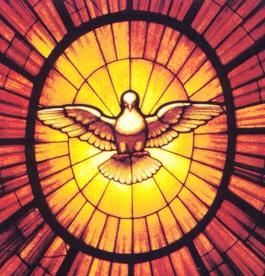
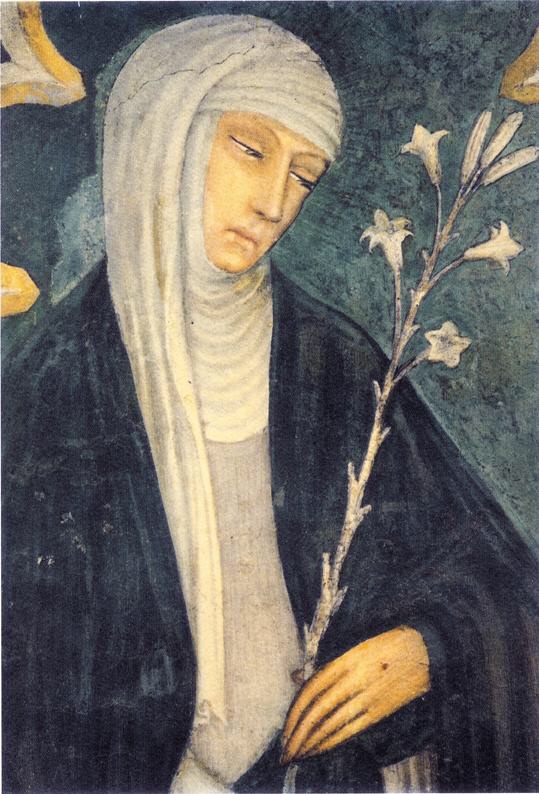
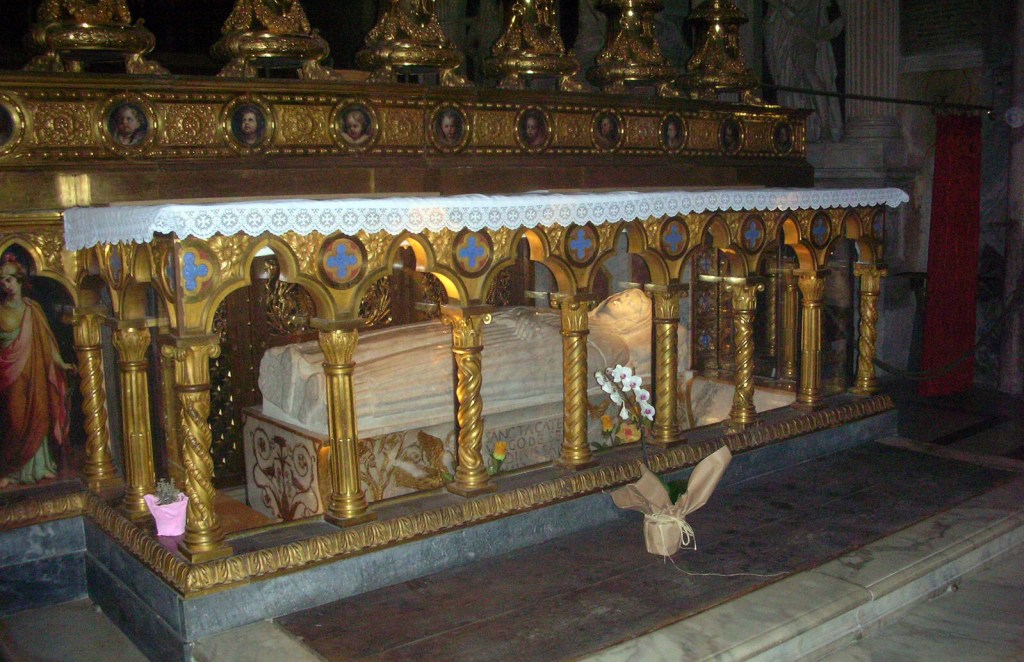


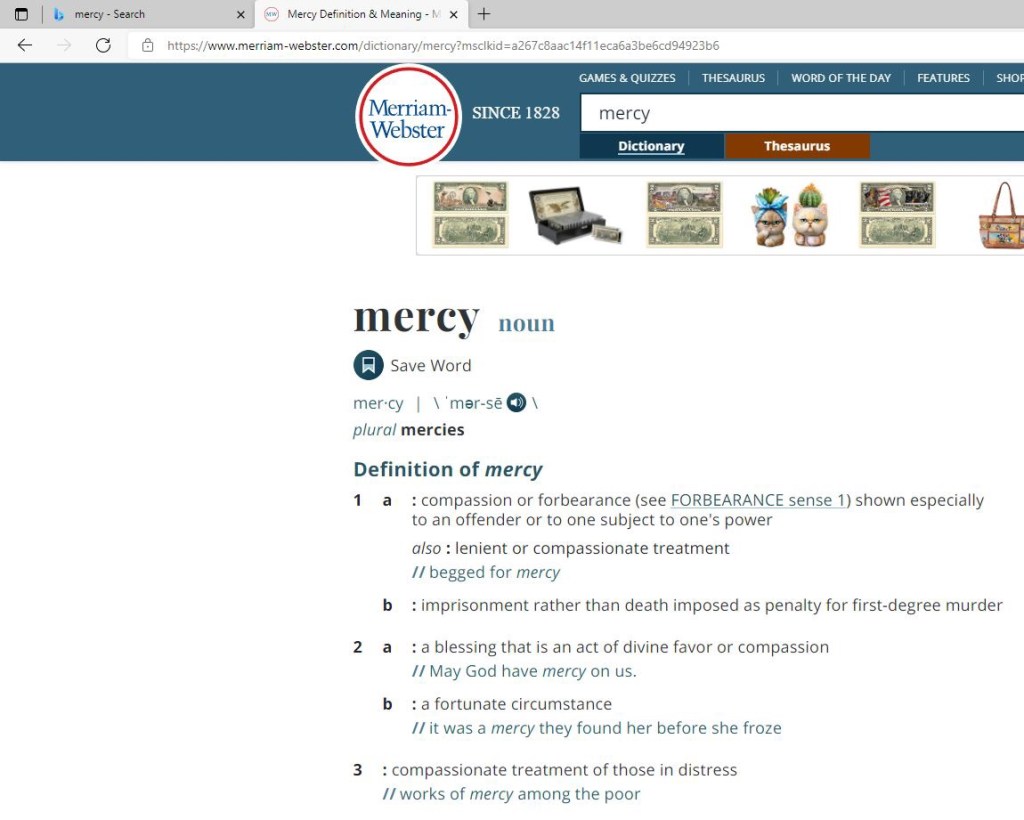


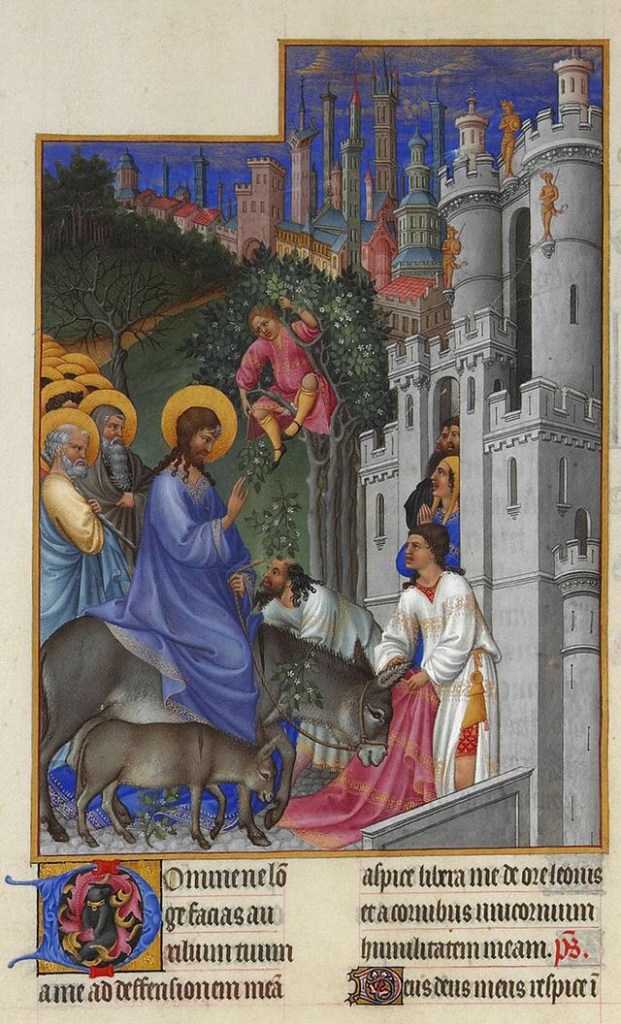


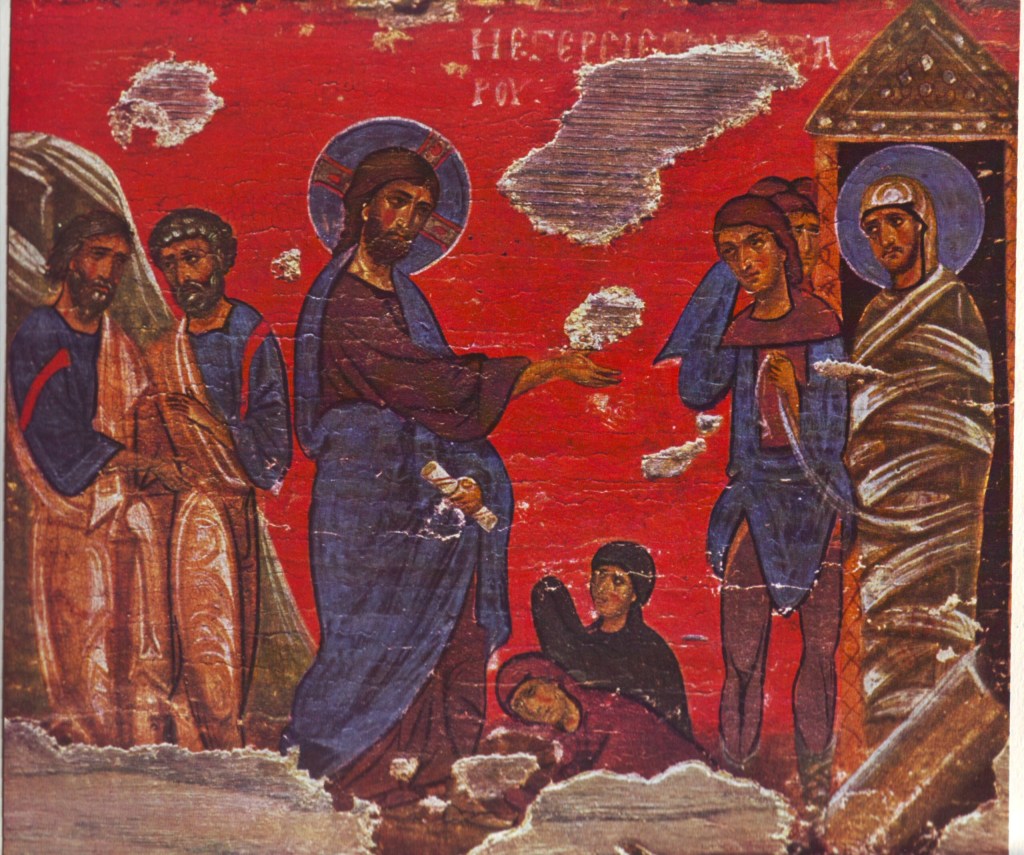

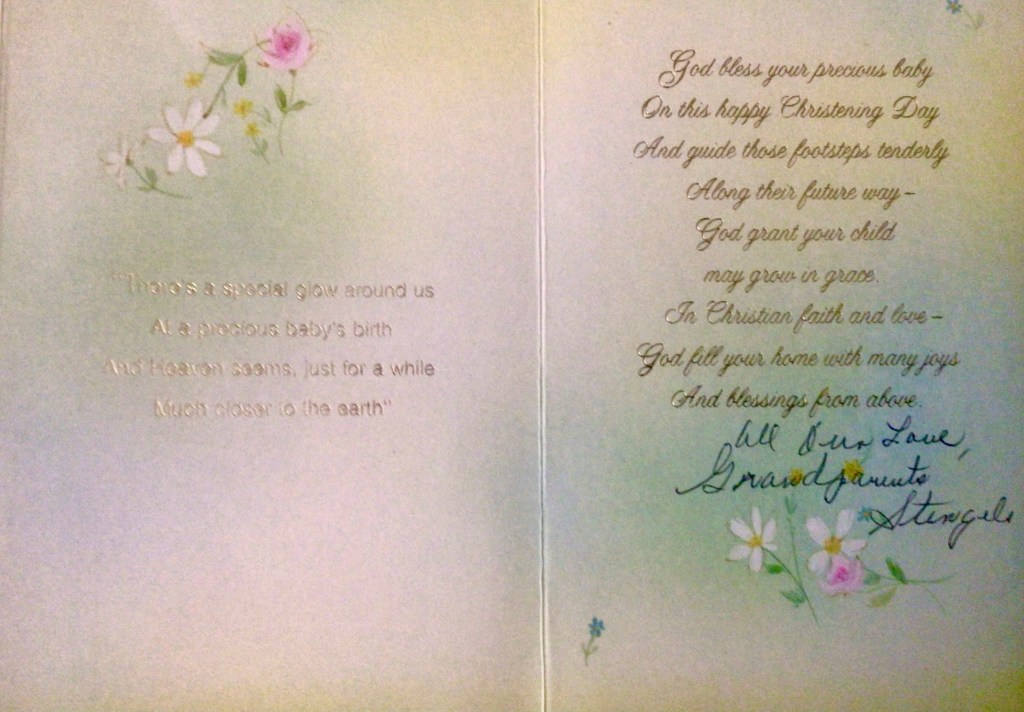
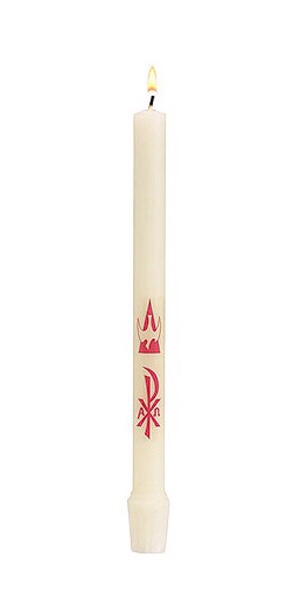
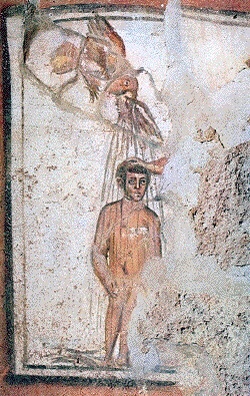


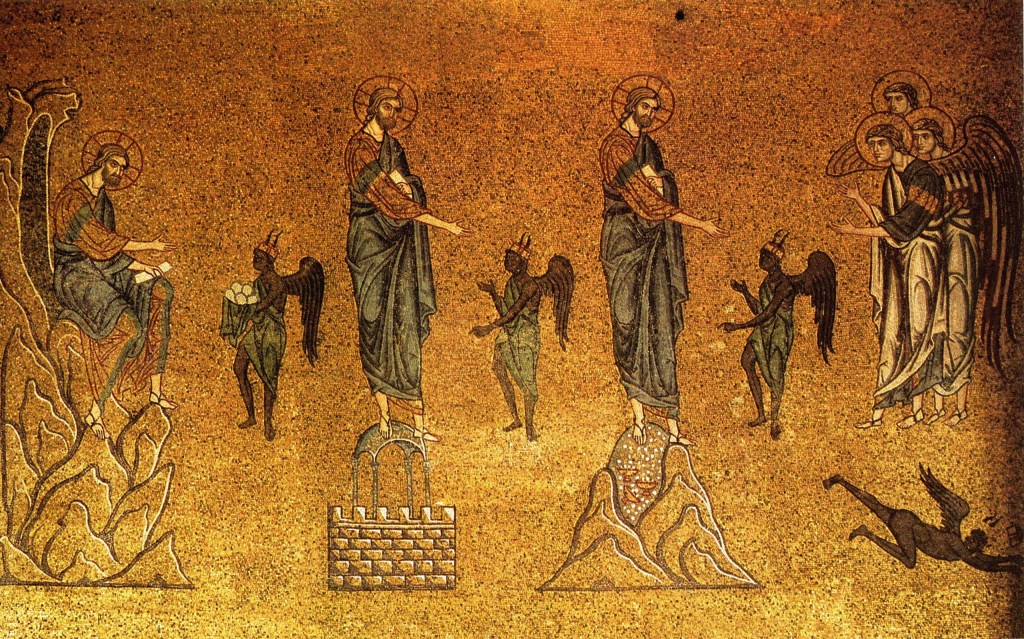



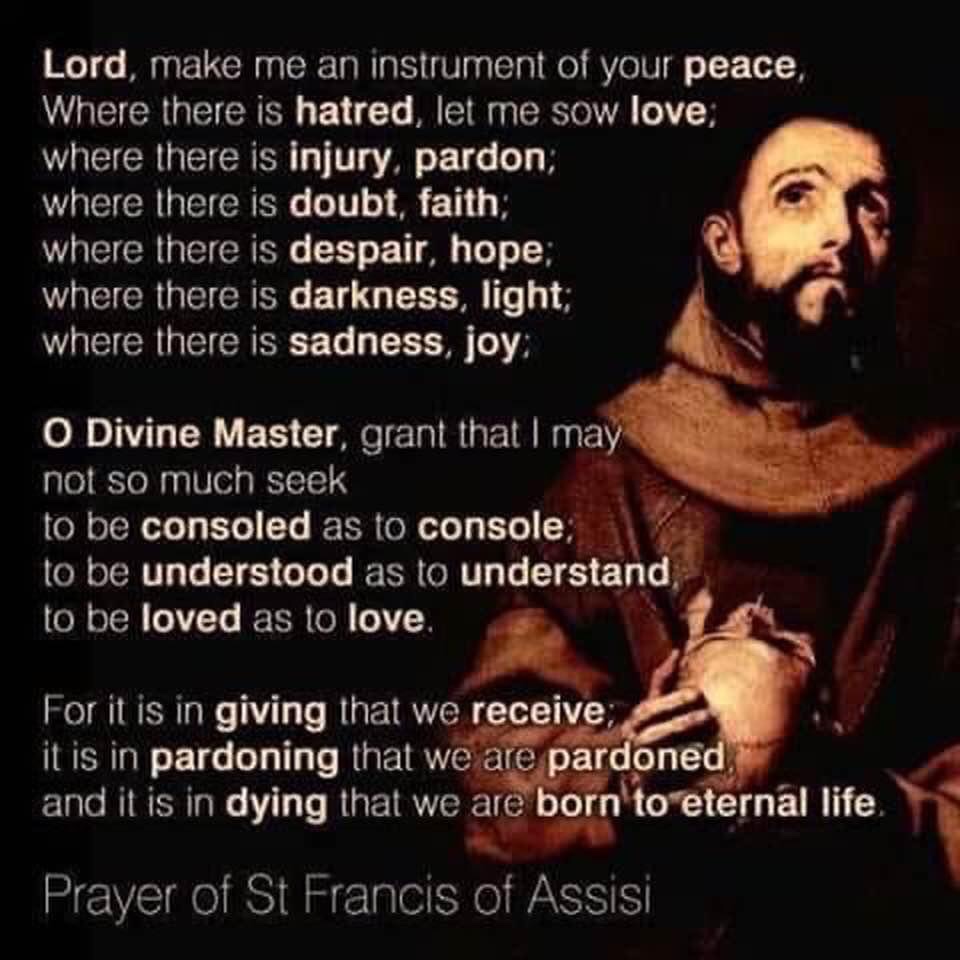
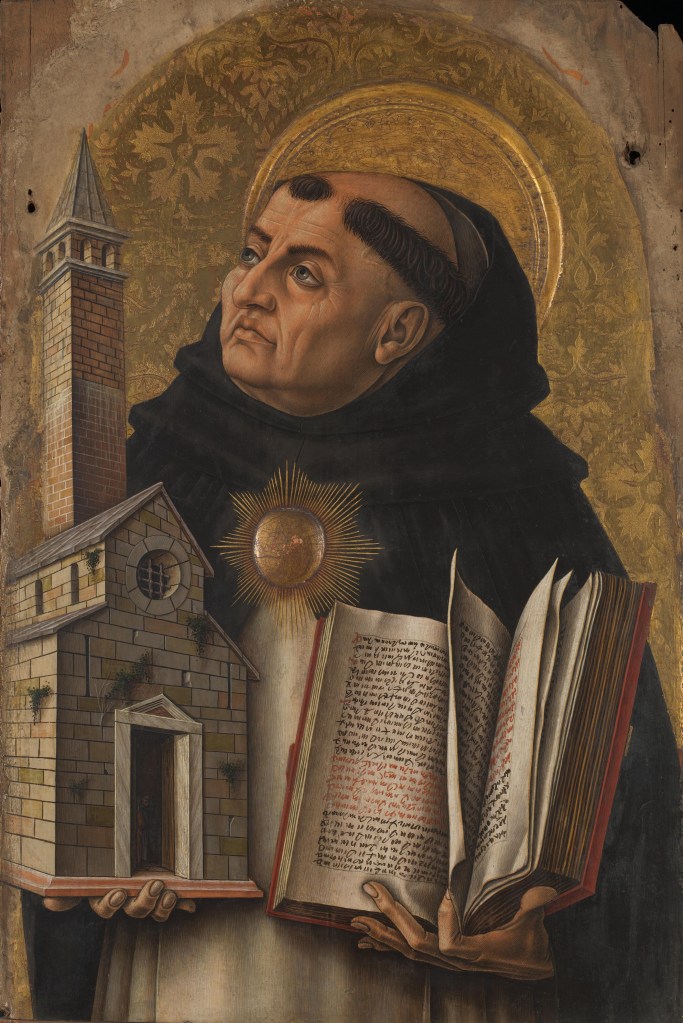

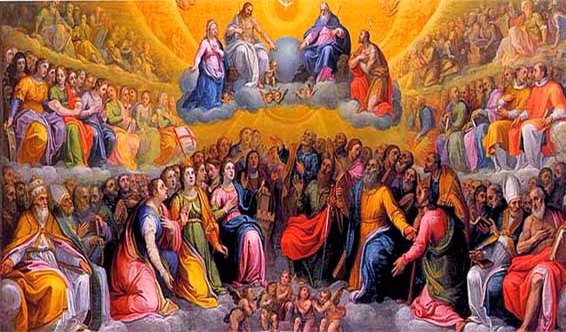
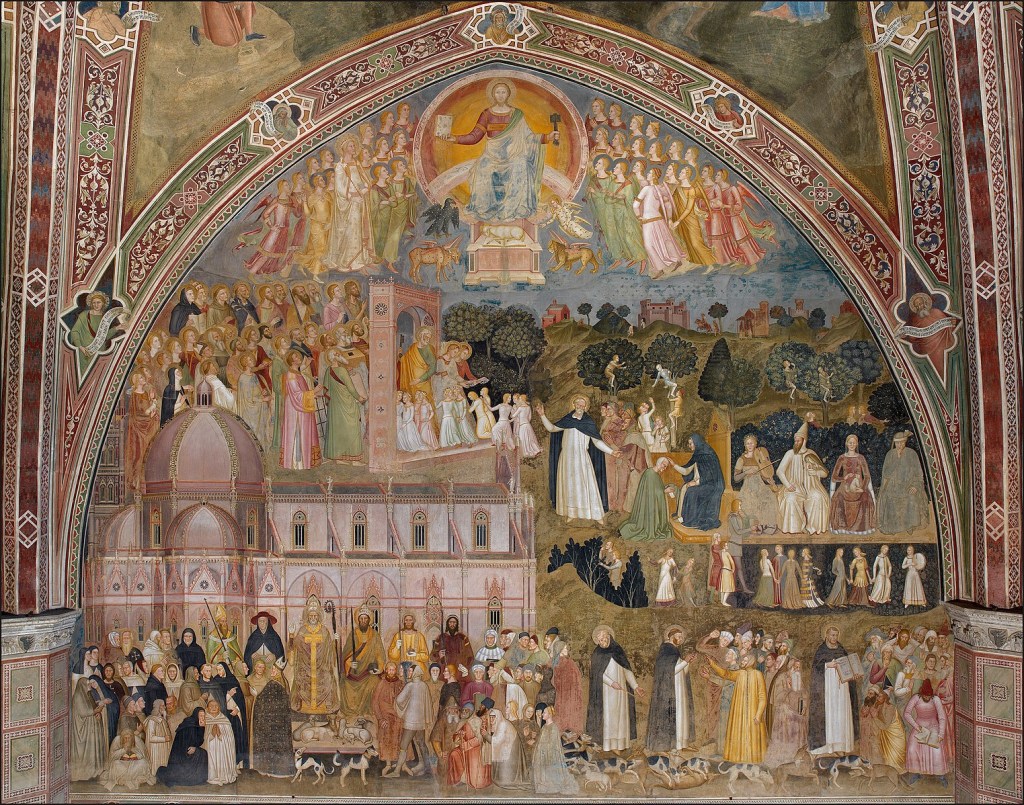
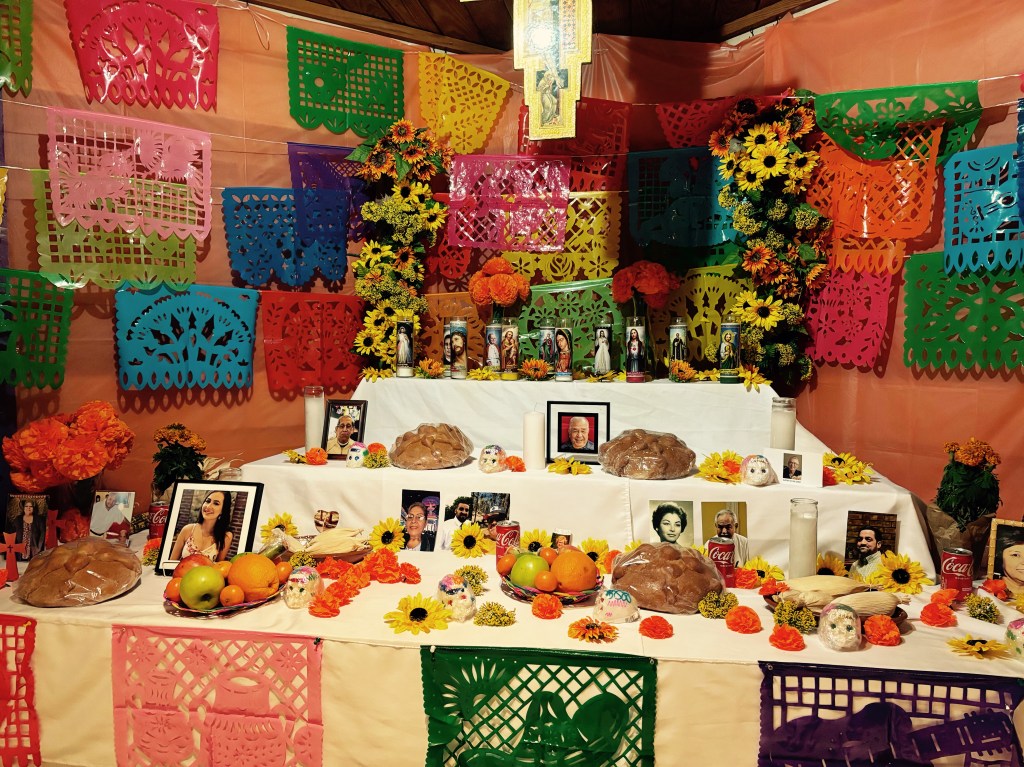

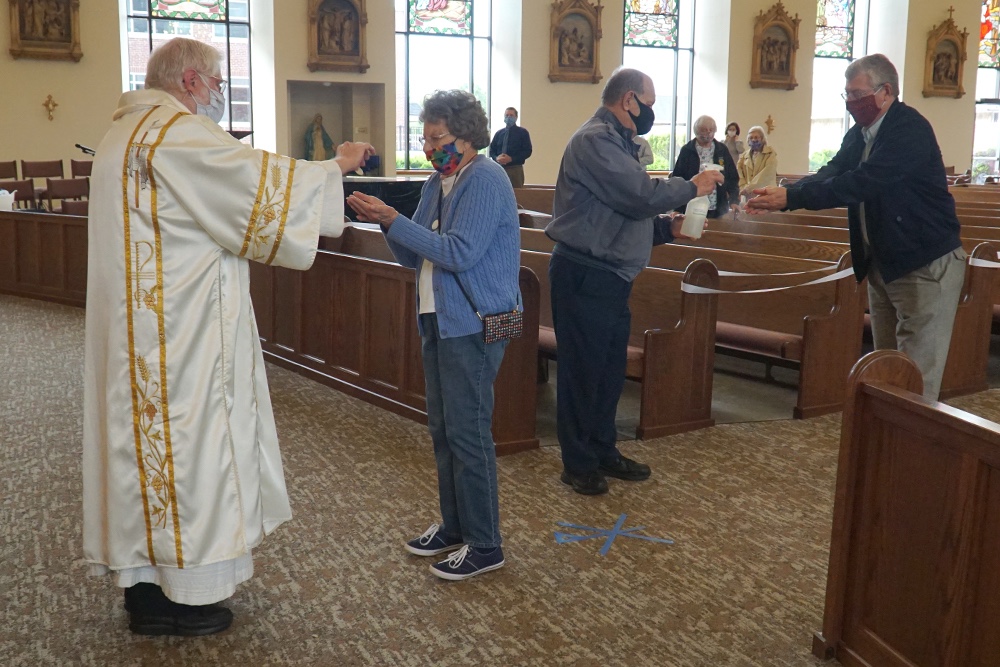


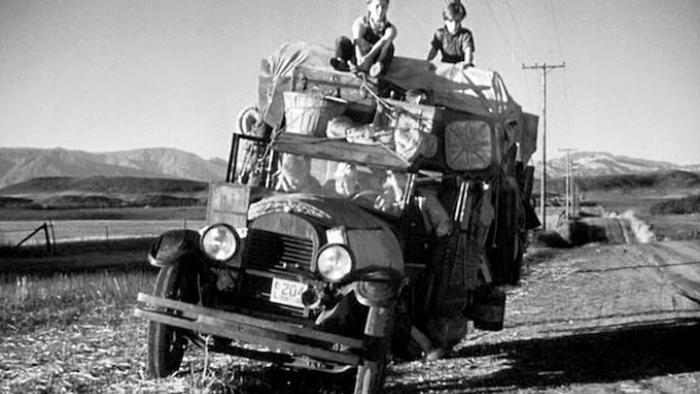



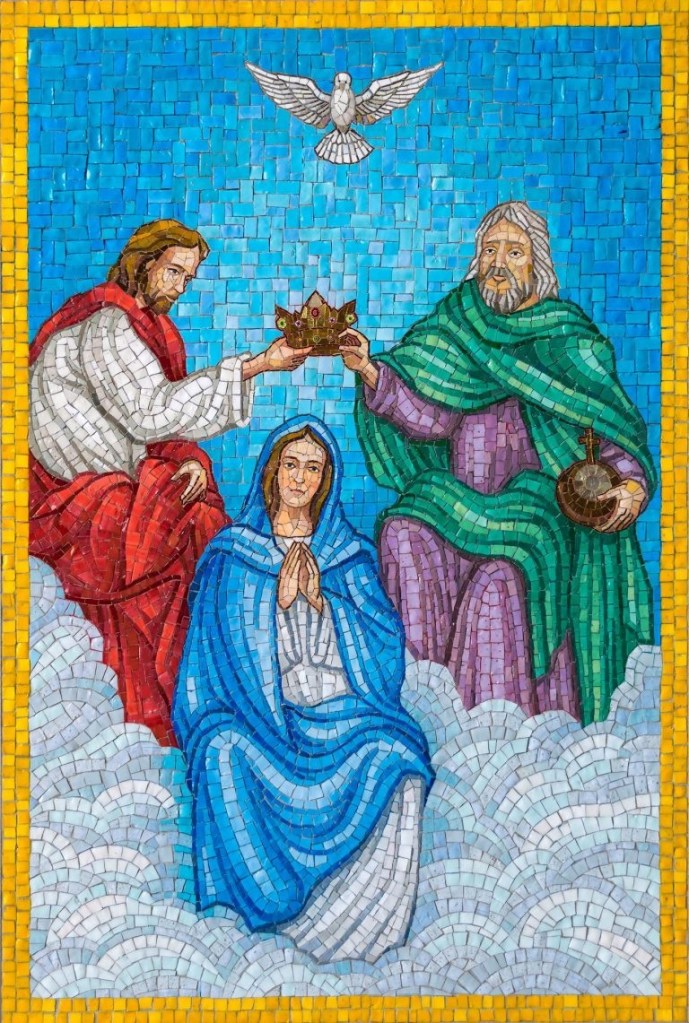



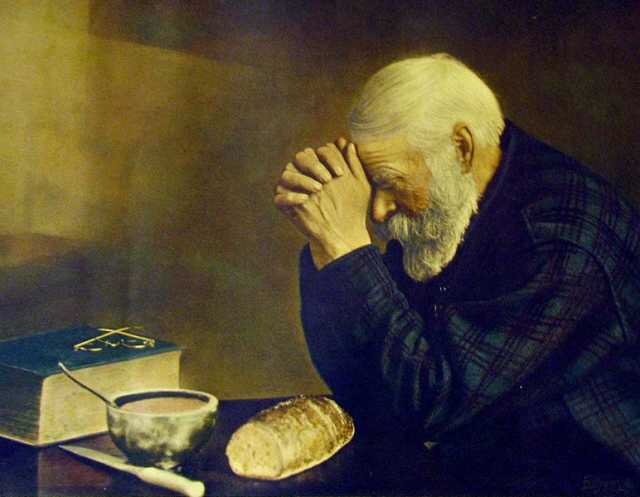


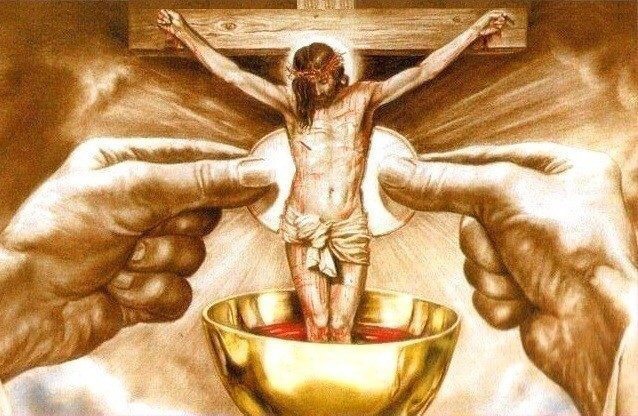

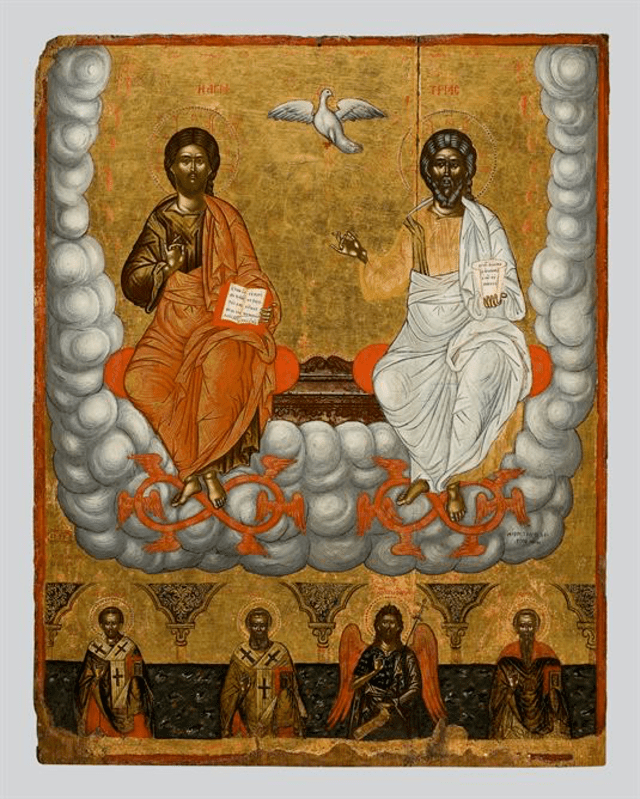
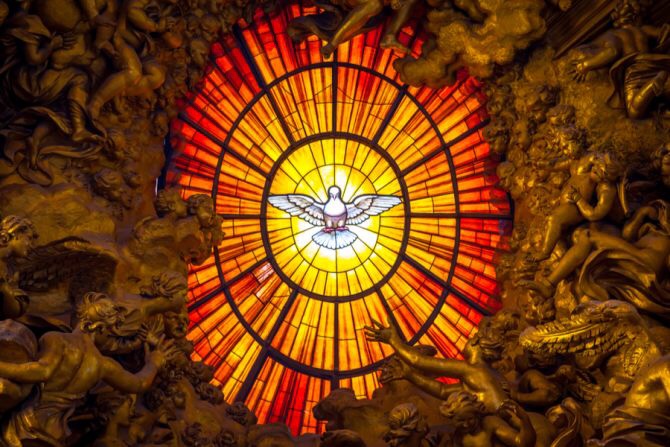

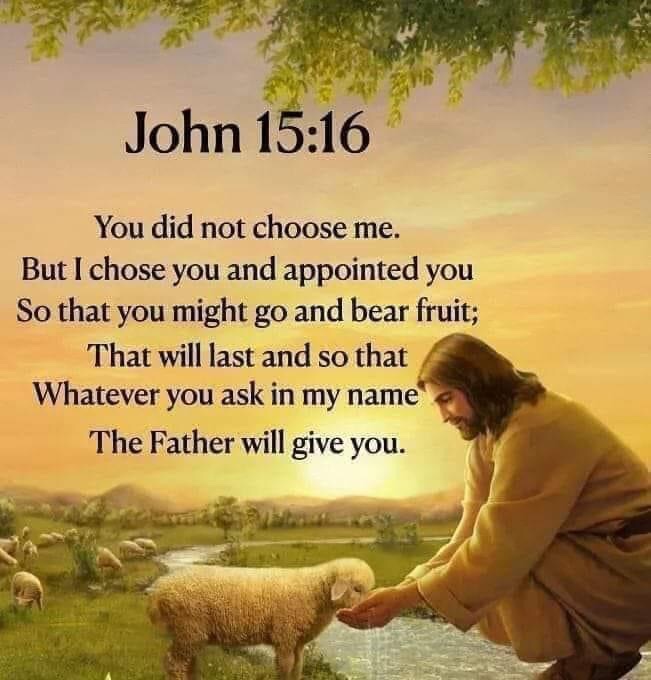
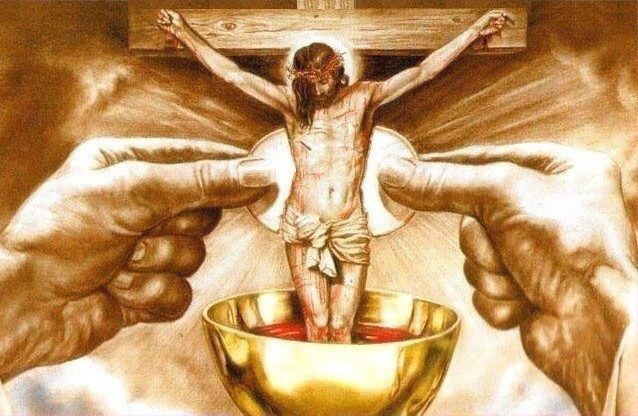


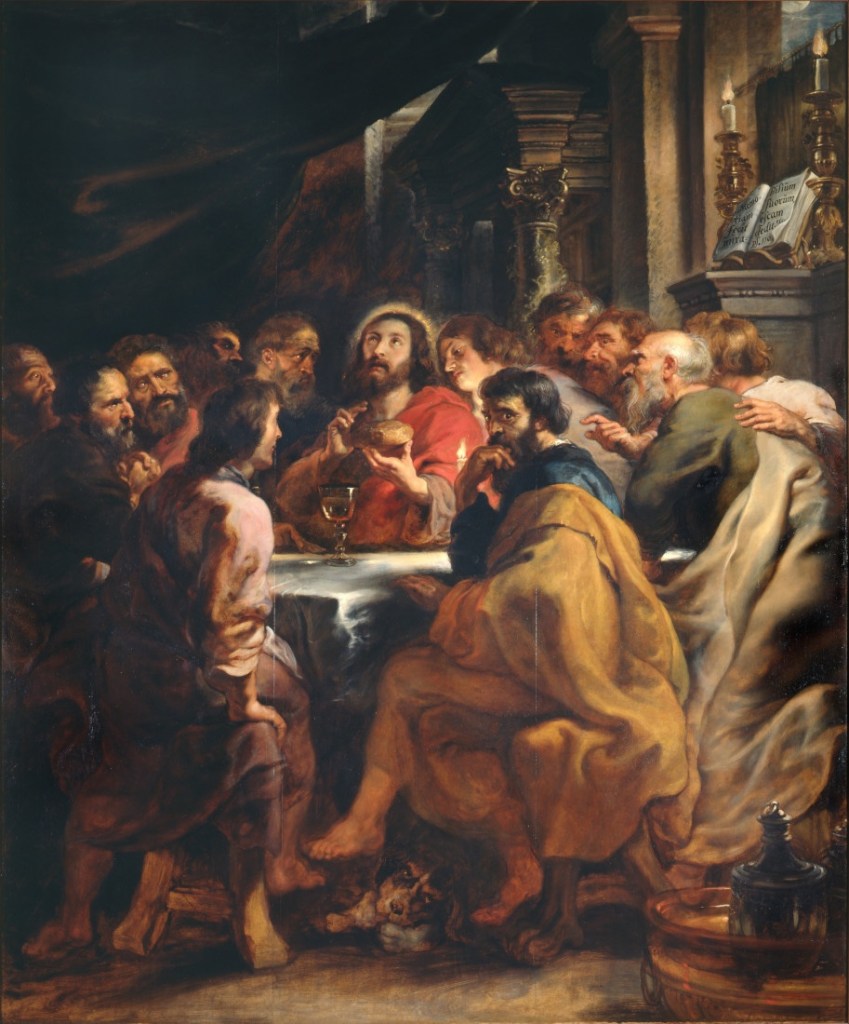


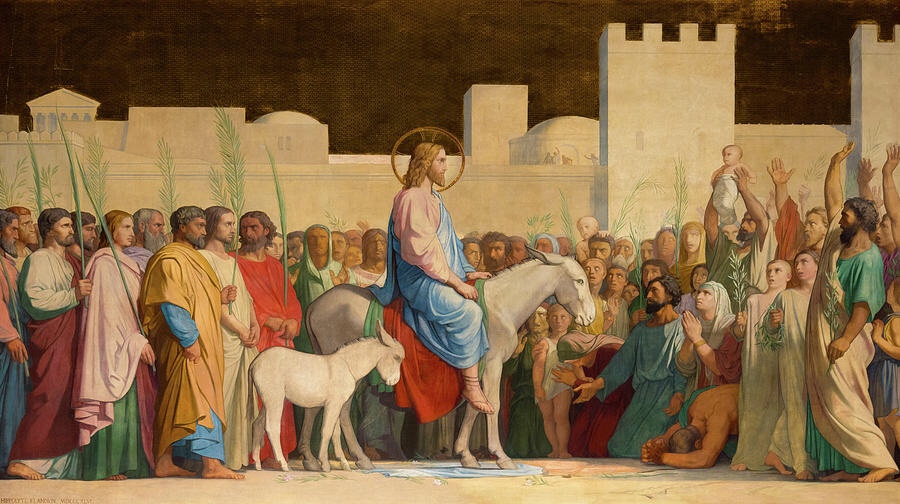


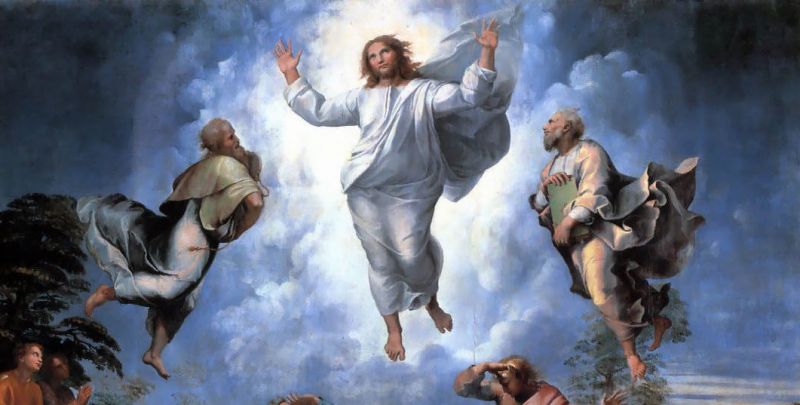
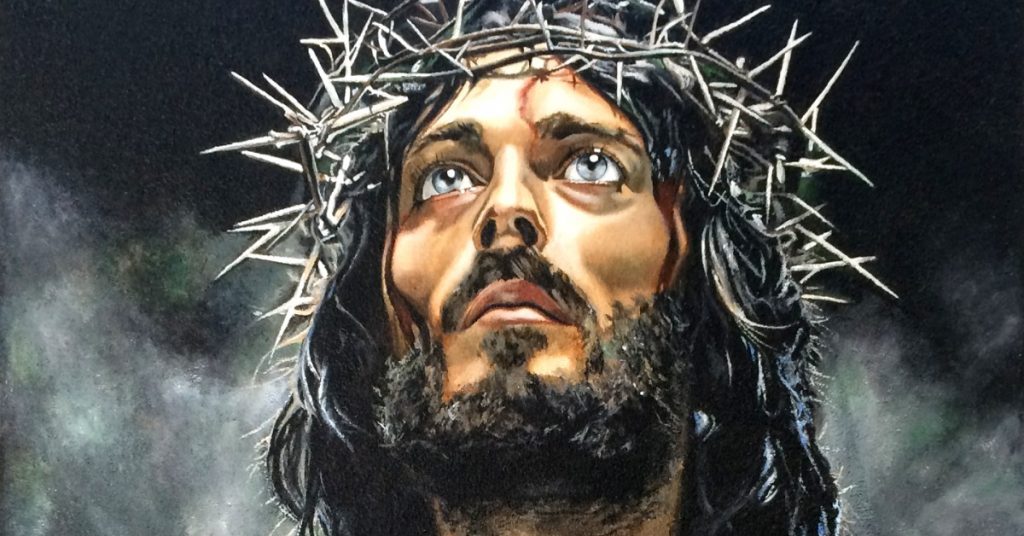
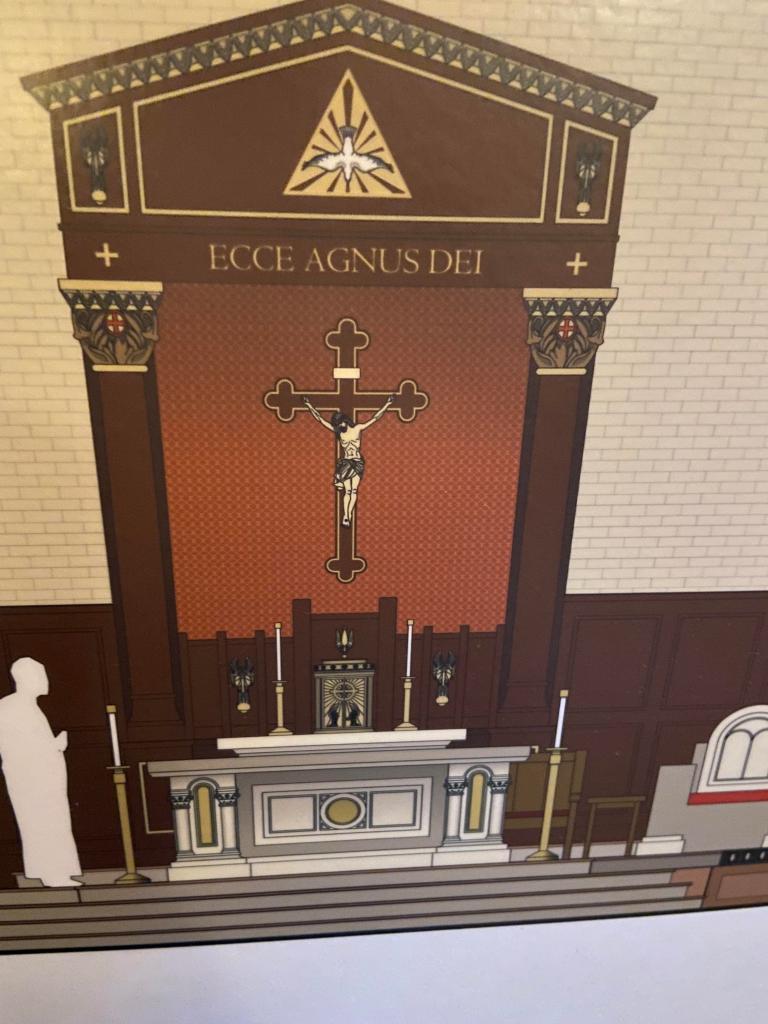

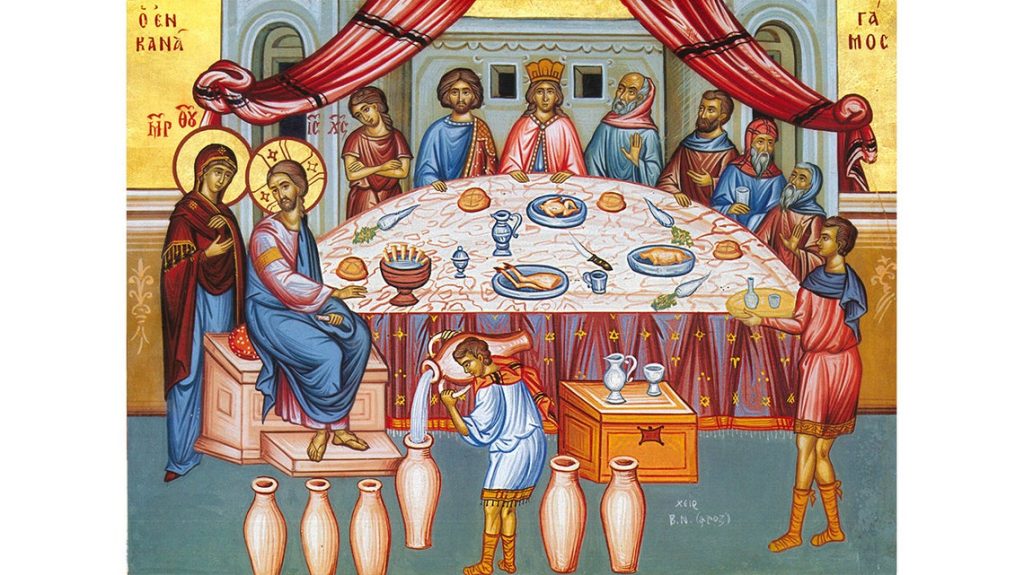
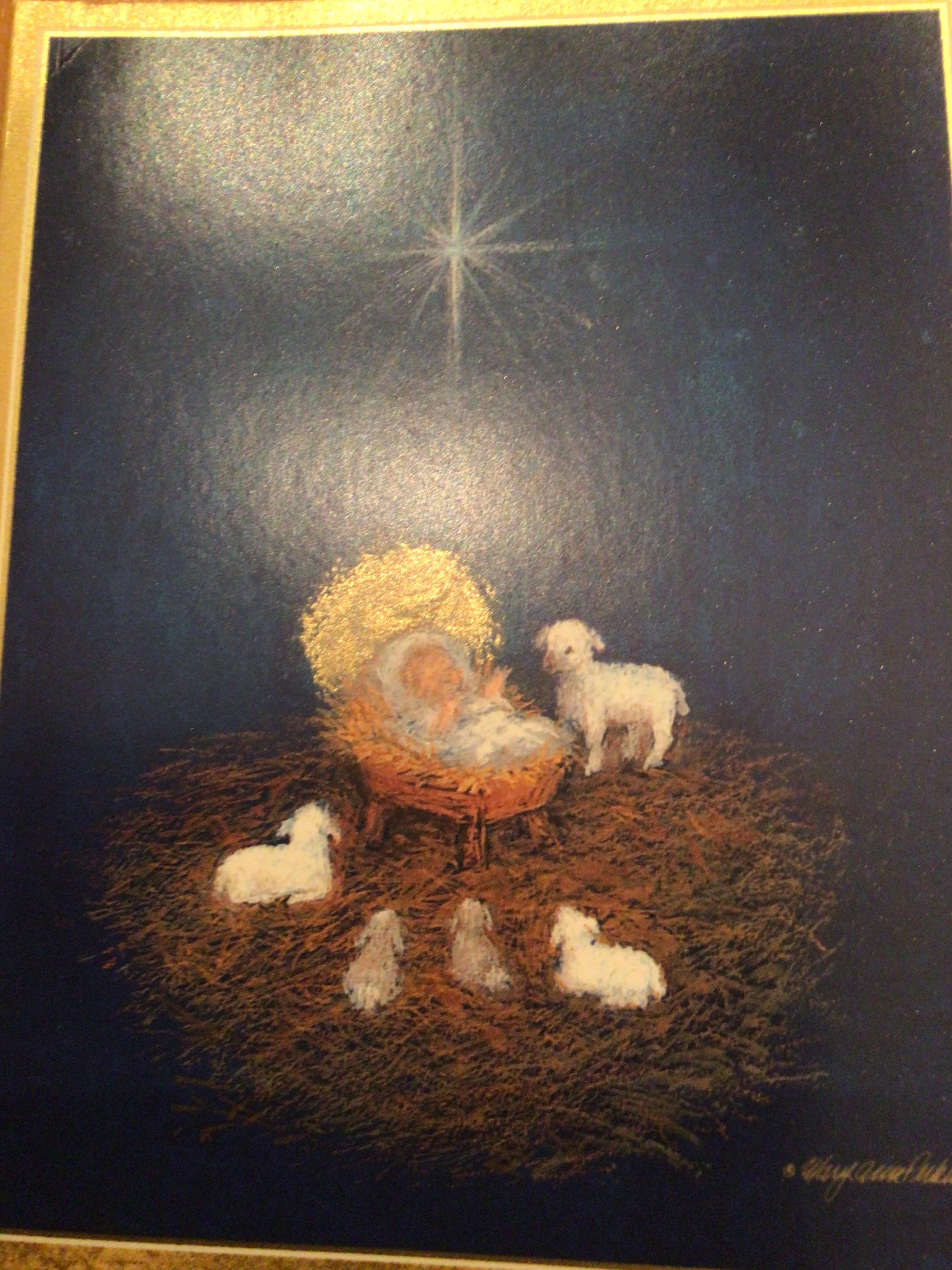
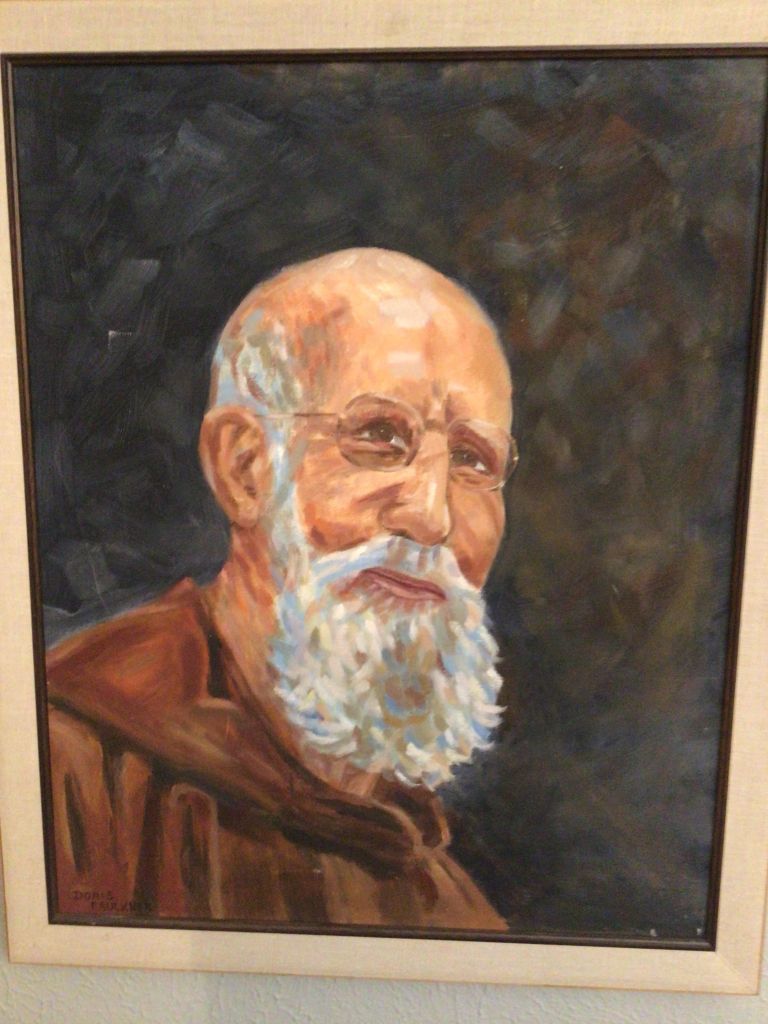



 StreetEvangelist


