Georges de Latour, Saint Joseph the Carpenter; retrieved from the public domain
In 1955 Pope Pius XII created the second feast of Saint Joseph the worker to coincide with the International Worker’s Day on May 1. Christians must not lose sight of the dignity of their labor mandated by God to Adam & Eve. Our labor resembles the creative aspect of God our Creator. Saint Joseph humbly cared for the holy family from his trade as a carpenter & provided for their wellbeing. We too should turn to Saint Joseph in which not much is mentioned. Saint Joseph faithfully carried out his daily labor without complaint and we too should approach our labor with prayer & ask the Lord God to help us grow in holiness just as Saint Joseph.
Here is a prayer attributed to Pope St. Pius X:
O Glorious St. Joseph, model of all those who are devoted to labor, obtain for me the grace to work conscientiously, putting the call of duty above my natural inclinations, to work with gratitude and joy, in a spirit of penance for the remission of my sins, considering it an honor to employ and develop by means of labor the gifts received from God, to work with order, peace, moderation and patience, without ever shrinking from weariness and difficulties, to work above all with purity of intention and detachment from self, having always death before my eyes and the account that I must render of time lost, of talents wasted, of good omitted, of vain complacency in success, so fatal to the work of God. All for Jesus, all through Mary, all after thine example, O Patriarch, St. Joseph. Such shall be my motto in life and in death. Amen.
From The Dialogue on Divine Providence by Catherine of Siena from the office of readings in the Roman Breviary
Eternal God, eternal Trinity, you have made the blood of Christ so precious through his sharing in your divine nature. You are a mystery as deep as the sea; the more I search, the more I find, and the more I find the more I search for you. But I can never be satisfied; what I receive will ever leave me desiring more. When you fill my soul I have an even greater hunger, and I grow more famished for your light. I desire above all to see you, the true light, as you really are.
I have tasted and seen the depth of your mystery and the beauty of your creation with the light of my understanding. I have clothed myself with your likeness and have seen what I shall be. Eternal Father, you have given me a share in your power and the wisdom that Christ claims as his own, and your Holy Spirit has given me the desire to love you. You are my Creator, eternal Trinity, and I am your creature. You have made of me a new creation in the blood of your Son, and I know that you are moved with love at the beauty of your creation, for you have enlightened me.
Eternal Trinity, Godhead, mystery deep as the sea, you could give me no greater gift than the gift of yourself. For you are a fire ever burning and never consumed, which itself consumes all the selfish love that fills my being. Yes, you are a fire that takes away the coldness, illuminates the mind with its light and causes me to know your truth. By this light, reflected as it were in a mirror, I recognise that you are the highest good, one we can neither comprehend nor fathom. And I know that you are beauty and wisdom itself. The food of angels, you gave yourself to man in the fire of your love.
You are the garment which covers our nakedness, and in our hunger you are a satisfying food, for you are sweetness and in you there is no taste of bitterness, O triune God!
Retrieved from the public domain Gemälde Jesus, wahrer Weinstock“ aus dem 17. Jh. in der Kirche St. Castor in Karden
Jn. 15:1-8
Jesus said to his disciples: “I am the true vine, and my Father is the vine grower. He takes away every branch in me that does not bear fruit, and every one that does he prunes so that it bears more fruit. You are already pruned because of the word that I spoke to you. Remain in me, as I remain in you. Just as a branch cannot bear fruit on its own unless it remains on the vine, so neither can you unless you remain in me. I am the vine, you are the branches. Whoever remains in me and I in him will bear much fruit, because without me you can do nothing. Anyone who does not remain in me will be thrown out like a branch and wither; people will gather them and throw them into a fire and they will be burned. If you remain in me and my words remain in you, ask for whatever you want and it will be done for you. By this is my Father glorified, that you bear much fruit and become my disciples.”
Today, we hear another I am statement from Jesus in which he says “I am the true vine.” We are reminded from this image Jesus presents that the source and summit of the life we have comes from Jesus, the true vine. In order to be strengthened and bear fruit, we must always come back to Jesus, the Vine of life. In prayer and through the gift of the sacramental life do we receive the nourishment from Jesus as the Vine to nourish our roots that will wither if not firmly connected to His will. Our life in the Spirit finds its nourishment from Jesus and in holy scripture. We are also reminded that we must continuously come back to Jesus as the Vine in which all spiritual and corporal works of mercy are rooted in Jesus, the Lord.
Today, let us ask God for the grace to be firmly connected to the Vine so that we will bear much fruit. Amen.
Image retrieved from: Jesus: The Good Shepherd (op.org) “The image above is from the stalls of the Thisle Chapel in Edinburgh’s St Giles Cathedral. “
Today’s readings in the Catholic church during this Easter season are oftentimes known as “Good Shepherd” Sunday per the selection from sacred scripture. Today is also the World Day of Prayer for Vocations. We must always remember to pray for our men and women called by God that receive the spiritual call to imitate Jesus as the Divine Shepherd.
In the Gospel passage from John, chapter 10 verses 11-18 Jesus proclaims the following:
Jesus said: “I am the good shepherd. A good shepherd lays down his life for the sheep. A hired man, who is not a shepherd and whose sheep are not his own, sees a wolf coming and leaves the sheep and runs away, and the wolf catches and scatters them. This is because he works for pay and has no concern for the sheep. I am the good shepherd, and I know mine and mine know me, just as the Father knows me and I know the Father; and I will lay down my life for the sheep. I have other sheep that do not belong to this fold. These also I must lead, and they will hear my voice, and there will be one flock, one shepherd. This is why the Father loves me, because I lay down my life in order to take it up again. No one takes it from me, but I lay it down on my own. I have power to lay it down, and power to take it up again. This command I have received from my Father.”
Oftentimes, as human beings, we are much like sheep. We tend to lose focus of the important aspects of our Christian life and wander off into danger. We let the petty distractions of the world and vainglory dull our senses and higher calling of being an Easter people with eyes always pointed to God and the Parousia or second coming. We are one Christian church despite the many rites, denominations and faith traditions that should always seek the goal of evangelizing others as our primary call. Bringing our fellow “sheep” closer to knowing who our great and awesome God is through the second person of the Trinity, Jesus, should be our ultimate task. Today, as we reflect on the good news, are you like the hired shepherd that wishes to flee and run from danger? Perhaps, we are not ready to have steadfast courage to face the many wolves in our life and possibly lay down our very own life for the “sheep”, or our brothers and sisters in need of His saving mercy in distress or danger? As the first letter from John reminds us, the love that God the Father has bestowed upon us allows us to be called children of God (1 Jn. 3:1). Jesus is the Good Shepherd who will never lead us astray. Those holy men and women that follow the model of our Good Shepherd to find the lost sheep among the wolves and danger should receive our heartfelt prayers and support.
According to the Vatican’s Pontifical Yearbook of 2024 and Statistical Yearbook of 2022 there are more Catholics with fewer vocations. The number of baptized Catholics increased by 1% from 1.376 billion in 2021 to 1.390 billion in 2022. The number of priests globally declined from 407,872 to 407,730. Africa and Asia saw an increase in vocations while the Americas, Europe and Oceania saw declines. Religious communities for men saw a decrease from 49,774 to 49,414. For women religious, there was a 1.6% decrease from 608,958 to 599,228 globally from 2021 to 2022 (https://www.vaticannews.va/en/vatican-city/news/2024-04/vatican-central-statistical-office-church-pontifical-yearbook.html).
Let us pray for those who work in the Lord’s harvest, that they may fully imitate our Good Shepherd, who brings life to others in a troubled world. Let us examine our own Christian worldview and take up our mission to not only serve others, but to boldly and courageously defend ourselves and others from the wolves that distract us from our mission. May we bring our brothers and sisters closer to knowing Him through our very actions, words and deeds this day for Jesus is our Good Shepherd.
Pray for all priests that they may receive God’s grace to be good and holy priests. Pray for those discerning a vocation to the priesthood and religious life. Sometimes we may not like certain priests at a parish – have you prayed for them lately or provided words of encouragement? According to a study conducted by the Catholic Project at the Catholic University of America in Washington DC regarding burnout, “the report says that 45% of priests surveyed reported at least one symptom of ministry burnout, unevenly distributed between diocesan (50%) and religious (33%) priests. Only 9% exhibited severe burnout, the report says, but the report’s authors cautioned that younger priests were significantly more likely than older priests to experience burnout.” (https://www.catholicnewsagency.com/news/252588/major-survey-of-catholic-priests-finds-trust-issues-burnout-fear-of-false-allegations).
Prayer for Priests by Saint John Vianney God please give your Church today many more priests after your own heart. May they be worthy representatives of Christ the Good Shepherd. May they wholeheartedly devote themselves to prayer and penance; Being examples of humility and poverty; Shining models of holiness; Tireless and powerful preachers of the Word of God; Zealous dispensers of your grace in the sacraments. May their loving devotion to your Son Jesus in the Eucharist and to Mary his Mother Be the twin fountains of fruitfulness for their ministry. Amen.
The supper at Emmaus; Christ sitting behind a table, his nimbus stretching across the entire background, to the right of the table Cleophas, to the left the owner of the inn, both looking surprised as Jesus is breaking the bread. Two lines of letterpress below. 1530 retrieved from public domain
Lk. 24: 35-48
The two disciples recounted what had taken place on the way, and how Jesus was made known to them in the breaking of bread.
While they were still speaking about this, he stood in their midst and said to them, “Peace be with you.” But they were startled and terrified and thought that they were seeing a ghost. Then he said to them, “Why are you troubled? And why do questions arise in your hearts? Look at my hands and my feet, that it is I myself. Touch me and see, because a ghost does not have flesh and bones as you can see I have.” And as he said this, he showed them his hands and his feet. While they were still incredulous for joy and were amazed, he asked them, “Have you anything here to eat?” They gave him a piece of baked fish; he took it and ate it in front of them.
He said to them, “These are my words that I spoke to you while I was still with you, that everything written about me in the law of Moses and in the prophets and psalms must be fulfilled.” Then he opened their minds to understand the Scriptures. And he said to them, “Thus it is written that the Christ would suffer and rise from the dead on the third day and that repentance, for the forgiveness of sins, would be preached in his name to all the nations, beginning from Jerusalem. You are witnesses of these things.”
Today, our church commemorates Laetare Sunday from the Latin “to rejoice” where we see a change in the vestments worn to a rose color. We recall that while we are wandering through our spiritual deserts in conducting our penances of increased prayer, almsgiving, fasting & drawing closer to the Lord, we are awaiting with joyful anticipation that Easter moment of resurrection.
However, just as we await with joy what is to come on Easter Sunday, we should contemplate the Gospel message today from John where the gospel writer describes a God of love. This God of ours who sanctified our condition through a selfless act of love & sacrifice bestows on us that saving grace for our transgressions. The true joy of Laetare Sunday reminds us that we are called to be selfless and humble servants in our own life for our brothers and sisters in our world. Even being a Christ to those we disagree with and our enemies requires a heart that is joyful and sincere. How do we find such joy in our world today?
We may wish to contemplate the fifth station of the cross in which Simon the Cyrene was made to help Jesus carry the cross. In a sense, Simon becomes the first Christian heeding the call of Jesus to take up the cross and follow him (Lk. 9:23). Our true joy is one where we imitate the humility of Jesus and take up the cross.
Retrieved from the public domain Simon van Cyrene wordt gedwongen Christus’ kruis te helpen dragen from Wikimedia Commons
As the responsorial psalm reminds us, “let our tongue be silenced if we should forget the Lord.” How can we forget the Lord’s great love for us unless we are lacking a heart of humility & piety and aren’t open to receiving His grace? Perhaps we are just going through the motions? Maybe we have yet to help Jesus take up the cross? The cross, a symbol of that sin and barrier that separates us from having the true joy of drawing closer to God’s love for each and every one of us is one we must carry.
The letter to the Ephesians reminds us of this great act of love and joy we hold in our hearts from Jesus’s passion. “God, who is rich in mercy, because of the great love he had for us, even when we were dead in our transgressions, brought us to life withChrist” (Eph. 2:4-5).
John’s gospel chapter 3 reminds us that Jesus is the light that came into the world, yet some prefer darkness to the light. In order to find the true joy of the Lenten season, we must not be afraid to cast those obstacles and sinful behaviors into the light. We must be open to receiving the light of Christ Jesus in the sacrament of reconciliation this Lent. When we receive absolution for the forgiveness of our sin in the sacrament of reconciliation, we receive the joy of Jesus’s love for us – a love that reminds us of that popular verse from John, chapter 3 verse 16 found in today’s gospel: “For God so loved the world that he gave his only Son, so that everyone who believes in him might not perish but might have eternal life.”
Today, let us take up our cross and cast aside those sins and obstacles in our life that prevent us from having a joyful heart. Let us approach the Lord today in humility and be open to forgiveness in order to receive His grace so that we can better imitate His joyful presence to our world we live in.
Reredos of St Michael Within, Chapel Court, Bath, Somerset. The mosaic backdrop represents the Lamb of God, with the Latin Ecce Angus Dei “Behold the Lamb of God”. From Wikimedia Commons https://commons.wikimedia.org/wiki/File:Reredos,The_Chapel_of_St_Michael_Within–geograph.org.uk-_988319.jpg
Spring is on the horizon and the commercialization of Easter is on full display in the stores. The Easter bunny has little to do with the true reason for the season. As John the Baptist proclaimed at the sight of Jesus, “Behold the Lamb of God, who takes away the sin of the world.” (Jn.1:29).
As the prophet Isiah reminds us as a prophecy of Jesus’s ultimate sacrifice, He is “Like a lamb led to slaughter or a sheep silent before shearers, he did not open his mouth.” (Is. 53.7).
As we journey throughout the rest of this Lenten season, we should try to abstain from partaking of the early Easter rush. We are still journeying within our Lenten deserts where we are recalling Jesus, the Lamb of God slain for our transgressions as the ultimate sacrifice. Just as the blood of the lamb marked the doorposts of the Israelite peoples in captivity during Passover, so too should we live our Lenten journey with the indelible mark of our baptism as Christian witnesses.
It is not too late to do penance, give alms or to draw closer to our Lord in prayer. We await the greatest season of Easter reminding us of this Christian mystery of our redemption and new life. As Revelation reminds us, “Then I saw standing in the midst of the throne and the four living creatures and the elders a Lamb that seemed to have been slain.” (Rev. 5:6).
Next time at mass, take heart and reflect on these words at the invitation of holy communion:
Behold the Lamb of God, behold him who takes away the sins of the world. Blessed are those called to the supper of the Lamb. Lord, I am not worthy that you should enter under my roof, but only say the word and my soul shall be healed.
From a sermon by Saint Leo the Great, pope (Sermo 4 de natali ipsius, 2-3: PL 54, 149-151) from the office of readings
The Church of Christ rises on the firm foundation of Peter’s faith
Out of the whole world one man, Peter, is chosen to preside at the calling of all nations, and to be set over all the apostles and all the fathers of the Church. Though there are in God’s people many shepherds, Peter is thus appointed to rule in his own person those whom Christ also rules as the original ruler. Beloved, how great and wonderful is this sharing of his power that God in his goodness has given to this man. Whatever Christ has willed to be shared in common by Peter and the other leaders of the Church, it is only through Peter that he has given to others what he has not refused to bestow on them.
The Lord now asks the apostles as a whole what men think of him. As long as they are recounting the uncertainty born of human ignorance, their reply is always the same.
But when he presses the disciples to say what they think themselves, the first to confess his faith in the Lord is the one who is first in rank among the apostles.
Peter says: You are the Christ, the Son of the living God. Jesus replies: Blessed are you, Simon Bar-Jona, for flesh and blood has not revealed it to you, but my Father who is in heaven. You are blessed, he means, because my Father has taught you. You have not been deceived by earthly opinion, but have been enlightened by inspiration from heaven. It was not flesh and blood that pointed me out to you, but the one whose only-begotten Son I am.
He continues: And I say to you. In other words, as my Father has revealed to you my godhead, so I in my turn make known to you your pre-eminence. You are Peter: though I am the inviolable rock, the cornerstone that makes both one, the foundation apart from which no one can lay any other, yet you also are a rock, for you are given solidity by my strength, so that which is my very own because of my power is common between us through your participation.
And upon this rock I will build my Church, and the gates of hell shall not prevail against it. On this strong foundation, he says, I will build an everlasting temple. The great height of my Church, which is to penetrate the heavens, shall rise on the firm foundation of this faith.
The gates of hell shall not silence this confession of faith; the chains of death shall not bind it. Its words are the words of life. As they lift up to heaven those who profess them, so they send down to hell those who contradict them.
Blessed Peter is therefore told: To you I will give the keys of the kingdom of heaven. Whatever you bind on earth is also bound in heaven. Whatever you loose on earth shall be loosed also in heaven.
The authority vested in this power passed also to the other apostles, and the institution established by this decree has been continued in all the leaders of the Church. But it is not without good reason that what is bestowed on all is entrusted to one. For Peter received it separately in trust because he is the prototype set before all the rulers of the Church.
Presentation of Jesus in the Temple from the public domain at Wikimedia Commons
From the Collect at Mass:
Almighty ever-living God, we humbly implore your majesty
that, just as your Only Begotten Son
was presented on this day in the Temple
in the substance of our flesh,
so, by your grace,
we may be presented to you with minds made pure.
Through our Lord Jesus Christ, your Son,
who lives and reigns with you in the unity of the Holy Spirit,
God, for ever and ever.
From the Gospel Reading (New American Bible Re) Lk.2:22-40
When the days were completed for their purification according to the law of Moses, they took him up to Jerusalem to present him to the Lord, just as it is written in the law of the Lord, “Every male that opens the womb shall be consecrated to the Lord,” and to offer the sacrifice of “a pair of turtledoves or two young pigeons,” in accordance with the dictate in the law of the Lord.
Now there was a man in Jerusalem whose name was Simeon. This man was righteous and devout, awaiting the consolation of Israel, and the holy Spirit was upon him. It had been revealed to him by the holy Spirit that he should not see death before he had seen the Messiah of the Lord. He came in the Spirit into the temple; and when the parents brought in the child Jesus to perform the custom of the law in regard to him, hetook him into his arms and blessed God, saying:
Now, Master, you may let your servant go
in peace, according to your word,
for my eyes have seen your salvation,
which you prepared in sight of all the peoples,
a light for revelation to the Gentiles,
and glory for your people Israel.”
The child’s father and mother were amazed at what was said about him; and Simeon blessed them and said to Mary his mother, “Behold, this child is destined for the fall and rise of many in Israel, and to be a sign that will be contradicted and you yourself a sword will pierce) so that the thoughts of many hearts may be revealed.” There was also a prophetess, Anna, the daughter of Phanuel, of the tribe of Asher. She was advanced in years, having lived seven years with her husband after her marriage, and then as a widow until she was eighty-four. She never left the temple, but worshiped night and day with fasting and prayer. And coming forward at that very time, she gave thanks to God and spoke about the child to all who were awaiting the redemption of Jerusalem. When they had fulfilled all the prescriptions of the law of the Lord, they returned to Galilee, to their own town of Nazareth. The child grew and became strong, filled with wisdom; and the favor of God was upon him.
Saint Francis de Sales Oratory (St. Louis, Missouri) – St. Francis de Sales mosaic from Wikimedia Commons author RickMorais
From an excerpt from Introduction to The Devout Life by Saint Francis de Sales
When God the Creator made all things, he commanded the plants to bring forth fruit each according to its own kind; he has likewise commanded Christians, who are the living plants of his Church, to bring forth the fruits of devotion, each one in accord with his character, his station and his calling.
I say that devotion must be practised in different ways by the nobleman and by the working man, by the servant and by the prince, by the widow, by the unmarried girl and by the married woman. But even this distinction is not sufficient; for the practice of devotion must be adapted to the strength, to the occupation and to the duties of each one in particular.
Tell me, please, my Philothea, whether it is proper for a bishop to want to lead a solitary life like a Carthusian; or for married people to be no more concerned than a Capuchin about increasing their income; or for a working man to spend his whole day in church like a religious; or on the other hand for a religious to be constantly exposed like a bishop to all the events and circumstances that bear on the needs of our neighbour. Is not this sort of devotion ridiculous, unorganised and intolerable? Yet this absurd error occurs very frequently; but in no way does true devotion, my Philothea, destroy anything at all. On the contrary, it perfects and fulfils all things. In fact if it ever works against, or is inimical to, anyone’s legitimate station and calling, then it is very definitely false devotion.
The bee collects honey from flowers in such a way as to do the least damage or destruction to them, and he leaves them whole, undamaged and fresh, just as he found them. True devotion does still better. Not only does it not injure any sort of calling or occupation, it even embellishes and enhances it.
Moreover, just as every sort of gem, cast in honey, becomes brighter and more sparkling, each according to its colour, so each person becomes more acceptable and fitting in his own vocation when he sets his vocation in the context of devotion. Through devotion your family cares become more peaceful, mutual love between husband and wife becomes more sincere, the service we owe to the prince becomes more faithful, and our work, no matter what it is, becomes more pleasant and agreeable.
It is therefore an error and even a heresy to wish to exclude the exercise of devotion from military divisions, from the artisans’ shops, from the courts of princes, from family households. I acknowledge, my dear Philothea, that the type of devotion which is purely contemplative, monastic and religious can certainly not be exercised in these sorts of stations and occupations, but besides this threefold type of devotion, there are many others fit for perfecting those who live in a secular state.
Therefore, in whatever situations we happen to be, we can and we must aspire to the life of perfection.
Excerpt from The Introduction to the Devout Life (Pars 1, cap. 3) by St. Francis de Sales. found in the Roman Office of Readings breviary…
About St. Francis de Sales, bishop & doctor of the church:
Image retrieved from the public domain from Duccio di Buoninsegna Calling of Peter and Andrew
From the NABRE translation
Mk. 1:14-20
After John had been arrested, Jesus came to Galilee proclaiming the gospel of God: “This is the time of fulfillment. The kingdom of God is at hand. Repent, and believe in the gospel.” As he passed by the Sea of Galilee, he saw Simon and his brother Andrew casting their nets into the sea; they were fishermen. Jesus said to them, “Come after me, and I will make you fishers of men.” Then they abandoned their nets and followed him. He walked along a little farther and saw James, the son of Zebedee, and his brother John. They too were in a boat mending their nets. Then he called them. So they left their father Zebedee in the boat along with the hired men and followed him.
Today’s gospel is a difficult one in which Jesus begins his public ministry with the calling of his disciples (followers) who are to later be called apostles to go and be sent with a mission. Within this third Sunday of ordinary time we receive a foretaste of the upcoming Lenten season which will call us to repent as well as spread the kerygma (proclamation) and good news of the gospel to others. Repentance and acknowledgment of one’s wrongs is never easy, however our life is not one of a selfish nature if we wish to continue to carry the mark of Christian identity. This mark of being Christians is engrained upon our personhood at baptism in which we become united with one another in Christ Jesus!
A modern day Christian has to have just as much courage as the original followers of Jesus. Most of the original followers of Jesus were martyred for the faith. After all, in our Western culture we are led to believe that our individual rights supersede all else and that time for God and personal prayer and introspection where we examine the depths of our soul take second place.
As Saint Paul reminds us in the second reading from 1 Corinthians, the time we have is running out (1. Cor. 7:29). If we are still looking at making our New Year’s resolutions, have you asked yourself if you are going to make this year one where you desire sainthood in order to follow our Lord more closely by the life you lead? All of us should desire for not only ourselves, but those within our family and friends the goal and attainment of heaven with a most loving and compassionate God. However, it will take courage and sacrifice to follow Jesus and cast aside those habits and behaviors that don’t center ourselves toward God’s plan for our life. If we truly want to follow Jesus, the time is now.
The passage from John’s gospel describing how John the Baptist proclaimed Jesus as the Lamb of God to two of his disciples (followers) is a reminder of our Christian mission. The disciples of John at hearing such a proclamation left John to go and follow Jesus. Just as in another passage of John’s gospel does John the Baptist remark, “He must increase; I must decrease.” We too must lead others to Jesus and be humble enough to recognize the Holy Spirit working through us to spread the good news!
Both Andrew and Simon Peter recognize something important about this person, Jesus. They recognize Him as the Messiah & anointed one in this passage from the high Christological description of Jesus’s identity. How can we drop everything to come follow Jesus? Do we look at our ministry as Christian disciples in the lens of God working through us, or is it all about us and our own self?
The first reading from 1 Samuel, chapter three describes a young Samuel who eventually grew up to be an important judge, prophet & Levite (priest) in the Old Testament. Samuel did not know the voice of the Lord who was calling him in the night. With the advice from Eli, Samuel finally says to God, “Speak, LORD, for your servant is listening.”How can we ask the same thing of God in prayer?
We are all called to heed the Lord’s call in all that we do with the gifts & talents God gives us with His Grace in the Holy Spirit. How will you seek to answer the call just as Samuel did & John the Baptist in sending others to go & follow Jesus the Christ?
Let us go forth with our vocation as Christian disciples and lead others to the call to drop everything and follow Jesus, the Messiah, the Teacher, the Anointed one & our Master.
As the responsorial psalm reminds us: Here I am Lord, I come to do your will.
The Return of The Holy Family From Egypt by Nicolás Enríquez retrieved from the public domain at Wikimedia Commons
What is your experience of family? Perhaps your family isn’t perfect? That’s ok as the Holy Family of Jesus, Mary and Joseph didn’t have an easy time from the accounts of scripture.
Within this octave of Christmas, we contemplate the example of the Holy Family and how they were continually being led back to God’s divine providence. Perhaps you lost a close member of your family during this special time in which you are experiencing loss, grief and sorrow. Rejoice, for the heavenly choirs of angels sing in glory with your loved one destined for their heavenly home despite your feelings of abandonment. We are never truly abandoned and through prayer, you still communicate with those you lost.
Regarding the Holy Family of Jesus, Mary and Joseph – Mary and Joseph were not able to find lodging for God’s son to be born. Jesus was born in a lowly manger, in a barn. The Holy Family had to flee to Egypt due to a dream Saint Joseph had from an angel about fleeing to Egypt and King Herod’s slaughter of the holy innocent newborn children & intent to murder Jesus, our King. Mary misplaced Jesus when Jesus wandered off into the temple to teach the elders from the biblical account as the parents of Jesus were worried.
The Holy Family didn’t have a perfect life, yet God’s presence was with them in their hardship for they were faithful Jews abiding by the traditions of their ancestors. God continually works with all families on our earthly journey for the family unit, albeit a genetic family, church family, work family or extended family from marriage is God’s way of enkindling in us a special relationship of love that is a reflection of the holy family of Jesus, Mary & Joseph.
We are all adopted sons and daughters of God per Saint Paul.
May our families be strengthened this day as we contemplate the example of the Holy Family of Jesus, Mary and Joseph.
Prayer:
O God, who were pleased to give us
the shining example of the Holy Family,
graciously grant that we may imitate them
in practicing the virtues of family life and in the bonds of charity,
and so, in the joy of your house,
delight one day in eternal rewards.
Through our Lord Jesus Christ, your Son,
who lives and reigns with you in the unity of the Holy Spirit,
The Word was made flesh and dwelt among us! (Jn. 1:14).
How can you live more fully the reality of the Incarnation in your life where God’s Son becomes one of us to lift us up to a more godly and ontological destiny?
Image taken from St Joseph parish, Richardson
This is the theme of the Christmas season. Our 9 year old daughter Abigail (Hebrew for “joy of the Father”) knows that there are 12 days of Christmas. Our family doesn’t tend to open all the gifts on the first day of the Christmas season, and instead spaces out the giving of gifts leading up to the the Feast of the Epiphany (Theophany) and the three kings giving gifts of gold, frankincense and myrrh. The gold given to Jesus symbolizes his kingly role. The gift of frankincense symbolizes his role of priestly ministry as being the ultimate sacrifice for our transgressions on the cross at Calvary. The myrrh symbolizes the anointing of his body and embalming with a sweet fragrance (https://www.biblicalarchaeology.org/daily/people-cultures-in-the-bible/jesus-historical-jesus/why-did-the-magi-bring-gold-frankincense-and-myrrh/).
New threads I purchased for my niece’s baptism that coincides with the 3rd week of Advent
Today the Church recognizes Guadaute Sunday of the third week of Advent. “Guadaute”is derived from the Latin words “gaudium,” joy, and “gaudeo,” to rejoice or be glad. Our society teaches us that it is so easy not to be joyful in the world we live in. Oftentimes we have feelings that we think resemble joy, but are not to be confused with other emotions to be defined with the etymology of the word Joy. Joy comes from the Greek chara or Χαρά meaning calm delight or cheerfulness.
Personally & spiritually for me this Advent I have performed penitential acts of service the first two weeks of Advent pondering His second coming and being awake and alert. Recognizing my sins and human fragility and turning to the Lord God through Eucharistic adoration, family prayer time, lectio divina, the rosary, las posadas, cleansing of the clutter and monetary tithes during this season of Advent has awakened in myself a more joyful heart open to His wondrous incarnation and light of love. Through my reflection and spiritual re-awakening & renewal I came to realize the root cause of my sin. In pondering my past mistakes and thinking of myself as being a slave to sin & temptations by Satan made me believe I was not worthy of His grace, love & being made in His holy image. The other cause for falling into sin and lashing out at others was about my worries with a future I can’t control (anxiety) and not being more attentive to the present. Our life should be one of prayerful moments in which we see His radiant Joy working in us and through us and allow that joy to permeate our surroundings and those we encounter. From doing menial chores such as cleaning the toilet, to having a really bad day times two, can we allow a joyful heart to rule the day for it is not about the roadblocks & conditions of life that create or diminish a joyful heart and soul. The way in which one has a joyful heart and can always be smiling no matter what life throws our way is about choosing to be in harmony to the workings of the Holy Spirit in our life.
My niece will be baptized in the Church this week and she will share a baptismal birthday with my wife which is definitely a joyful coincidence. The white sport coat (symbolizing the white garment that I wore for my baptism for which we are made clean from the stain of original sin as a new creation) in conjunction with the pink or rose color of vestments worn seemed appropriate for the week. Plus another humorous and joyous guidepost was the experience of my daughter conferring with the sales lady in choosing pink since girls rock!
Life is fleeting (memento mori) and we can’t not have a heart of joy which is a fruit of the Holy Spirit working in us on this earthly journey. Let us prepare the way for the Lord as we recall His coming in which we can’t help but not repeat that everlasting sounding Joy!
Here are some biblical verses to reflect on from the New Catholic Answers Bible version:
Luke 15:7 “I tell you, in just the same way there will be more joy in heaven over one sinner who repents than over ninety-nine righteous people who have no need of repentance.” Our sins are not too great for His Joy to rule.
1 Thessalonians 5:16-19 “Rejoicealways. Pray without ceasing. In all circumstances give thanks, for this is the will of God for you in Christ Jesus. Do not quench the Spirit.
Philippians 4:4 “Rejoice in the Lord always.”
Isaiah 61:10 “I rejoice heartily in the Lord, in my God is the joy of my soul, For he has clothed me with a robe of salvation and wrapped me in a mantle of justice…”
Mary’s Magnificat from Luke 1:46: “My soul proclaims the greatness of the Lord; my spirit rejoices in God my savior.”
Psalm 118 from the spiritual songs often sung in Vacation Bible School: “This is the day the Lord has made, let us rejoice and be glad in it.
From a letter from Saint Ambrose found in the Roman Breviary Office of Readings:
You have entered upon the office of bishop. Sitting at the helm of the Church, you pilot the ship against the waves. Take firm hold of the rudder of faith so that the severe storms of this world cannot disturb you. The sea is mighty and vast, but do not be afraid, for as Scripture says: he has founded it upon the seas, and established it upon the waters.
The Church of the Lord is built upon the rock of the apostles among so many dangers in the world; it therefore remains unmoved. The Church’s foundation is unshakeable and firm against the assaults of the raging sea. Waves lash at the Church but do not shatter it. Although the elements of this world constantly beat upon the Church with crashing sounds, the Church possesses the safest harbour of salvation for all in distress. Although the Church is tossed about on the sea, it rides easily on rivers, especially those rivers that Scripture speaks of: The rivers have lifted up their voice. These are the rivers flowing from the heart of the man who is given drink by Christ and who receives from the Spirit of God. When these rivers overflow with the grace of the Spirit, they lift up their voice.
There is also a stream which flows down on God’s saints like a torrent. There is also a rushing river giving joy to the heart that is at peace and makes for peace. Whoever has received from the fullness of this river, like John the Evangelist, like Peter and Paul, lifts up his voice. Just as the apostles lifted up their voices and preached the Gospel throughout the world, so those who drink these waters begin to preach the good news of the Lord Jesus.
Drink, then, from Christ, so that your voice may also be heard. Store up in your mind the water that is Christ, the water that praises the Lord. Store up water from many sources, the water that rains down from the clouds of prophecy.
Whoever gathers water from the mountains and leads it to himself or draws it from springs, is himself a source of dew like the clouds. Fill your soul, then, with this water, so that your land may not be dry, but watered by your own springs.
He who reads much and understands much, receives his fill. He who is full, refreshes others. So Scripture says: If the clouds are full, they will pour rain upon the earth.
Therefore, let your words be rivers, clean and limpid, so that in your exhortations you may charm the ears of your people. And by the grace of your words win them over to follow your leadership. Let your sermons be full of understanding. Solomon says: The weapons of the understanding are the lips of the wise; and in another place he says: Let your lips be bound with wisdom. That is, let the meaning of your words shine forth, let understanding blaze out. See that your addresses and expositions do not need to invoke the authority of others, but let your words be their own defence. Let no word escape your lips in vain or be uttered without depth of meaning.
Half-length portrait showing Saint Nicholas of Myra. First half of the 13th century Saint Catherine’s Monastery, Sinai (Egypt) from Wikimedia Commons in the public domain
To introduce the year of St. Joseph, Pope Francis wrote one of the most beautiful letters of his papacy, his Apostolic Letter Patris Corde. Throughout the letter, the Holy Father reflects on many characteristics of St. Joseph. In his reflection on Joseph’s title “most chaste,” Pope Francis defines chaste love as “freedom from possessiveness in every sphere of one’s life.” He continues, “Only when love is chaste, is it truly love. A possessive love ultimately becomes dangerous: it imprisons, constricts and makes for misery.”
This is reminiscent of the teaching of Pope John Paul II in Love and Responsibility where he makes it clear that the opposite of loving someone is using them. Both popes point to a dangerous temptation that can distort our love for others. Love can easily turn unchaste when we desire to control and constrict the object of our love. In extreme cases, it ceases to be love at all – we simply use others for our own selfish ends. Note that neither pope limits his definition to the sensual dimension of chastity, but understands chastity to encompass our entire experience of relating to others. This, as with all virtues, is exemplified by God’s love for us. In Patris Corde, Pope Francis goes on to explain:
“God himself loved humanity with a chaste love; he left us free even to go astray and set ourselves against him. The logic of love is always the logic of freedom.”
It is clear then that God loves us in a chaste manner by leaving us free to be ourselves while encouraging us (both in his word and through his grace) to be the saints He made us to be. However, the question remains, “What does it mean to love God chastely?” The definitions given by John Paul II and Francis give us the key. We cannot approach God with an attitude of possessiveness that attempts to constrict and imprison God, and, most of all, we cannot attempt to use God for our own ends.
In the Gospel of Matthew there are only two times that Jesus expresses what can be seen as anger, and the cause of His anger in both cases can be clearly seen to be this unchaste love of God. The first time is just after Simon made his great profession of faith and is named Peter:
“From that time on, Jesus began to show his disciples that he must go to Jerusalem and suffer greatly from the elders, the chief priests, and the scribes, and be killed and on the third day be raised. Then Peter took him aside and began to rebuke him, “God forbid, Lord! No such thing shall ever happen to you.” He turned and said to Peter, “Get behind me, Satan! You are an obstacle to me. You are thinking not as God does, but as human beings do.” (Mt 16: 21-23)[1]
We can see here that Peter is indeed expressing his deep love, concern, and adoration for the Lord. However, Peter is trying to make Jesus into the type of messiah that he wants him to be instead of accepting the plan Jesus revealed to him. Peter is encouraging Jesus to be the proud and powerful warrior messiah that the Jews had expected, rather than the meek and mild suffering servant that Jesus is. Peter’s attempt to possess and control God was, understandably, met with a harsh rebuke.
The second time is when Jesus drives out the money changers and merchants in the Temple saying, “It is written: ‘My house shall be a house of prayer,’ but you are making it a den of thieves” (Mt 21: 13). The Temple was a building meant to be the place of the highest expression of the love of God. However, the Jewish elite had turned the sacrifices mandated by the Law into a way to extort and rob the poor, and, not only this, they claimed that God demanded such extortion. This was not love of God, but instead using Him for their own selfish gain. Jesus’ anger at this mockery of love was, once again, understandable.
Pope Francis, in Patris Corde, goes on to contrast this with the way Joseph loved:
“Joseph accepted Mary unconditionally. He trusted in the angel’s words. “The nobility of Joseph’s heart is such that what he learned from the law he made dependent on charity. … Often in life, things happen whose meaning we do not understand. Our first reaction is frequently one of disappointment and rebellion. …The spiritual path that Joseph traces for us is not one that explains, but accepts.”
This, it seems, is the key to being able to truly love God chastely. We have to approach Him always with a sense of wonder, humility, and acceptance. This means that the primary way that we know God is by Him revealing Himself to us, not by us grasping at that knowledge. The danger when we try to rely too heavily on our own explanations is that we attempt to possess, imprison, and constrict God and then our love becomes unchaste. Instead of us being a part of His grand plan, this constricted false image of God, that we create in our mind, becomes a tool or a weapon wieled in our petty worldly plans.
How then does the fact that the Church has always encouraged deep intellectual study, especially among the ordained, fit into this? The key here is to have clear in our minds why we are seeking to know more about God. The correct approach is to seek knowledge about God only so that we can better serve, love, and please him. In this way, we will not be using God, because we are seeking to unite our will with His will. However, one must have the intellectual humility to recognize that God is always beyond my finite understanding. As St. Augustine said, “Si comprehendis, non est Deus”[2] (If you comprehend, it isn’t God). There is also the well-known account of St. Thomas Aquinas, after receiving a revelation from God, leaving his great work of the Summa Theologiae unfinished and saying, “All that I have written seems like straw compared to what has now been revealed to me.”[3]
Finally, we can look to the comparison of Eve and Mary. Here we can see this difference between chaste and unchaste love once again. Looking at the story of the fall in Genesis we can see that, at first, Eve is loving and obedient to God, but the temptation of the serpent that convinced Eve to eat of the tree was, “your eyes will be opened and you will be like gods, who know good and evil.” Eve then looked at the tree and saw that, “ the tree was desirable for gaining wisdom.” We see here that her desire to grasp at the knowledge of God was, in a sense, out of admiration of God’s omniscience, but the devil used intellectual pride to convince Eve to attempt to make God’s power her own.
Now let us compare this to the actions of Mary in the Gospel of Luke. When told by the Angel Gabriel that she would bear the “Son of the Most High,” she did ask how it could be possible, but the answer she received was not a full scientific and theological explanation but instead a request to trust that, “nothing will be impossible for God.” She then responds with her fiat, “Behold I am the handmaid of the Lord. May it be done to me according to your Word.” Here we see the desire to understand, but the preeminence of trust that is found in chaste love of God. We see this attitude continue throughout Mary’s life as she follows the will of God, but how she still “kept all these things, reflecting on them in her heart.” Of course this posture of chaste humility towards God the Father was also exemplified by her son who, “though he was in the form of God, did not regard equality with God something to be grasped” (Phil 2: 6).
Any time we approach the study of God in an unchaste, possessive way, we are like Eve grasping at the tree of knowledge, attempting to make herself an equal with God. However, when we approach God in a humble and chaste manner, trusting in His will, He will slowly reveal Himself to us in a deeper more loving way than our feeble grasping could have ever obtained. May we all ask for the intercession of the Blessed Virgin Mary and her most chaste spouse, St. Joseph, that we may return to an attitude of loving trust and submission to God and His Church, and that by reflecting on His revelation we may unite our will to His will so that we can love Him and our neighbor in a more proper way.
A violent squall came up and waves were breaking over the boat, so that it was already filling up.
Jesus was in the stern, asleep on a cushion. They woke him and said to him, “Teacher, do you not care that we are perishing?” He woke up, rebuked the wind, and said to the sea, “Quiet! Be still!” The wind ceased and there was great calm. Then he asked them, “Why are you terrified? Do you not yet have faith?” They were filled with great awe and said to one another, “Who then is this whom even wind and sea obey?” (Mk 4:37-41)[1]
On March 27, 2020, Pope Francis used this Scripture passage as the basis of his message during a special Urbi et Orbi blessing, when we were entering a time of great uncertainty due to the pandemic. In his reflection on the event, Pedro Gabriel wrote about how—to the pope’s critics and supporters alike—Pope Francis at that moment was recognized as “a much-needed beacon of hope in the midst of the COVID-19 pandemic.” In Pope Francis’s address he repeatedly returns to the refrain, “Why are you afraid? Have you no faith?” to address the fear and angst many people were feeling at the beginning of the pandemic. This question can also be applied to a current source of fear in the US Catholic Church today.
In recent months we have witnessed many people express fear, angst, and despair about the Synod on Synodality, and have even reached the point of a cardinal saying it could lead to the destruction of the Church. On the other side, however, we have a very vocal contingent of the Church who is extremely critical about the USCCB’s three-year Eucharistic Revival, seeing it as an attempt to downplay and distract from the global Synod. Despite this tension, however, the two initiatives are both deeply needed and intrinsically linked.
The True Meaning of “Synod”
When one breaks down the original Greek meaning of the word synod, it literally means “journeying together” (from syn- —”together” and hodos—”journeying”). This is why the above scripture passage is an apt metaphor for the synodal process we are undertaking as a Church. We are all in the barque of Peter on a journey of faith together. Additionally, a proper understanding of the Eucharist shows that it is also a celebration of a journey that we are on together—one that we generally refer to as “communion.” As St. Paul wrote to the Corinthians, “Because the loaf of bread is one, we, though many, are one body, for we all partake of the one loaf” (1 Cor 10:17). A deeper understanding of the Eucharist ought to draw us all into the idea that we are united in the Body of Christ, and that to hate our fellow members of the Body is to hate Christ himself.
Secondly, we know that when Jesus gave us the greatest commandment he first told us to love God, “with all your heart, with all your soul, and with all your mind” (Mt 12:37). Then he says that the second—to love our neighbor as ourselves—“is like” the first (Mt 12:39). They are not two commands, but two sides of one commandment. As Catholics, the foundation of our great love for our neighbor is in seeing the image of Christ in them. We love Christ through our neighbor, and we love our neighbor through Christ. There is no greater expression of love of God and neighbor than when we partake of the Body of Christ at the same altar. In this sense, the Synod and the Eucharistic Revival should not be seen as rival initiatives, but as an expression of both sides of the greatest commandment.
The Eucharistic Revival
With the understanding that the Eucharist only strengthens our need to journey together, we may better understand the point in the passage when the storm begins and the disciples on the boat are filled with fear. Today, so many Catholics are filled with fear and doubt. Some are looking over the starboard side and see a huge wave of traditionalism threatening to tear apart the barque of Peter. Others are looking to port and see a wave of progressivism threatening to steer the barque off course. We cannot be naïve—these waves are very real and concerning—but an even greater problem is that so many in the crew are focused on the waves and forgetting who is asleep in the stern.
Originally, when reading the famous Pew Research poll indicating that many Catholics did not have a proper understanding of the Eucharist, I was not particularly convinced of its significance. After all, there are many Catholics who live deep lives of faith, prayer, and love for the Eucharist who would not necessarily give the correct theological answer. That said, the level of panic and fear about the Synod that I see among some Catholics suggests that the situation is indeed quite grave. However, the problem I’m witnessing is that many Catholics who likely would have answered the survey question in accordance with Church teaching on Christ’s presence in the Eucharist have shown by their words and actions that their faith is lacking in the reality of Christ’s presence in the Church.
In that March 2020 Urbi et Orbi address, Pope Francis said, “Lord, you are calling to us, calling us to faith. Which is not so much believing that you exist, but coming to you and trusting in you.” Even though the disciples who were with Jesus in the boat knew he was a great teacher, they did not understand until that night that Jesus was one “whom even the wind and sea obey.” This is the same Jesus asleep in the stern of every one of our churches, in the tabernacle. The Eucharistic Revival has the potential to educate and motivate more Catholics to live and act like they truly believe in the enormity of this reality. This is the type of faith that will be vital to the success of the Synod. If Catholics begin to see that the Church—the barque of Peter—is truly the Body of Christ, rather than a purely human political institution, then their fear, anxiety, and anger will dissolve and be replaced with real faith and trust.
If you are experiencing fear and doubt about either the Synod or the Eucharistic revival, perhaps this is an opportunity to go before Our Lord in adoration and—like the apostles on the boat who said, “Teacher, do you not care that we are perishing?”—bring your concerns and fears to our Lord. Jesus’ response to this plea is, “Why are you afraid? Have you no faith?” This is not a reproach, but is the loving reassurance of a father to a child that he is in control and there is no need for worry.
Adam Stengel started out studying to be a medical doctor, then moved to Honduras to start a family and pursue a love for missionary work. He now lives in rural Arkansas with his wife and three children and is employed as a custom cabinet maker in a family owned shop.
Wailua River boat rideNinini Point Lighthouse & Lihue Airport, Kauai
My wife, daughter and I recently celebrated 10 years of marriage with a recent Hawaiian cruise. As I reflect on 10 years of marriage and being blessed with a daughter, I am left with the idea that this life God gives us is like a photo album. Life will throw us a curve ball and we will have those less than desirable photogenic moments that don’t end up in our photo album. We will have the stressors of the world that weigh us down, but learning how to have a God sighting of seeing how the Creator is ever present in our world is important.
Sometimes one needs to go on a retreat, vacation or even a walk in the world around us outside our interior “cloistered” life to cherish God’s gifts. Think about your favorite vacation or family experience. How do we make that a habit of having such memories in our day to day living?
It’s much like the parable of the sower in the gospel where our lives should yearn for deep roots where we are continuously filled with joy at living out the Good News of the gospel with those around us. Living without anxiety per the Our Father prayer and acknowledging God’s kingdom alive and among us on earth just as it is in heaven should be the goal.
Retrieved from the public domain at Wikimedia Commons
One thing we rely on too much is the luxury of instant photos with digital cameras and smartphones with enhanced photography capabilities. As Paul’s letter to the Colossians states, “Set your minds on things that are above, not on things that are on earth” (Col. 3:2). I found on my trip there were some photos of the open sea and landscape that were way too beautiful to capture on camera. The same is true with those special moments of marriage and raising a daughter that can’t be captured in a photo or social media post. After retrospection, the memory of living in the present moment and being aware that God’s presence is always with us, especially in those joyous moments is an awareness we should strive for in the Christian life. We should reflect on those mental photo albums of our life that go straight to our soul. Reflecting on those great times and seasons of life is one way as Christians we can nourish our roots. We might call these moments God sightings – how do you see God in your midst each day in your relationship with others & the world around you?
A Joyful heart is the health of the body, but a broken spirit dries up the bones. Proverbs 17:22
NAWILIWILI KAUAI waterfall Pu’uhonua O Honaunau National Historical ParkNā Pali CoastView of a Pacific Ocean sunrise
May the Lord bless you and keep you, May the Lord make his face to shine upon you and be gracious to you. May the Lord lift up the light of his countenance upon you and give you his peace. Amen (Numbers 6:24-26)
El papa San León I Magno by Francisco Herrera the Younger in the public domain retrieved from Wikimedia Commons
From a Sermon from Leo the Great
Although the universal Church of God is constituted of distinct orders of members, still, in spite of the many parts of its holy body, the Church subsists as an integral whole, just as the Apostle says: We are all one in Christ. No difference in office is so great that anyone can be separated, through lowliness, from the head. In the unity of faith and baptism, therefore, our community is undivided. There is a common dignity, as the apostle Peter says in these words: And you are built up as living stones into spiritual houses, a holy priesthood, offering spiritual sacrifices which are acceptable to God through Jesus Christ. And again: But you are a chosen people, a royal priesthood, a holy nation, a people set apart.
For all, regenerated in Christ, are made kings by the sign of the cross; they are consecrated priests by the oil of the Holy Spirit, so that beyond the special service of our ministry as priests, all spiritual and mature Christians know that they are a royal race and are sharers in the office of the priesthood. For what is more king-like than to find yourself ruler over your body after having surrendered your soul to God? And what is more priestly than to promise the Lord a pure conscience and to offer him in love unblemished victims on the altar of one’s heart?
Because, through the grace of God, it is a deed accomplished universally on behalf of all, it is altogether praiseworthy and in keeping with a religious attitude for you to rejoice in this our day of consecration, to consider it a day when we are especially honoured. For indeed one sacramental priesthood is celebrated throughout the entire body of the Church. The oil which consecrates us has richer effects in the higher grades, yet it is not sparingly given in the lower.
Sharing in this office, my dear brethren, we have solid ground for a common rejoicing; yet there will be more genuine and excellent reason for joy if you do not dwell on the thought of our unworthiness. It is more helpful and more suitable to turn your thoughts to study the glory of the blessed apostle Peter. We should celebrate this day above all in honour of him. He overflowed with abundant riches from the very source of all graces, yet though he alone received much, nothing was given over to him without his sharing it. The Word made flesh lived among us, and in redeeming the whole human race, Christ gave himself entirely.
Excerpt from the Office of Readings in the Breviary on the occasion of the memorial of St. Leo the Great
On this 30th Sunday in ordinary time the gospel from Matthew reminds us of the greatest command summarized in two didactics by Jesus the Christ. Jesus reminds us of the need for love of God and our neighbor. Such a reminder summarizes the 10 commandments given to Moses on Mt. Sinai. Jesus reminds us of the simple, yet logical response in his answer. His response is not filled with a rigid legalistic approach to following God, but returns to the foundational Shema prayer (https://bibleproject.com/articles/what-is-the-shema/). The Pharisees were trying to entrap Jesus with such a question. The 613 Jewish rules in the Mitzvot are certainly important (https://www.jewishvirtuallibrary.org/mitzvot). However, Jesus’s response to the Pharisees reminds us of the simplicity of how we should lead a good life. When we have a reciprocal relationship with a God that is love, how can we not love our neighbor, whoever that might be? Jesus as God’s Son fulfills this command for the salvation of all of us per the correlation to John’s gospel: “For God so loved the world that he gave his only Son, so that everyone who believes in him might not perish but might have eternal life (Jn. 3:16).
Matthew 22:34-40
When the Pharisees heard that he had silenced the Sadducees, they gathered together, and one of them [a scholar of the law] tested him by asking, Teacher, which commandment in the law is the greatest?”He said to him, “You shall love the Lord, your God, with all your heart, with all your soul, and with all your mind. This is the greatest and the first commandment. The second is like it: You shall love your neighbor as yourself. The whole law and the prophets depend on these two commandments.”
Some practical tips for putting this into practice are the following:
Plan for a Christ centered life: turn to the Lord in prayer each day. Acknowledge our weaknesses and ask for God’s grace to go out and be a Christ (anointed) son & daughter of our Lord in our relationship with others. Frequent participation in the Sacrament of Reconciliation and Sacrament of the Eucharist at the Divine Liturgy (mass) will enrich our Christ centered mission. Ask Jesus to help us take up our cross to come follow Him each and every day for this earthly journey we are on has a lot of mini crosses.
Create times for personal and family prayer time. How can we love the Lord our God if we don’t pray? St. Paul in his epistle to the Thessalonians reminds us to pray without ceasing and give God our thanks. (1 Thes. 5:17-18).
Become a servant. By having a life enriched by selfless service to others where we put the need of others before ourself will we be humbled and begin to reflect that perfect agape love that God gives us with His Son, Jesus.
The cover image from Salvation Mountain in the state of California reminds us of this mission to live out Jesus’s Great Command. We acknowledge our weakness and brokenness to sin and ask God to fill us with His love, His grace. For more information about Salvation Mountain, a vision created by Leonard Knight, visit https://www.visitcalifornia.com/experience/salvation-mountain-slab-city/.
We are reminded in the Gospel of Matthew (chapter 26), Mark (chapter 14), Luke (chapter 22) that Jesus goes to the Garden of Gethsemane to pray before His arrest and suffering by bringing Peter and the two sons of Zebedee (James & John) with him to keep watch. All three could not stay awake as there are three moments where Jesus goes off in prayer only to come back and find his disciples asleep. His frustration shows with the remark toward Peter in that he could not keep watch for one hour and that the spirit is willing but the flesh is weak (Mt. 26:40-41). The story continues as Jesus chooses a way of peace and perfect love. Jesus is captured by soldiers, imprisoned, beaten, flogged, crowned with thorns and nailed to a cross as an act of the greatest sacrificial love that frees mankind from their sin. Jesus reminds us after one of his followers strikes the ear of the high priest’s servant’s ear that all who live by the sword, perish by the sword. He acknowledges that as God’s Son, 12 legions of angels could have come to his aid but the scripture from Isaiah 53 and the suffering servant prophecy must be fulfilled.
When we enter into prayer, we are casting aside our thoughts, doubts, fears and selfish desires and handing it over to God. When we add fasting to the mix, and limit our desire for food, we are truly ridding ourselves of that earthly desire which binds us all. By emptying ourself and giving everything to God allows a radical change to occur.
Perhaps we can add an act of kindness to a day of prayer and fasting where we express to our neighbor something as simple as a gesture such as a smile, or greeting? Perhaps we can add a more profound act of service to our day?
As St. Mother Teresa once remarked, “prayer in action is love, love in action is service.”
Let us heed the call of Jesus’s request to attempt to keep watch with Him for an hour. Let our fasting and prayers this day be a radical sign to the world that when Christians unite in prayer and fasting, goodness and peace can flourish.
Pietro Antonio Novelli (1779) retrieved from the public domain at Wikimedia Commons
For us Catholics, the Sacrament of Healing known as Reconciliation or Penance is a beautiful sacrament to behold. In the drawing by Pietro Antonio Novelli, there is a picture of a penitent confessing sins to a priest being held by the chains of the devil. The other drawing to the left is of a penitent being led by an Angel having just received the words of absolution. These words are a true blessing in which the priest says the following, acting in persona Christi or in the place of Christ “God, the Father of mercies, through the death and resurrection of his Son has reconciled the world to himself and poured out the Holy Spirit for the forgiveness of sins; through the ministry of the church may God grant you pardon and peace, and I absolve you from your sins in the name of the Father, (+) and of the Son, and of the Holy Spirit.” Amen!
For many, the confession of sins is akin to a root canal. Many Catholics question the need to go to such a beautiful sacrament of healing when they can just confess their sins directly to God. For myself, I struggled with such questions where going to the sacrament was most challenging.
It wasn’t until I discovered the Examen by St. Ignatius of Loyola that made the practice of doing an examination of conscience easier. I’ve discovered that many times, my sins and turning away from God’s love impacted those around me. After all, how could I love others if I didn’t allow for God’s love to be with me each day when turning to a selfish act and away from a selfless and loving God in Christ Jesus. Asking for the Holy Spirit to enter into each day and reflect upon the day with the Examen is a powerful practice.
1 Give thanks Spend a few moments in gratitude for the gifts and blessings of the day.
2 Ask for light Ask God to enlighten you, showing where he has been at work and present in your day through events, people and places.
3 Examine the day Review the moments of the day, noticing what has led to consolation and what has led to desolation and my reactions to these events, people and places (see below on consolationand desolation).
4 Seek forgiveness Ask God’s forgiveness for the times when you have acted, spoken or thought contrary to his grace and calling for you.
5 Resolve to change Decide what in your behaviour or attitude you will try to improve tomorrow.
St Ignatius’ use of the concepts of consolation and desolation are critical to understanding and practising the examen.
Consolation is when something is deeply and genuinely good for us, good for our souls, leads us towards God and away from our selfish preoccupations.
Desolation is when something is not good for us, when we are wrapped up in ourselves, and careless of God’s gifts and grace working in us, when we substitute other things in place of God.
Why go to Confession? As Msgr. Richard B. Hilgartner notes from the USCCB article, The Sacrament of Penance and Reconciliation: Forgiveness in Four Easy Steps, it is more than our saying we are sorry. “In every relationship, there comes a time when something goes wrong and one person or one group hurts or offends the other, and the relationship is damaged. Whether it is a personal relationship between family members or friends or a more structured relationship between an individual and a group or organization, some process of healing or repair is required to restore the relationship. Sometimes it takes as little as an apology—”I’m sorry”—but in some cases, a more significant act or gesture to demonstrate good will or an attempt to make up for the harmful action is required.”
This is such a profound reflection to consider for the reason to partake of this beautiful sacrament. How do we desire to move toward God’s grace and be forgiven? How will we allow God to move us toward our ontological destiny of sainthood? (All Christians are called to be saints, officially canonized or not for which by a heroic and virtuous life lived for others are a model of imitation) How will we ensure the eschatological journey we are on continues to be toward heaven as our final destination?
When preparing for Confession and doing an examination of conscience, we can start by looking at the 10 commandments and see if we have broken any? For example even the 1st of acknowledging God as the one God can be one many of us have broken. Have we given God our undivided attention or worshipped other things in life putting God as second place? The following is a good link for such preparation https://www.ncregister.com/info/confession-guide-for-adults?gclid=EAIaIQobChMIuJO7pZ_DgQMVTDfUAR3TwA23EAMYASAAEgJC1PD_BwE.
If we haven’t participated in the sacrament of Penance or Reconciliation in 30 years or even two weeks, it is not too late to come and be healed. The parable of the Pharisee and Tax collector is a good gospel to meditate upon from Luke chapter 18. We should all be like the tax collector in saying “O God, be merciful to me a sinner” (Lk. 18:13).
With the season of fall upon us where leaves will begin to change color and we think about the preparation, fast and recognition of All Hallow’s Eve before the celebration of All Saints Day, what will our response be? Will we make an attempt to want to be counted among those holy and saintly figures or be left behind by the sin that wishes to chain our soul to earthly matters?
The following is from the Catechism of the Catholic Church Second Edition:
There is a certain irony that a feast that celebrates a birthday, something one may find at least mundane, or at best an historical remembrance is framed and defined by one of the most pithy eschatological (end-time) statements in Paul’s corpus, this selection from Romans:
God’s Indomitable Love in Christ. We know that all things work for good for those who love God, who are called according to his purpose. For those he foreknew he also predestined to be conformed to the image of his Son, so that he might be the firstborn among many brothers. And those he predestined he also called; and those he called he also justified; and those he justified he also glorified.—- Romans 8:28–30 (NABRE)
This short passage is ultimately a call to hope; a hope based in the knowledge that God has an eternal plan which has been set in motion by the very voice or command or God who calls it into being. It began when God called for the universe to be created, when he “called” all things into being. But more to the point, it continued with the call of the Jewish people to be a people set apart. From there we see his interlinking argument about the meaning of that call.
God claimed a people whom he foreknew and from that people, he called out a nation. When St. Paul says that he then predestined those to be conformed to the image of his Son, he did not merely mean that they would imitate Jesus, or be holy people like Jesus. The phrase he uses is symmorphous tes eikonos autou. This is a technical phrase for St. Paul which is roughly translated as “sharing in the same way of being as the icon, or the inner reflection, of the Son.”
The whole passage is meant to reassure Christians in their times of suffering that a plan has been unfolding for a long time of which the individual Christian is a small part of a grand plan wherein the whole universe is remade. But this remake is not a spackle job or a painting over—it is a renewal from the inside out. Those who belong to Christ will be transformed as he was at the resurrection into a totally new creation in the fullness of time. Firstborn refers to Jesus as the first to experience this Glory but it is something which others will share as his brothers and sisters.
One cannot help but then connect today’s liturgy with that of three weeks ago. The Solemn Feast of the Assumption, which celebrates the other side of Mary’s journey, is the quintessential Marian eschatological feast because it is not about the death of Mary, but is instead about the fact that the unusual occasion of her Dormition points to the fact that she was allowed to share in the life of grace of her Son in powerful and significant ways. The Assumption is a feast which shows us the promise of the future. And it seems that the Feast of the Nativity brings that to mind as well.
Indeed, based on the scriptures provided for us today, one can take two roads in celebrating this feast, but they both tend to converge. The other scriptures today do well to establish the genealogy of Mary and the place of the Lord in the plan of salvation history which parallels to the Great Design theme of our reading from Romans above. We are meant to understand that there has always been a great plan and that this plan is for us and for our salvation.
And as an eschatological or end-time liturgy, the over-riding virtue of the day is hope. When all seems lost, when all seems confusing, and when all seems to be absurd, to know that there is a plan is a comforting thought. And when one sees the complex web of history and salvific actions implied by our First Reading today (which would include everything from creation to the history of the Jewish people to the choice of Mary to say yes to Gabriel) it is moving. Then we must couple that with the knowledge we get from the Genealogy provided for us in Gospel today.
The Matthean genealogy differs from that provided by St. Luke but it still surprises. It includes Rahab (a “harlot of Jericho who hides spies) and the Moabite Ruth who follows Yahweh, Tamar (a very unlucky bride), and the wife of Uriah. Salvation history often includes unexpected heroes, including women, who may seem like they are only playing a small role in the grand story of life, but whom, upon a second look, are important links in a chain of relationships which are necessary for the whole fabric of history to hold together.
What do we learn when we couple our knowledge of salvation with the knowledge from the genealogy, the reason to honor Mary for her part in weaving this great fabric of history, of gratitude for her agreeing to do her part in saying Fiat to the angel, and to greatly honor her for who she became in becoming the First Disciple of her own Son and therefore, in a sense a “sister” to him in the glory of the Resurrection which we know she shared in through the mystery of the Assumption.
I would conclude this celebration then with a review of the Prayer over the Gifts written for today’s liturgy. It emphasizes the humanity of Jesus and Mary which I think adds just the right kind of seasoning to an eschatological celebration like this one.
May the humanity of your Only Begotten Son
come, O Lord, to our aid,
and may he, who at his birth from the Blessed Virgin
did not diminish but consecrated her integrity,
by taking from us now our wicked deeds,
make our oblation acceptable to you.
When one gets lost in talk of great plans and generations working together toward a lofty goal, theology can turn into talk about destiny and eschatology and hope can turn into talk about destiny, fate, and predetermination which makes the contributions of human beings seem like nothing. If nothing else, we hold this Feast, mindful of all that salvation history behind it, to remember that each person born is a link in a chain, a thread in a long-woven fabric. And their birth is worthy of celebration.
For this 22nd Sunday in ordinary time we have some challenging readings. It is easy to decorate our homes and places of worship with the cross. We proudly display the cross as a piece of jewelry and as a sign of our faith. However, the cross that we are all called to carry is not always easy to take pride in and not considered as glamorous. These crosses, oftentimes hidden, are part of the human condition of becoming dependent on our Lord God. This God of ours sent His only begotten Son into the world to carry the ultimate cross of all mankind as a reminder of His love (Jn.3:16).
What exactly does it mean to take up one’s cross and follow Jesus? With Peter’s admonishment at the thought of Jesus having to suffer with the first prediction of the passion in Matthew’s gospel, Jesus says to Peter “Get behind me, Satan! You are an obstacle to me. You are thinking not as God does, but as human beings do. Then Jesus said to his disciples, “Whoever wishes to come after me must deny himself, take up his cross, and follow me.” (Mt. 16:23-24). Peter’s response is all too human – he wants Jesus to take the easier path. Such a temptation reminds us of Jesus being tempted in the desert by the devil to take the easier path. However, Jesus reminds us that taking up one’s cross is a condition of discipleship.
The second reading from the gospel from Paul’s epistle to the Romans reminds us of this Christian mission we are called to:
I urge you, brothers and sisters, by the mercies of God, to offer your bodies as a living sacrifice, holy and pleasing to God, your spiritual worship. Do not conform yourselves to this age but be transformed by the renewal of your mind, that you may discern what is the will of God, what is good and pleasing and perfect. (Rom. 12:1-2).
Most of Jesus’s original apostles were martyred and killed for their faith. Countless early Christians under the brutality of the Roman Empire were slaughtered and died violent deaths. Many Christians to this day continue to be persecuted for their faith. Tradition holds that St. Peter was crucified upside down
However, our own cross may not be one as great that calls us to martyrdom. Perhaps our cross may be showing love and compassion to a member of our family we don’t always get along with? Maybe our cross is dealing with a difficult coworker or aspect of our job we don’t particularly enjoy? Perhaps, our cross may be dealing with an ailment or health condition? Perhaps our cross calls us to evaluate those things that separate us from love of God and our neighbor in the forms of pride, greed or addiction? Whatever our cross might be, we must let go and let God.
I myself have carried many crosses throughout life – some big and some small. As I ponder such an experience I am reminded that the Lord God was leading me to a better place from one of independence to complete dependence on Him. Many times I cursed my crosses and questioned why it was the Lord was allowing such experiences to happen. After carrying those crosses and continuing to carry such crosses I was left with a different perspective and dependence on God that I didn’t previously have. As Proverbs 27:17 reminds us, “iron sharpens iron and one person sharpens another.” Such a biblical metaphor reminds me that those Christian witnesses in my life and Jesus himself wanted to make my soul “sharper” with those moments in life where I questioned bearing my crosses of life. The Old Testament reading from Jeremiah shows us that such a countercultural aspect of being overcome by God is not something a proud man or woman may desire. After all, our culture today calls for one of comfort, leisure and ease. In the Western world we feel entitled to a certain lifestyle. We complain when something doesn’t go our way and don’t know how to offer it up as St. Paul so eloquently states in “offering our bodies as a living sacrifice” to God.
You duped me, O LORD, and I let myself be duped; you were too strong for me, and you triumphed. All the day I am an object of laughter; everyone mocks me. (Jer. 20:7).
The imagery from Jeremiah is one that reminds us that we are called to humility in the Christian life. Allowing ourselves to be duped or seduced by God where we allow our prideful image of self to be mocked and made fun of reveals the Christian mystery. Ours is a life not of luxury or ease, but one of continuous introspection & self mortification in which we evaluate those aspects of our life that separate us from the love of God and love of thy neighbor. When we think we have things figured out, God’s sense of humor throws us a curveball in which we strike out only to realize that it was an intentional wake-up call to remind us that God is wanting to lead us and guide us on this earthly journey. We must allow a total transformation to take place when we carry our cross in which we can say to God just as the psalmist does, “my body yearns; for you my soul thirsts, in a land parched, lifeless, and without water” (Psalm 63).
When we are weak and are tempted to turn away from God in sin, make the sign of the cross and ask the Lord Jesus to come into your heart. Let us ask God for the grace to carry our crosses of life well, journeying with Jesus, our Lord, who is walking alongside us every step of the way carrying the heaviest of crosses and weight of the sin of all mankind upon His shoulders. Jesus reminds us that his yoke is easy and his burden is light in another gospel passage from Matthew (Mt. 11:30). The metaphor and imagery of a wooden yoke is used where the stronger oxen lead the weaker oxen during the plowing of a field. When we surrender ourselves to His presence during those difficult times we are called to take up our own crosses of life, we are never left alone. The stronger ox (Jesus) leads the weaker ox (us) when plowing our spiritual fields in which God’s Spirit wishes to dwell in us during those times of trial where we too must say, “Get behind me Satan!”
The Beheading of St John the Baptist by Caravaggio, 1608
Mk. 6:17-29
Herod was the one who had John the Baptist arrested and bound in prison on account of Herodias, the wife of his brother Philip, whom he had married. John had said to Herod, “It is not lawful for you to have your brother’s wife.” Herodias harbored a grudge against him and wanted to kill him but was unable to do so. Herod feared John, knowing him to be a righteous and holy man, and kept him in custody. When he heard him speak he was very much perplexed, yet he liked to listen to him. She had an opportunity one day when Herod, on his birthday, gave a banquet for his courtiers, his military officers, and the leading men of Galilee. Herodias’ own daughter came in and performed a dance that delighted Herod and his guests. The king said to the girl, “Ask of me whatever you wish and I will grant it to you.” He even swore many things to her, “I will grant you whatever you ask of me, even to half of my kingdom.” She went out and said to her mother, “What shall I ask for?” She replied, “The head of John the Baptist.” The girl hurried back to the king’s presence and made her request, “I want you to give me at once on a platter the head of John the Baptist.” The king was deeply distressed, but because of his oaths and the guests he did not wish to break his word to her. So he promptly dispatched an executioner with orders to bring back his head. He went off and beheaded him in the prison. He brought in the head on a platter and gave it to the girl. The girl in turn gave it to her mother. When his disciples heard about it, they came and took his body and laid it in a tomb.
From the collect at mass today:
O God, who willed that Saint John the Baptist should go ahead of your Son both in his birth and in his death, grant that, as he died a Martyr for truth and justice, we, too, may fight hard for the confession of what you teach. Through our Lord Jesus Christ, your Son, who lives and reigns with you in the unity of the Holy Spirit, God, for ever and ever.
Mt. 16:16-19 Simon Peter said in reply, “You are the Christ, the Son of the living God.” Jesus said to him in reply, “Blessed are you, Simon son of Jonah. For flesh and blood has not revealed this to you, but my heavenly Father. And so I say to you, you are Peter, and upon this rock I will build my church, and the gates of the netherworld shall not prevail against it. I will give you the keys to the kingdom of heaven. Whatever you bind on earth shall be bound in heaven; and whatever you loose on earth shall be loosed in heaven.”
Sálve Regina, Máter misericórdiae, vita, dulcédo, et spes nóstra, sálve. Ad te clamámus, éxsules filii Evae. Ad te suspirámus geméntes et fientes in hac lacrymárum valle. Eia ergo, advocáta nóstra, illos tuos misericórdes óculos ad nos convérte. Et Jésum, benedíctum frúctum véntris tui, nóbis, post hoc exilium osténde. O clémens, o pía, o dúlcis Virgo María. Ora pro nóbis, Sáncta Déi Génitrix. Ut dígni efficiámur promissiónibus Christi.
Hail, holy Queen
Hail, holy Queen, Mother of mercy, our life, our sweetness and our hope. To thee do we cry, poor banished children of Eve. To thee do we send up our sighs, mourning and weeping in this valley of tears. Turn, then, most gracious advocate, thine eyes of mercy toward us, and after this, our exile, show unto us the blessed fruit of thy womb, Jesus. O clement, O loving, O sweet Virgin Mary.
V. Pray for us, O holy Mother of God. R. That we may be made worthy of the promises of Christ.
Matthew 15:21–28 At that time, Jesus withdrew to the region of Tyre and Sidon. And behold, a Canaanite woman of that district came and called out, “Have pity on me, Lord, Son of David! My daughter is tormented by a demon.” But Jesus did not say a word in answer to her. Jesus’ disciples came and asked him, “Send her away, for she keeps calling out after us.” He said in reply, “I was sent only to the lost sheep of the house of Israel.” But the woman came and did Jesus homage, saying, “Lord, help me.” He said in reply, “It is not right to take the food of the children and throw it to the dogs.” She said, “Please, Lord, for even the dogs eat the scraps that fall from the table of their masters.” Then Jesus said to her in reply, “O woman, great is your faith! Let it be done for you as you wish.” And the woman’s daughter was healed from that hour.
The gospel passage for the 20th century in ordinary time takes a different turn than last Sunday in which Jesus says to Peter, “where is your faith, why do you doubt?” to “O woman, great is your faith!” Jesus clearly asserts the message that his mission is to fulfill the covenant where Jesus has come for the Israelite nation. The Canaanite woman as a gentile & non Jewish person whimsically tests Jesus with the “even the dogs eat the scraps.” Jesus is moved at this woman and her sense of his mission where Jesus came for the salvation of all mankind, even for those who associate themselves to be no better than a dog seeking table scraps.
The lesson we can take away from this gospel is that our priorities are not always God’s priorities. This woman had to ask Jesus a couple of times because her sense of God’s timing and wanting her needs met instantly was not part of God’s plan. For our own life, do we place our priorities according to His time or our time? Do we seek to accept others who are different from us and considered “gentiles” that are only worthy to eat the scraps of the dogs?
When we approach the Lord in prayer do we do so in a faithful manner? Many times I fall into the trap of praying and asking God to give me certain things and become impatient when it seems like God didn’t even listen. Oftentimes we are left with “our will be done” instead of “His will be done.” The Canaanite woman’s faith is an inspiration to all in that her persistence and desire for Jesus to come to her aid after doing him homage show that a faithful Christian has a chance. We shall no longer look at God as the Baskin Robbins one stop shop where we can get any flavor and favor granted. We oftentimes take Jesus’s message of salvation for granted, becoming hollow vessels that are merely seeking a false gratification versus a close and personal relationship with our Lord. Many times our prayers and petitions are asked for, but not in the correct way where we fail to acknowledge God’s glory before our own. This woman must have been desperate to have her daughter healed. She is a woman who had heard about this Jewish miracle worker, a person and religion outside of her usual sphere of influence as a Canaanite. She is hopeful for a miracle despite these differences. Her devotion and faithful pleas for help end up teaching us something. We should remember that when it seems God is not listening to us is no reason to stop praying and doing God homage. It may take another attempt or two before God responds to our prayer. We must recall that it is according to God’s own time and place that our prayers are answered. An answer of no or a period of silence doesn’t mean we should lose faith and stop our prayer life. We should ask for the faith of the Canaanite woman. Will you be the one that Jesus says, “great is your faith!”
Our family recently made a video of us praying the rosary. When a young child wants to be a “YouTube star” what better way than by sharing the faith. The rosary is a great family prayer reflecting upon the life & times of Jesus and Mary. An old saying, “the family that prays together, stays together” as attributed to Fr. Patrick Peyton is definitely true (https://www.catechist.com/family-prays-together-stays-together/). There are many benefits to praying the rosary and other forms of prayer as a family. It is a change of pace from a busy day to channel oneself back to God. The rosary is one of many prayerful devotions our family does.
The 1st reading from the Old Testament book from 1 Kings chapter 19 has the prophet Elijah seeking shelter at the Holy mountain of God on Mt. Horeb or Mt. Sinai. Throughout both the old and new testament writings, the subtle way in which God reveals Himself to His creation is done in ways that are often not overtly loud, showy or a spectacular display of power. Elijah did not recognize the voice of God in a loud wind, in an earthquake, or in a fire but in a whisper. The essence of God and the way God wishes to have a personal relationship with us is done in a gentle and loving whisper. While God certainly can reveal Himself to us in extraordinary circumstances, it is during those gentle and less subtle ways that the Lord wishes to communicate with us. It is similar to Jesus asking Peter the following: “Do you love me, Peter? Feed my sheep” (John 21:15-19). Sometimes we’re called to restore those who have failed or fallen as with our call to discipleship. Gentleness, rather than harshness or control, is God’s way.
The Gospel from Matthew chapter 22 is similar to the theophany experience for Elijah and others who have had that divine encounter where God reveals Himself to us in ways we can understand. After feeding the masses, Jesus and his disciples get in the boat to flee the crowds so they can commune with the Father. Jesus as the Son of Man realizes that he must seek solace and quiet time with the Father in prayer before he can continue his mission. The disciples are probably tired, confused and bewildered from the day’s events and feeding of the masses. Once it is evening, a storm and wind pick up rocking the boat. The disciples are fearful when they encounter their own theophany experience and see Jesus coming to them by walking on the water. Peter, like any of us, doubts Jesus’s ability to save him from sinking to the bottom of the sea. The distraction from the wind and noise around him is too great. Peter’s doubt, like our doubt most likely yearns for a flashy show of power to convince him that it is safe to proceed. When Peter does start proceeding to Jesus he starts to sink because his fear of the wind and the storm is greater than the gentle voice and outstretched hand of Jesus. Jesus gives Peter his outstretched arm and says “O you of little faith, why did you doubt?” We too can be like Elijah and Peter where the outstretched hand of God and the gentle whisper of the Spirit saying “Take courage, it is I; do not be afraid” can be lost in a loud and noisy world.
What are your storms in life? Do you recall the worst day you ever had? How was God leading you through such a time? Now, think of the best day of your life. How was God wanting to reveal Himself to you in that moment?
Take some time in prayer and find a quiet place to communicate with the Lord God. Cast aside those fears, doubts, and loud storms of life to listen for the gentle voice of the Holy Spirit. Perhaps you can put yourself in the place of Elijah or of Peter and ask yourself how God might be revealing Himself to you. What do you hear and is it what you expected? Let us cleanse ourselves of the tendency to have selective hearing. Perhaps Jesus might be asking us to also take courage and not be afraid. Let us seek out God in a prayerful and silent disposition through our work and encounters with others this week. What do you hear and is it what you expected? We must also reflect upon the fact that we will need to come out of our comfort zone and be led by God to a place where He wishes to dwell & reveal His great love for us in a simple and humble way.
We must be willing to get out of the boat to take the outstretched hand that Jesus provides. Just as Elijah, we must be willing to be led up to the mountain to listen for the whisper of the Holy Spirit.
The church recalls in the liturgy today the life of Clare of Assisi. Clare lived during the same time as St. Francis of Assisi. Together with St. Francis, she was inspired to found the Poor Clares, a contemplative order of nuns who take solemn vows to live according to the charism of the Franciscan way of life. Despite her family’s wishes, St. Clare didn’t want marriage as a vocation. Under the guidance of St. Francis, the second order of St. Francis began in which Clare and other holy women chose a life of simplicity, humility, poverty and seclusion from the world. (https://www.franciscanmedia.org/saint-of-the-day/saint-clare-of-assisi/).
A letter of St Clare to Blessed Agnes of Prague
Happy the soul to whom it is given to attain this life with Christ, to cleave with all one’s heart to him whose beauty all the heavenly hosts behold forever, whose love inflames our love, the contemplation of whom is our refreshment, whose graciousness is our delight, whose gentleness fills us to overflowing, whose remembrance makes us glow with happiness, whose fragrance revives the dead, the glorious vision of whom will be the happiness of all the citizens of the heavenly Jerusalem. For he is the brightness of eternal glory, the splendour of eternal light, the mirror without spot.
Look into that mirror daily, O queen and spouse of Jesus Christ, and ever study therein your countenance, that within and without you may adorn yourself with all manner of virtues, and clothe yourself with the flowers and garments that become the daughter and chaste spouse of the most high King. In that mirror are reflected poverty, holy humility and ineffable charity, as, with the grace of God, you may perceive.
Gaze first upon the poverty of Jesus, placed in a manger, wrapped in swaddling clothes. What marvellous humility! What astounding poverty! The King of angels, Lord of heaven and earth, is laid in a manger. Consider next the humility, the blessed poverty, the untold labours and burdens which he endured for the redemption of the human race. Then look upon the unutterable charity with which he willed to suffer on the tree of the cross and to die thereon the most shameful kind of death. This mirror, Christ himself, fixed upon the wood of the cross, bade the passers-by consider these things: ‘All you who pass this way look and see if there is any sorrow like my sorrow.’ With one voice and one mind let us answer him as he cries and laments, saying in his own words: ‘I will be mindful and remember and my soul shall languish within me.’ Thus, O queen of the heavenly King, may you ever burn more ardently with the fire of this love.
Contemplate further the indescribable joys, the wealth and unending honours of the King, and sighing after them with great longing, cry to him: ‘Draw me after you: we shall run to the fragrance of your perfumes, O heavenly bridegroom.’ I will run and faint not until you bring me into the wine cellar, until your left hand be under my head and your right hand happily embrace me and you kiss me with the kiss of your mouth.
In such contemplation be mindful of your poor little mother and know that I have inscribed your happy memory indelibly on the tablets of my heart, holding you dearer than all others.
From an excerpt of a letter from St. Clare of Assisi to Blessed Agnes of Prague (Edit . I. Omaechevarria, Escritos de Santa Clara, Madrid 1970, pp. 339-341) in the Roman Office ofReadings for the Feast of St. Clare on August 11.
These are the simple lines about Lawrence from the Roman Martyrology:
AT Rome, on the Tiburtine road, the birthday of the blessed archdeacon Lawrence, a martyr during the persecution of Valerian. After much suffering from imprisonment, from scourging with whips set with iron or lead, from hot metal plates, he at last completed his martyrdom by being slowly consumed on an iron instrument made in the form of a gridiron. His body was buried by blessed Hippolytus and the priest Justin in the cemetery of Cyriaca, in the Veran field….[i]
It is a shame that prurient interest seems to always emphasize the way the martyrs died rather than highlighting the way one lived because the life of this fourth century Roman martyr was exemplary to the point of being a model for holiness throughout the Church. Let us remember that of all of the Feasts of the church (not memorials or solemnities but those special liturgical days of second rank—the Feast), there are basically only four of those Feasts for saints: St. Lawrence today, St. Stephen the Protomartyr, the Holy Innocents, and Mary Magdalene.
Why does he attain such great honor? As the legend goes, Lawrence was executed during the persecution of Emperor Valerian in 258 AD. This particular persecution was directed at clergy and included the confiscation of property by the state of the convicted. Just a few days after the arrest and execution of the pope of Rome, Sixtus II, Lawrence, the head deacon of Rome was arrested and given three days to gather the riches of the church to pay as tribute. As deacon, Lawrence was an administrator of material goods, his primary mission being the social service aspect of church ministry to the poor and needy. During that three-day period, we are told that Lawrence emptied the church’s coffers by helping the poor to that no resources would end up in the hands of the prefect of Rome. When confronted by the authorities, Lawrence presented the poor, the lame, the sick people of Rome as the church’s true treasure. According to legend, he was placed on a grill to be executed and complained, at one point, that he needed to be turned over, as “I am done on this side.”
While this story is inspiring and charming (and means that Lawrence is honored as a patron for deacons, for cooks, and for comedians) it does not explain why he has a feast day when many others who suffered similar fates are honored with Memorials. I think it has to do with what his life and death began to mean upon reflection over the centuries.
First of all, we have Lawrence fulfilling his role as deacon in an exemplary way. The point of this particular persecution was to “cut off the head” of the church, to cripple the institutional church so that it could not function properly. And yet, in an attack on the institutional church, the response of Lawrence is to expand the notion of the very nature of the church. For the Roman’s strategic mind, killing off the leaders, the hierarchy of the church, would do the trick. But Lawrence knew the real ecclesiology of the Church as the People of God. You can hurt the Church, but it lives as long as the “least” lives. And he reminded people of that.
Furthermore, Lawrence as a deacon was at the service of others. The Church which he served and died for was a church that fulfilled the command of the Lord to minister to others. The persecution of Christians, accompanied by various new laws regarding the confiscation of property came at a time when the emperor was engaged in heavy and expensive conflict with forces in the East which may explain why he sought such heavy fines and confiscations.
At around the same time, plague would also break out in the Empire. Historian Rodney Stark reminds us that the Christian response to plague was always better than that of the state, with Christians taking great risks to serve the sick and suffering.
In this context, Lawrence emerges as a model of how sanctity looks in a world that is riven by social and political turmoil. The church is an engaged Church, one that does not retreat from the world, but seeks to serve the world. Furthermore, it is open to shed its own blood in the pursuit of what is discerned as right and proper.
What we know is that when the persecutions died down and many different spiritual movements began to emerge within what would become a Christian empire, that many times esoteric Christian movements would emerge. These spiritual movements would emphasize the mystical side of Christianity and sometimes they might veer into behaviors or attitudes that many considered vain or overly spiritualistic—a spirituality detached from the world, that rejected the world and that sought purity in the espousal of extreme practices and beliefs.
This has been a perennial problem in the church perhaps best expressed in the expression the Jansenist movement in Seventeenth-century France would often use to describe itself, le petít église, “the little church.” It was a sobriquet chosen to say, “We are the little, faithful church, the true holy ones, while the rest of the church is filled with slackers and compromisers.”
Historically, there are some who have said that over the two, three hundred years following his death, the example of Lawrence and the model of holiness that he set, was often subtly used as a critique of that world-rejecting Christianity which would come to be associated with Arian Christianity or other heretical expressions (or near heretical) expressions of church. Lawrence’s image and story was often used as a model for “ordinary and messy Christianity”, as opposed say to great miracle stories involving angels or apparitions. This is not to disregard those other stories, but merely to point out interesting historical developments. When people began to make Christianity into some sort of elite cult, Lawrence reminded people, it is all about real people in a real world.
Lawrence then became a symbol bigger than himself of holiness that involved facing the world’s troubles head-on, dealing with them in practical ways, and being willing to live the faith even if it meant one might end up dying for that faith. He became a symbol of a hands-on, service oriented, big-tent church which included the messy, the insane, the sick, the less-than-perfect whom he proclaimed as the true treasures of the church’s patrimony.
This is the blessed Lawrence,
who gave himself up for the treasure of the Church:
for this he earned the suffering of martyrdom
to ascend with joy to the Lord Jesus Christ.
Entrance antiphon for today
And so, this is Blessed Lawrence, who was not only an exemplary deacon and leader, but who also reminds us of the obligation we share to get our hands dirty, to remember the social teachings of the church, and to live to our last with humor and love foremost in our hearts.
[i] Catholic Church. The Roman Martyrology. Ed. Benedict XIV. Revised Edition. Baltimore: John Murphy Company, 1916. Print.
Jesus said to his disciples: “The kingdom of heaven is like a treasure buried in a field, which a person finds and hides again, and out of joy goes and sells all that he has and buys that field. Again, the kingdom of heaven is like a merchant searching for fine pearls. When he finds a pearl of great price, he goes and sells all that he has and buys it. Again, the kingdom of heaven is like a net thrown into the sea, which collects fish of every kind. When it is full they haul it ashore and sit down to put what is good into buckets. What is bad they throw away. Thus it will be at the end of the age. The angels will go out and separate the wicked from the righteous and throw them into the fiery furnace, where there will be wailing and grinding of teeth.
“Do you understand all these things?” They answered, “Yes.” And he replied, “Then every scribe who has been instructed in the kingdom of heaven is like the head of a household who brings from his storeroom both the new and the old.”
In Matthews’s gospel regarding the parables of Jesus for the 17th Sunday in Ordinary time we are left with a great image of God’s nature and person. We may ask ourselves how can we be like these two individuals who find a great treasure in a field or a great pearl? Do we search out such a treasure or pearl in our spiritual life by communing with the Lord God in prayer in all that we do both in our leisure time and when we are working? Sometimes finding a treasure or pearl is akin to a gift of grace that God bestows on us to lead us in the right direction. Do we thank God daily for each day as a blessing to come follow Him more closely so we may find that hidden treasure or pearl in our relationships with not only God, but our brothers and sisters in Christ Jesus? We are reminded of God’s saving grace to us with these parables in His sacrifice for us on Calvary in which our loving God wants to gather up all the fish (we are the fish in which he proclaimed to the first apostles that they would be fishers of mankind) with the imagery of the net. It is God leading us to this great treasure and these accidental finds by the man who buys the field and merchant are part of the complex parable narratives in which Jesus wishes to explain the kingdom to his disciples.
Jesus is the Net. Jesus is the Great Pearl. Jesus is the Great Treasure leading us to the Father’s field in the Kingdom of heaven. God the Father gathers up all mankind and offers His mercy & His love to those willing to accept such a gift and treasure through the sacrificial gift of His only begotten son as a gift of selfless agape love (Jn. 3:16). Such a love continues to be made manifest in our life with the workings of the Holy Spirit until the end of the age in which the Son of Man (Jesus) will come again. We too must make a similar sacrifice so as to give up everything to follow Him by casting aside those obstacles in our life that prevent us from giving ourselves over to God. We don’t necessarily have to give up and sell our earthly possessions as was done in these parables, but do have to acknowledge that our loving God wishes to have a personal relationship with us. Once we acknowledge our relationship with God as being within the center of our life will the grace filled treasures of the kingdom be revealed to us as we seek to do God’s will on our earthly pilgrimage. Just as Solomon asked for wisdom in the Old Testament reading, what would you ask God to gift you with at this point in your life?
1 Kings 3:11-12 “The LORD was pleased that Solomon made this request. So God said to him: “Because you have asked for this— not for a long life for yourself, nor for riches, nor for the life of your enemies, but for understanding so that you may know what is right— I do as you requested. I give you a heart so wise and understanding that there has never been anyone like you up to now, and after you there will come no one to equal you.”
The imagery from the stained glass art from Scots Church in Melbourne depict a gaze from the two men of being awestruck with seeing the treasure and the pearl when such a discovery is made. We too should keep our eyes on the prize and not lose focus by chasing those earthly desires that don’t lead back to God. The other image with the Parable of Hidden Treasure depict a gaze from a man directed in a different direction. Perhaps he is seeing the great field of a Heavenly paradise for which we too must continuously seek out.
Today, let us ask for the grace to rid ourselves of sin and those inferior earthly desires in our life. Let us be open to seeking and receiving the greatest treasure in a relationship with Christ Jesus. Amen.
From a homily on Matthew by Saint John Chrysostom, bishop (Hom. 65, 2-4: PG 58, 619-622), Roman Breviary
The sons of Zebedee press Christ: Promise that one may sit at your right side and the other at your left. What does he do? He wants to show them that it is not a spiritual gift for which they are asking, and that if they knew what their request involved, they would never dare make it. So he says: You do not know what you are asking, that is, what a great and splendid thing it is and how much beyond the reach even of the heavenly powers. Then he continues: Can you drink the cup which I must drink and be baptized with the baptism which I must undergo? He is saying: “You talk of sharing honours and rewards with me, but I must talk of struggle and toil. Now is not the time for rewards or the time for my glory to be revealed. Earthly life is the time for bloodshed, war and danger.”
Consider how by his manner of questioning he exhorts and draws them. He does not say: “Can you face being slaughtered? Can you shed your blood?” How does he put his question? Can you drink the cup? Then he makes it attractive by adding: which I must drink, so that the prospect of sharing it with him may make them more eager. He also calls his suffering a baptism, to show that it will effect a great cleansing of the entire world. The disciples answer him: We can! Fervour makes them answer promptly, though they really do not know what they are saying but still think they will receive what they ask for.
How does Christ reply? You will indeed drink my cup and be baptized with my baptism. He is really prophesying a great blessing for them, since he is telling them: “You will be found worthy of martyrdom; you will suffer what I suffer and end your life with a violent death, thus sharing all with me. But seats at my right and left are not mine to give; they belong to those for whom the Father has prepared them.” Thus, after lifting their minds to higher goals and preparing them to meet and overcome all that will make them desolate, he sets them straight on their request.
Then the other ten became angry at the two brothers. See how imperfect they all are: the two who tried to get ahead of the other ten, and the ten who were jealous of the two! But, as I said before, show them to me at a later date in their lives, and you will see that all these impulses and feelings have disappeared. Read how John, the very man who here asks for the first place, will always yield to Peter when it comes to preaching and performing miracles in the Acts of the Apostles. James, for his part, was not to live very much longer; for from the beginning he was inspired by great fervour and, setting aside all purely human goals, rose to such splendid heights that he straightway suffered martyrdom.
Saint James the greater, the first apostle to be martyred and killed by the sword by King Herod Aggripa as described in Acts chapter 12 verse 2 is a saint to reflect on. While this “son of thunder” may have had a short temper and been eager to follow Jesus, his commitment and faith even unto martyrdom and dying for Jesus is remarkable. Saint James is the patron saint of Spain (the tomb of Saint James was relocated to Compostela) and of pilgrims. It is believed that James was called “greater” because he was most likely older and the first disciple to follow the call of our Lord Jesus compared to the other James (Mk. 15:40). (https://faith.nd.edu/s/1210/faith/interior.aspx?sid=1210&gid=609&pgid=15679&cid=31728&ecid=31728&crid=0#:~:text=James%20the%20Greater%20is%20patron,John%2C%20and%20cousin%20to%20Jesus).
The Interior of the Shrine to St James the Greater at Santiago de Compostela. Image: Wikimedia Commons
Early Christians and many faith traditions acknowledge the fact that we are mortal beings here on this earth for a short time. Time flies, Remember death (Tempus fugit, Memento mori) is a motto we should recall. While no one likes to discuss such an unpleasant topic, it is one that should be at the forefront of our thoughts and actions.
Anytime we see news stories of those losing their life to some event and hoping for the best outcome, we are left in a state of shock, sadness and grief. Many don’t acknowledge the fact that us mortal beings are destined for something greater, an eternity with a loving Creator.
Practical tips to consider now:
1. Start a prayer life now. How can we recognize the face of God in eternity if we don’t start getting to know our Lord now? John’s gospel reminds us of the following: “I am the vine, you are the branches. Whoever remains in me and I in him will bear much fruit, because without me you can do nothing”(Jn. 5:5). We must be connected to the vine. While Jesus was fully divine, his humanity knew the importance of prayer before his passion, in his prayer in John’s gospel chapter 17 “When Jesus had said this, he raised his eyes to heaven and said, “Father, the hour has come. Give glory to your son, so that your son may glorify you, just as you gave him authority over all people, so that he may give eternal life to all you gave him” (Jn. 17:1-2).
Death is not a sad affair but a recognition of a change in which we will one day see the beatific vision. The catechism of the Catholic Church reminds us of the following:
The Christian meaning of death is revealed in the light of the Paschal Mystery of the Death and Resurrection of Christ in whom resides our only hope. The Christian who dies in Christ Jesus is ‘away from the body and at home with the Lord’ (2 Cor 5:8).” – Catechism of the Catholic Church, no. 1681
2. Make a plan regarding your final wishes for your Christian funeral. We should not have ashes scattered or be placed on someone’s mantle in a home for such an action diminishes the final farewell of the Christian funeral rite for which all baptized Christians are called. Not only make these plans known in a will or trust, but provide copies to loved ones and your church. Here is one such planning guide https://uploads.weconnect.com/mce/872a319ee7a24a0ea855777702e15aae09deb042/CCF%20Catholic%20Funeral%20Planning%20Guide_Fill-in.pdf
“At the death of a Christian, whose life of faith was begun in the waters of Baptism and strengthened at the Eucharistic table, the Church intercedes on behalf of the deceased because of its confident belief that death is not the end, nor does it break the bonds forged in life. The Church also ministers to the sorrowing and consoles them in the funeral rites with the comforting Word of God and the Sacrament of the Eucharist.” (Order of Christian Funerals, no. 4)
4. Prepare your financial matters for your loved ones by updating beneficiary information and a power of attorney. You don’t want your loved ones looking through boxes or filing cabinets for this information, so prepare now. Here is a helpful guide for such matters https://www.ccf-mn.org/estate-plan/
As Matthew’s gospel reminds us, “Do not store up for yourselves treasures on earth, where moth and decay destroy, and thieves break in and steal” (Mt. 6:19). We can’t take our money or possessions with us. Make sure to include a final tithe to the Church or a charity in your last wishes.
Death is not the end, but only the beginning of our call to be with a loving and merciful God in heaven.
Fatherhood is a great gift bestowed upon all who are called to be not only biological fathers, adoptive fathers, but spiritual fathers as well. When I first learned the news that my wife was pregnant I was overjoyed with the prospect of being a dad. My wife and I chose the name, Abigail. Abigail translates to “my Father’s joy” in Hebrew. It was not so much our joy, but the sense that the joy of the God the Father had blessed us with a beautiful girl as a precious gift within our first year of marriage. While I may not be the most perfect father due to the ups & downs of life, it is that continual call to return to the guidance of our Heavenly Father that leads me on the right path in guiding Abigail.
As Psalm 139 reminds us, “You formed my inmost being; you knit me in my mother’s womb.” Such a verse reminds us of the gift that God bestows upon all father figures. Such a verse also reminds us of a father’s role in their call to minister to all God’s children who are uniquely formed in God’s image. Earthly fathers are called to be a mirror of our Heavenly Father’s love to the world.
Here are some biblical takeaways for all the father figures:
Proverbs 22:6 “Train the young in the way they should go; even when old, they will not swerve from it.”
Ephesians 6:4 “Fathers, do not provoke your children to anger, but bring them up with the training and instruction of the Lord.”
The return of the prodigal son…Luke 15:20 “So he got up and went back to his father. While he was still a long way off, his father caught sight of him, and was filled with compassion. He ran to his son, embraced him and kissed him.”
Father’s Day Blessing from the Book of Blessings :
God our Father, in your wisdom and love you made all things. Bless these men, that they may be strengthened as Christian fathers. Let the example of their faith and love shine forth. Grant that we, their sons and daughters, may honor them always with a spirit of profound respect.
Today the church recalls the account from Luke’s gospel reminding us of Mary’s visitation to Elizabeth. The second joyful mystery after the Annunciation from the angelic messenger is the Visitation where two holy women converse in great joy.
Lk. Ch.1:39-45:
During those days Mary set out and traveled to the hill country in haste to a town of Judah, where she entered the house of Zechariah and greeted Elizabeth. When Elizabeth heard Mary’s greeting, the infant leaped in her womb, and Elizabeth, filled with the holy Spirit, cried out in a loud voice and said, “Most blessed are you among women, and blessed is the fruit of your womb. And how does this happen to me, that the mother of my Lord should come to me? For at the moment the sound of your greeting reached my ears, the infant in my womb leaped for joy. Blessed are you who believed that what was spoken to you by the Lord would be fulfilled.”
How many instances in life do we take a visit with neighbors, friends and family for granted? Are we looking at our watch or cellular device instead of being present in the moment? It is easy to become distracted by our selfish desires and concerns. By being present and seeing how God is always working in our midst can we allow the Holy Spirit to be present as it was with the encounter between Elizabeth and Mary.
We should reflect upon the virtue of humility in our encounters with others. Such a virtue is difficult to master, however it takes a conscious effort to rid ourself from the opposite extreme of selfish pride. When we converse with our neighbor, do we allow our thoughts, actions and conversations to be about others, or ourselves? Mary at hearing the news that Elizabeth was with child went in haste to see her, casting aside any concerns about her recent divine experience with the angel. Mary’s humility at saying yes to God to be the Theotokos (God bearer) and concern for her close kinswoman Elizabeth is an example we should strive for. Love of thy neighbor is another meditation to contemplate with this visitation experience for the encounter with both is beautifully portrayed by the gospel writer Luke.
Mary was full of grace and the Holy Spirit. Her Magnificat shows us her humility and love for her neighbor Elizabeth in that her only response can be one of joy for what an awesome God we have:
Lk. 1:46-55
My soul proclaims the greatness of the Lord, my spirit rejoices in God my Savior for he has looked with favor on his lowly servant. From this day all generations will call me blessed: the Almighty has done great things for me, and holy is his Name.
He has mercy on those who fear him in every generation. He has shown the strength of his arm, he has scattered the proud in their conceit.
He has cast down the mighty from their thrones, and has lifted up the lowly. He has filled the hungry with good things, and the rich he has sent away empty.
He has come to the help of his servant Israel for he remembered his promise of mercy, the promise he made to our fathers, to Abraham and his children forever.
On the evening of that first day of the week, when the doors were locked, where the disciples were, for fear of the Jews, Jesus came and stood in their midst and said to them, “Peace be with you.” When he had said this, he showed them his hands and his side. The disciples rejoiced when they saw the Lord. Jesus said to them again, “Peace be with you. As the Father has sent me, so I send you.” And when he had said this, he breathed on them and said to them, “Receive the Holy Spirit. Whose sins you forgive are forgiven them, and whose sins you retain are retained.”
Today’s liturgical commemoration and feast of Pentecost reminds us of that great event in which the Holy Spirit imparted upon the disciples the mission to be sent as witnesses of faith and fortitude to the world.
John’s gospel bestows the gift of the Sacrament of Reconciliation upon the disciples per this outpouring of the Holy Spirit from Jesus during the Easter resurrection experience. This passage reminds us that the Holy Spirit doesn’t allow us to sit idly by out of fear. The wounds that Jesus shows to his disciples remind us of our wounds caused by sin and turning away from God’s love. These wounds can be forgiven and cast aside with the peace that the Holy Spirit brings about. The Spirit of God, the 3rd person of the Trinity, brings about the glorification of God the Father & God the Son to His church for God’s plan of salvation. Other words for the Holy Spirit are the Paraclete, the Advocate, the Divine Consoler, and Comforter.
Acts 2:1-11
When the time for Pentecost was fulfilled, they were all in one place together. And suddenly there came from the sky a noise like a strong driving wind, and it filled the entire house in which they were. Then there appeared to them tongues as of fire, which parted and came to rest on each one of them. And they were all filled with the Holy Spirit and began to speak in different tongues, as the Spirit enabled them to proclaim. Now there were devout Jews from every nation under heaven staying in Jerusalem. At this sound, they gathered in a large crowd, but they were confused because each one heard them speaking in his own language. They were astounded, and in amazement they asked, “Are not all these people who are speaking Galileans? Then how does each of us hear them in his native language? We are Parthians, Medes, and Elamites, inhabitants of Mesopotamia, Judea and Cappadocia, Pontus and Asia, Phrygia and Pamphylia, Egypt and the districts of Libya near Cyrene, as well as travelers from Rome, both Jews and converts to Judaism, Cretans and Arabs, yet we hear them speaking in our own tongues of the mighty acts of God.”
The celebration of Pentecost or Hag Shavuot (festival of the weeks) for the Jewish faithful occurs 50 days after Passover in which a sheaf offering is made. Such a commemoration is one of three festivals marking the occasion for the beginning of the wheat harvest in which the first two loaves of bread made were presented at temple (https://www.britannica.com/topic/Shavuot). It is fitting that the Holy Spirit would come upon the disciples during this time. In both the gospel of John and the book of Acts, the imagery of the Holy Spirit as Breath from Jesus and Wind remind us of the Hebrew word ruach and pneuma. Just as God the Creator breathed life in us with the account in Genesis, so too does the power of the Holy Spirit breathe life into us as a Church.
The disciples were called to be the first fruits of the harvest of the Holy Spirit that brought life to the early church as Jesus’s fulfillment of the law and sign of God’s new covenant to us. It is much like the miracle of a plant or flower that requires good soil, water and sunlight to grow. The Holy Spirit is that key ingredient that helps us to grow. The Holy Spirit is with us for each sacrament celebrated and with us during those other moments in which we as church are going out doing the will of the Father & Son.
While we might be like the early devout Jews in the account from the book of Acts questioning such a miracle, we must revel in the noise from heaven. Oftentimes we have the tendency to let the noise of the world and of the evil one impede our Christian call to go forth and be sent. Our tongues may not be tongues of fire to our brothers & sisters because we don’t allow the Holy Spirit to come rest upon us. We are good at casting judgement and complaining about various matters that don’t resemble the Holy sound of God’s spirit. The sounds that come forth from our own tongues may be negative and displeasing sounds that don’t help us grow as a Church community. We must ensure that our words, our breath or pneuma is one that brings life to our brothers and sisters. It is quite easy to be a skeptic and cynic these days and think that our voice is the only one that matters. On the contrary, the Holy Spirit unites us all to understand the gift that our Lord bestows upon us on this Pentecost Sunday. As St. Paul reminds us: “For in one Spirit we were all baptized into one body, whether Jews or Greeks, slaves or free persons, and we were all given to drink of one Spirit.” (1 Cor. 12:13).
St. Catherine of Siena was born in Siena, Italy in the 1347. From an early age Catherine’s love of God was apparent. She once cut her hair short and fasted in order to avoid marriage as she was in love with Jesus the Christ. Instead of joining the convent, she joined the Third Order of St. Dominic which allowed her to minister to the world. At around the age of 21 she had what she describes as a mystical marriage to Christ (https://www.catholic.org/saints/saint.php?saint_id=9).
Excerpt from one of St. Catherine’s letters to Stefano Maconi:
Dearest son in Christ sweet Jesus: I Catherine, servant and slave of the servants of Jesus Christ, write to thee in His precious Blood: with desire to see thee arise from the lukewarmness of thy heart, lest thou be spewed from the mouth of God, hearing this rebuke, “Cursed are ye, the lukewarm! Would you had at least been ice-cold!” This lukewarmness proceeds from ingratitude, which comes from a faint light that does not let us see the agonizing and utter love of Christ crucified, and the infinite benefits received from Him. For in truth, did we see them, our heart would burn with the flame of love, and we should be famished for time, using it with great zeal for the honour of God and the salvation of souls. To this zeal I summon thee, dearest son, that now we begin to work anew.
I send thee a letter that I am writing to the Lords, and one to the Company of the Virgin Mary. See and understand them, and then give them; and then … And talk to them fully concerning this matter that is contained in the letters, begging each of them, on behalf of Christ crucified and me, that they deal zealously, just so far as they can, with the Lords and whoever has to do with it, that the right thing may be done in regard to Holy Church, and the Vicar of Christ, Urban VI. It weighs upon me very much, for my part, that it should please them to have confidence in this matter, for the honour of God, and the spiritual and temporal profit of the city. Do thou be fervent and not tepid in this activity, and in quickening thy brothers and elders of the Company to do all they may in the affair of which I write. If you are what you ought to be, you will set fire to all Italy, and not only yonder. (http://www.domcentral.org/trad/cathletters.htm#2StefanoMaconi)
Saint Catherine of Siena had very little formal education, yet the Holy Spirit and her Christian witness allowed her to challenge church leaders to rise to greatness and unite.
Emmaus on the Road (Les pèlerins d’Emmaüs en chemin) – James Tissot (public domain) retrieved from https://commons.wikimedia.org/wiki/File:Brooklyn_Museum_-The_Pilgrims_of_Emmaus_on_the_Road(Les_pèlerins_d%27Emmaüs_en_chemin)_-_James_Tissot.jpg
I recently attended an ACTS (https://www.actsmissions.org/about) retreat that rekindled my relationship with our Lord. It is good for us as Christians to periodically disconnect from the world and go out on a spiritual pilgrimage to let the flame of the Holy Spirit burn bright in us.
Interestingly enough, the readings from this 3rd Sunday in Easter reminds us of our own interior struggles with recognizing the risen Lord in our midst. It is easy to become distracted and worry about the trials of the day without recognizing the beauty that surrounds us and Jesus walking alongside us on that same road to our own Emmaus.
“Now that very day two of them were going to a village seven miles from Jerusalem called Emmaus, and they were conversing about all the things that had occurred. And it happened that while they were conversing and debating, Jesus himself drew near and walked with them,but their eyes were prevented from recognizing him.” (Luke 24:13–15-16).
This conversation debate experience between the disciples show how we can get sidetracked on our earthly pilgrimage and fail to recognize the Lord Jesus in our midst. One of the great things about attending such a spiritual retreat is the disconnection from cell phones and time pieces that inhibit our ability to seek our Lord in prayer each day. The disciples were no doubt confused, fearful and most likely were debating what they had heard about the Easter miracle of the resurrection on the road to Emmaus. Their blindfolds of life prevented them from recognizing Jesus in their midst.
“One of them, named Cleopas, said to him in reply, “Are you the only visitor to Jerusalem who does not know of the things that have taken place there in these days?” “And he replied to them, “What sort of things?” They said to him, “The things that happened to Jesus the Nazarene, who mighty in deed and word before God and all the people.” how our chief priests and rulers both handed him over to a sentence of death and crucified him. But we were hoping that he would be the one to redeem Israel; and besides all this, it is now the third day since this took place.” (Lk. 24: 18-21).
The name Cleopas means glory of the father or son of a renowned father from the Greek (https://bible-history.com/links/cleophas-1174). Sometimes our hope and anticipation of what should happen is not always what does occur according God’s divine will. We must continuously humble ourselves daily in order to understand that our desires don’t always match up with the desire of God. In our own journey on our road to Emmaus, do we recognize Jesus in our midst or are we distracted because we aren’t grounded in a good prayer life? Let us humbly approach the Lord this day in prayer and ask His Holy Spirit to dwell in us so that we may see the risen Christ this day.
For those that are Catholic Christians we have the opportunity to commune with our Lord Jesus at every mass and can spend time with Him in Holy adoration. Luke’s gospel reminds us of this first Eucharistic miracle where Jesus was truly present:
And it happened that, while he was with them at table, he took bread, said the blessing, broke it, and gave it to them. With that their eyes were opened and they recognized him, but he vanished from their sight. Then they said to each other, “Were not our hearts burning [within us] while he spoke to us on the way and opened the scriptures to us?” So they set out at once and returned to Jerusalem where they found gathered together the eleven and those with them who were saying, “The Lord has truly been raised and has appeared to Simon!” Then the two recounted what had taken place on the way and how he was made known to them in the breaking of the bread. (Lk. 24 30-35).
If your prayer life and relationship with our Lord is weak, take action now. Get away and turn off the distractions. Commit to the Lord times during the day where you can enter into conversation with Him to allow the risen Christ Jesus to walk along side you on your own journey.
As Psalm 16:11 reminds us, “You will show me the path to life, abounding joy in your presence, the delights at your right hand forever.” May that joy be with you as you allow His presence to dwell with you.
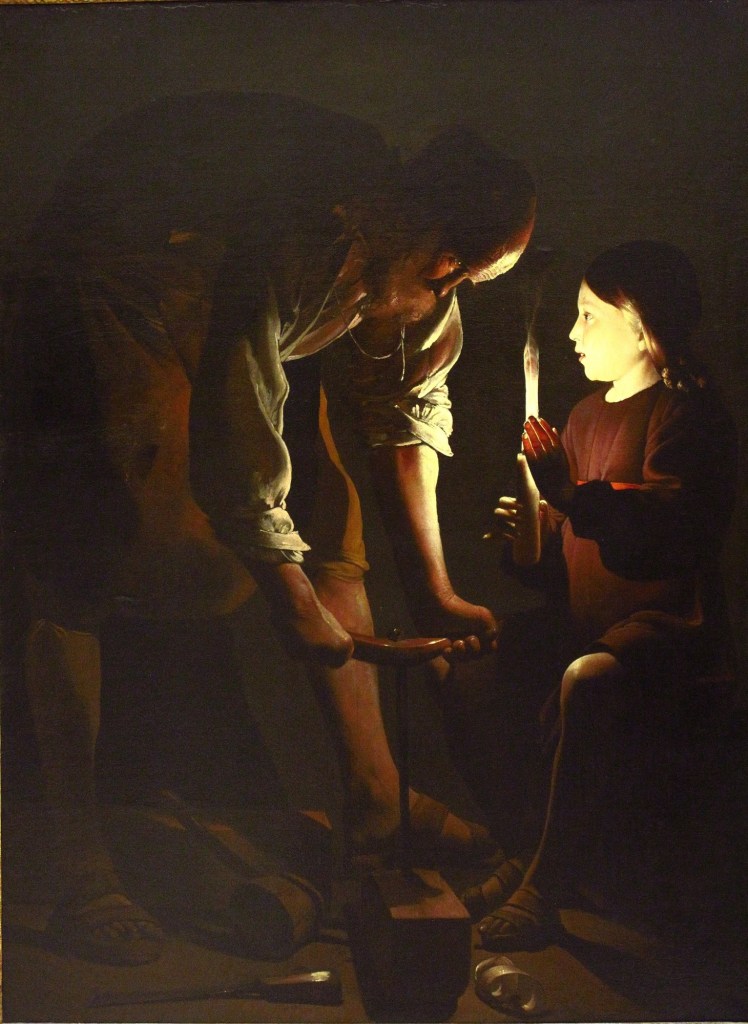
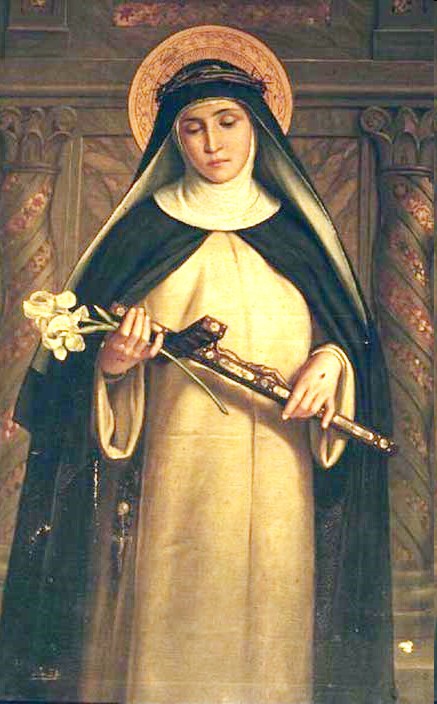
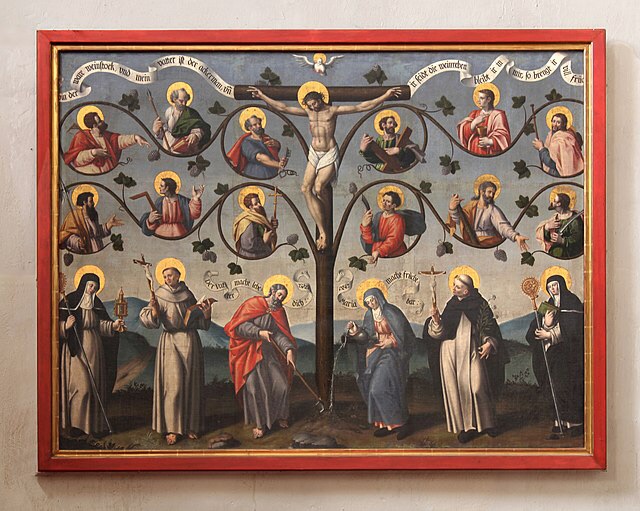
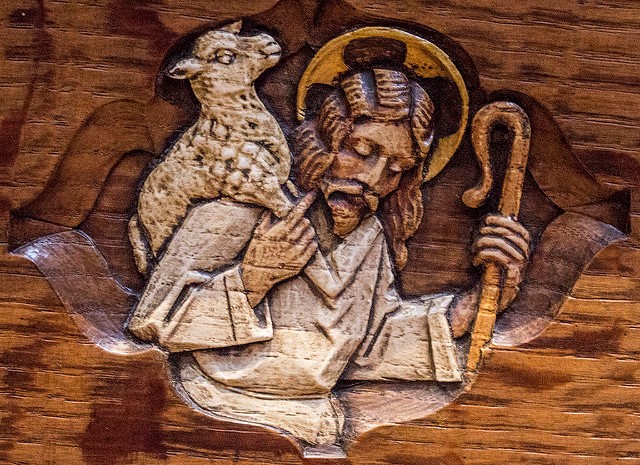

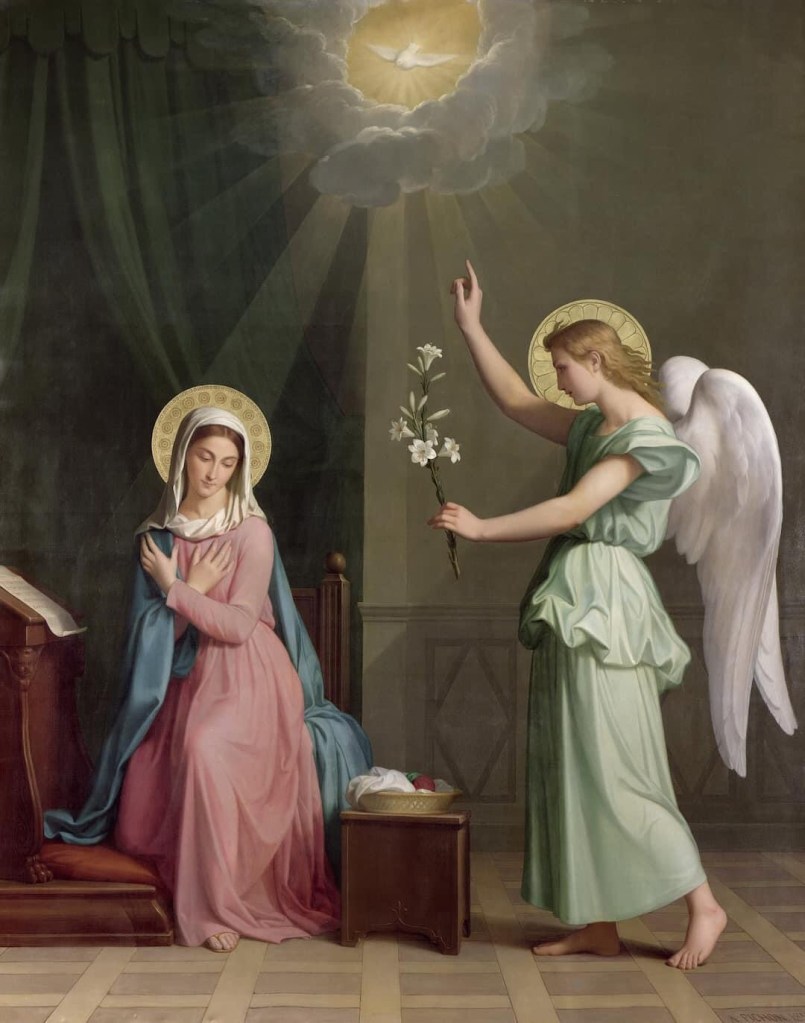
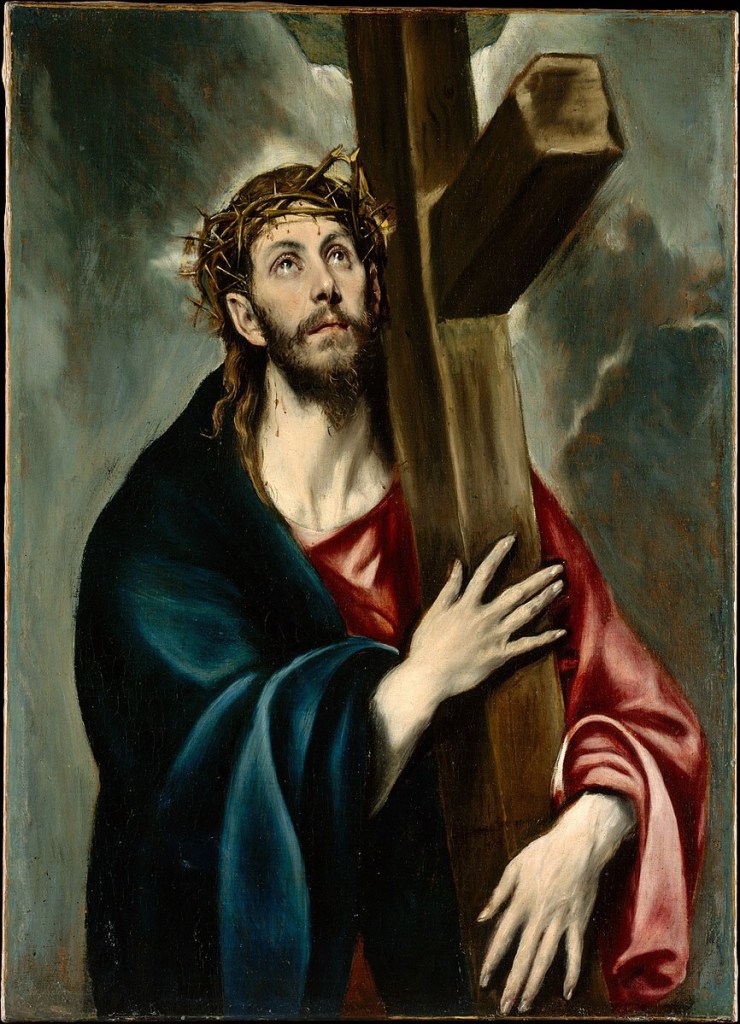
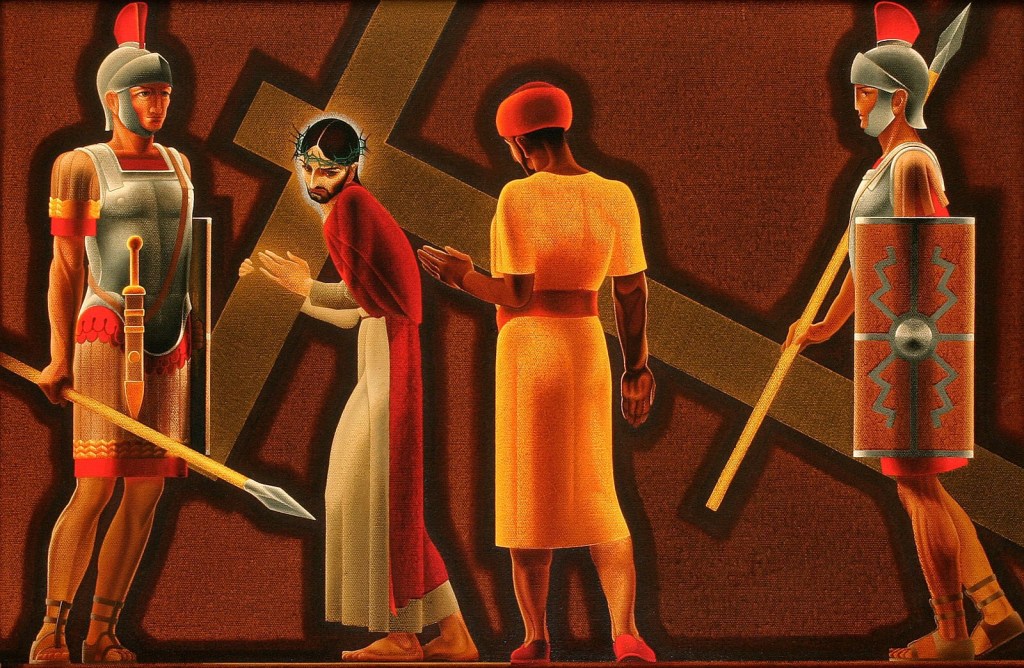
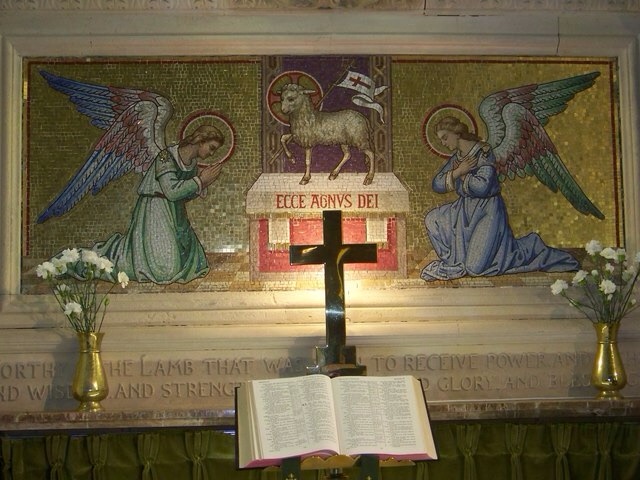

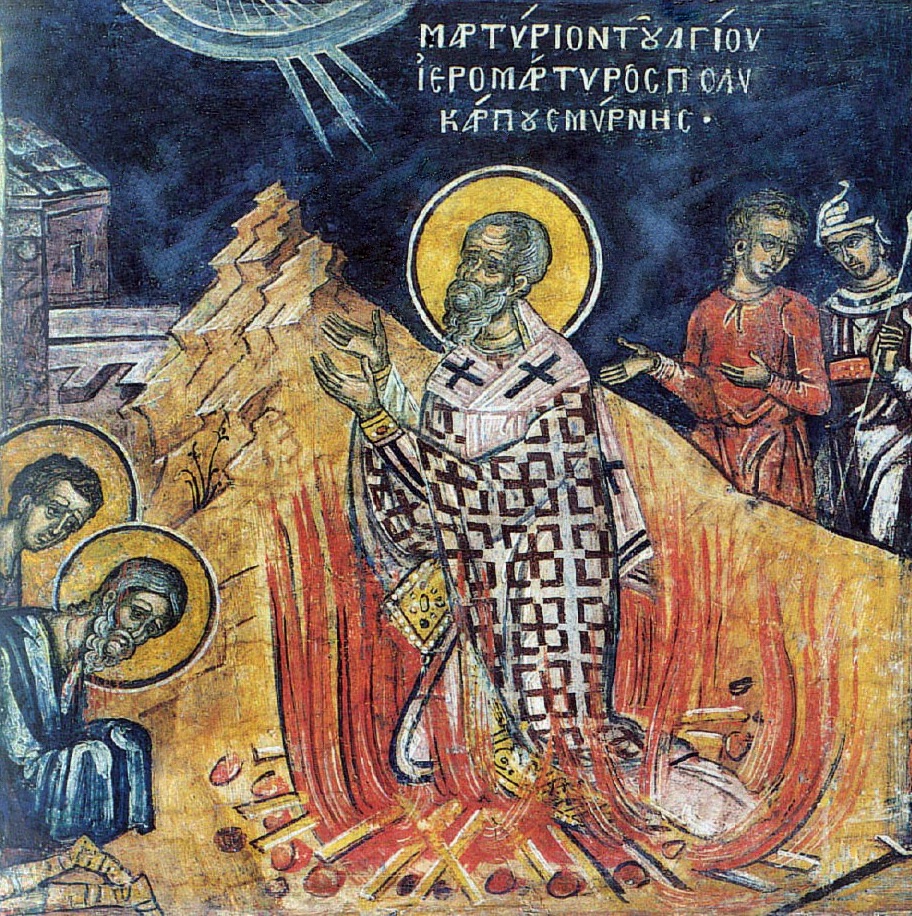


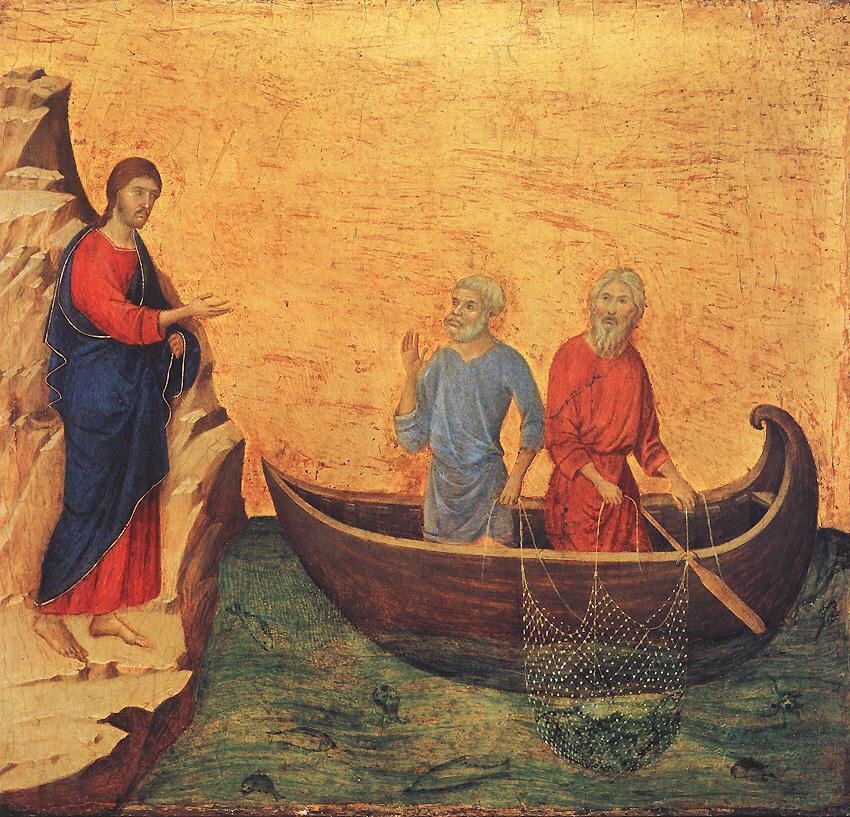




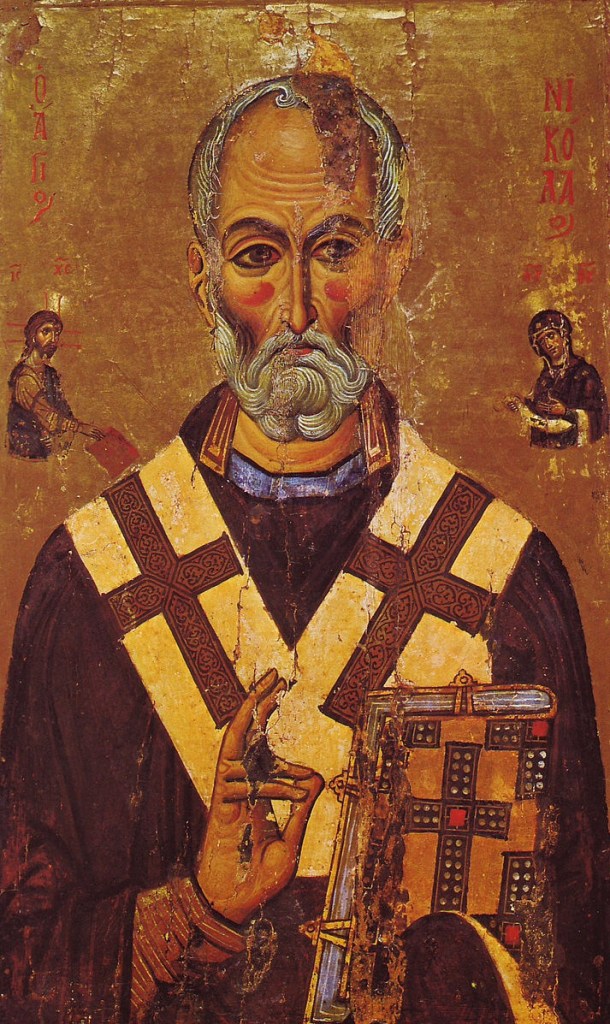
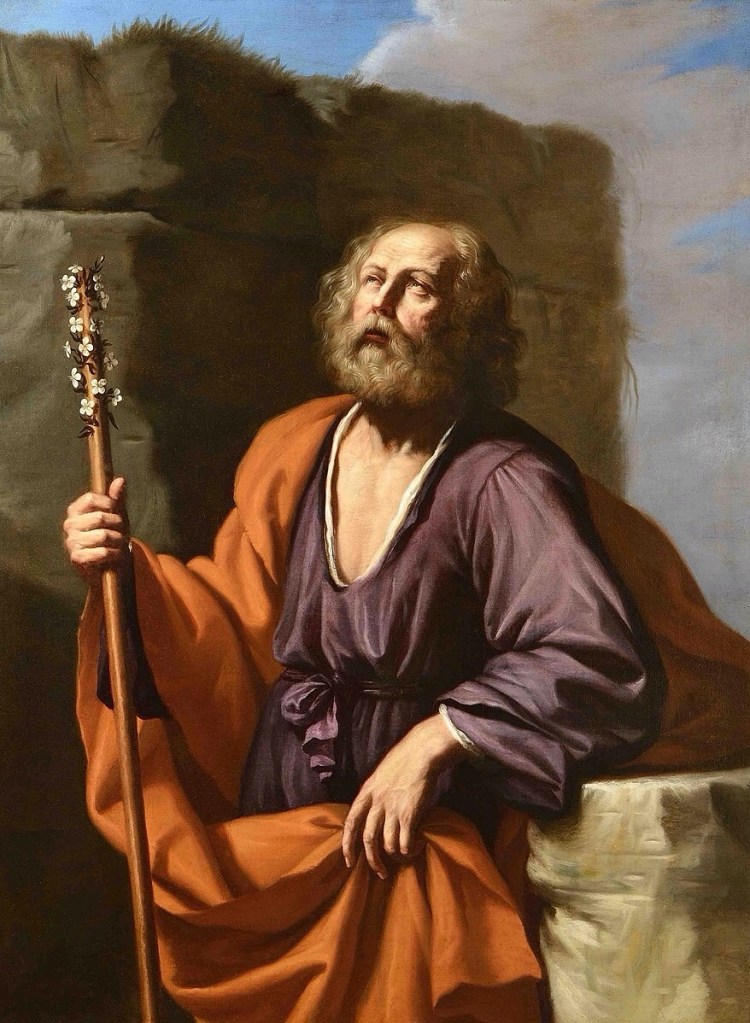








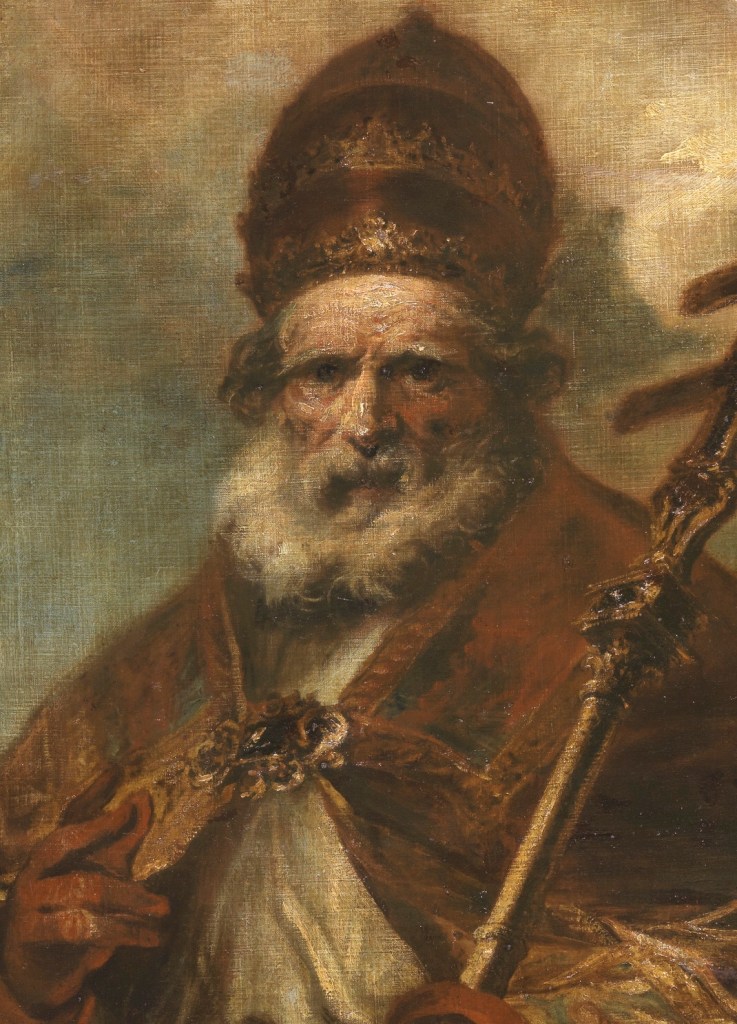

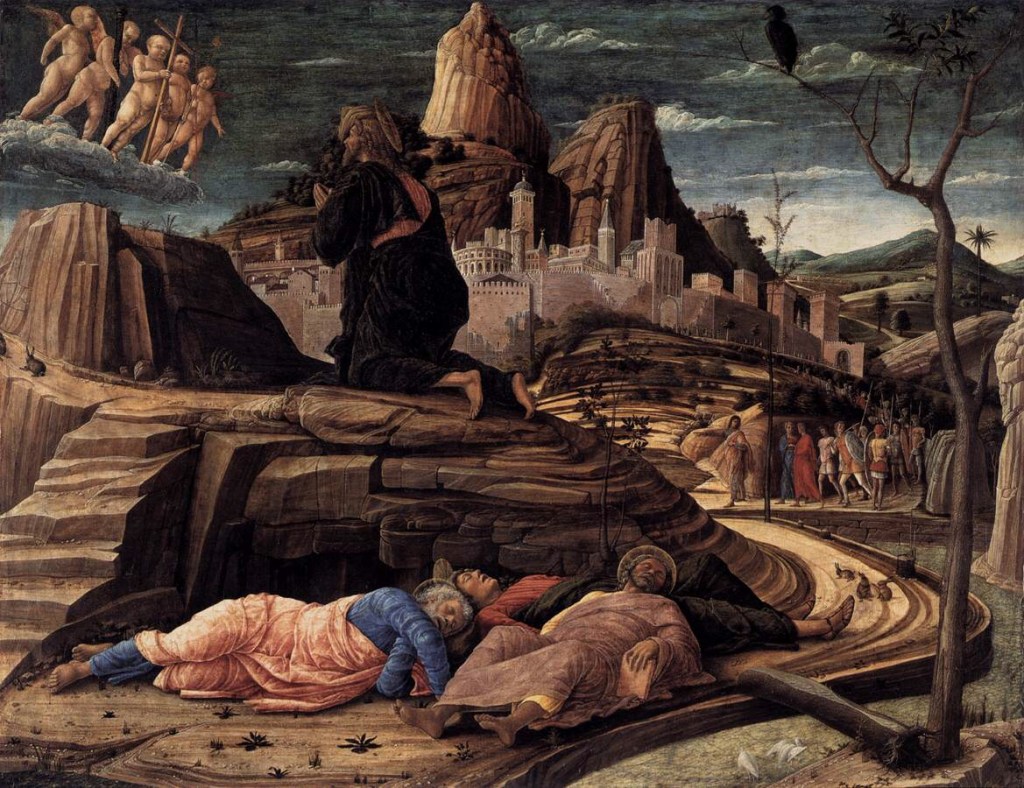

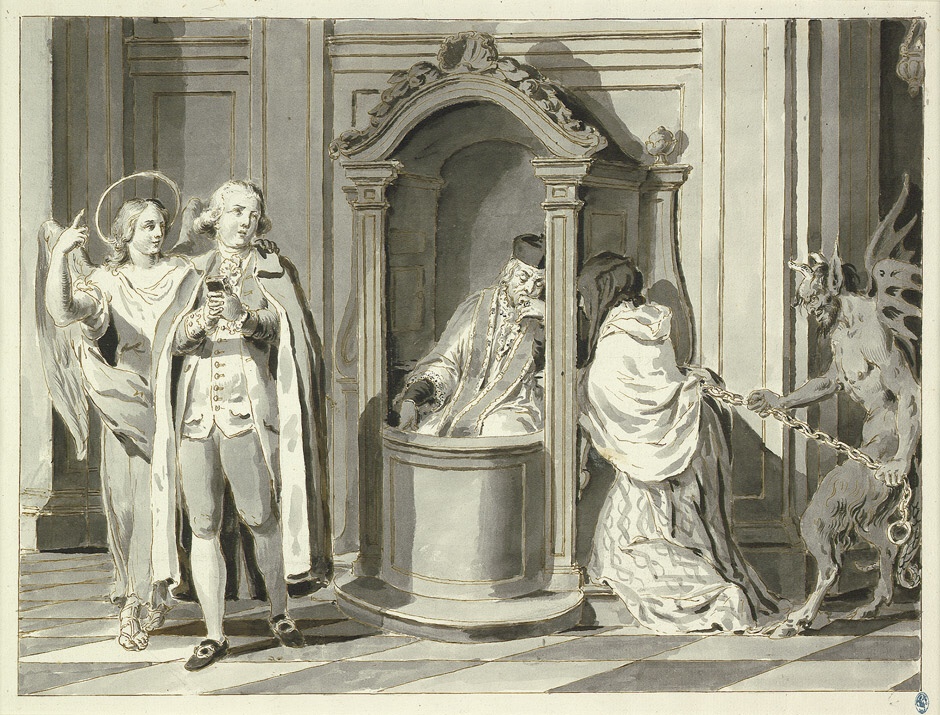

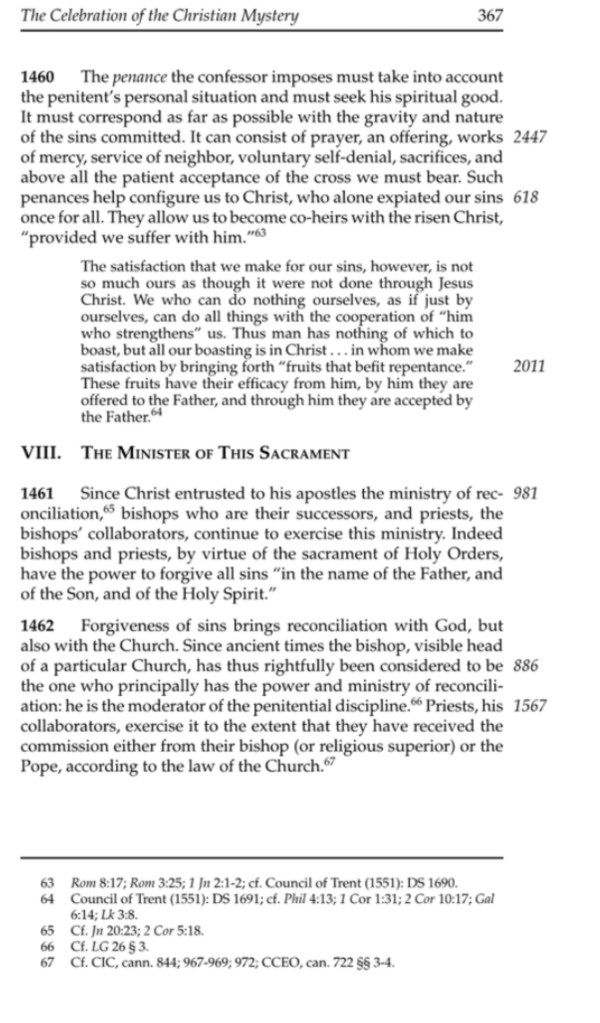

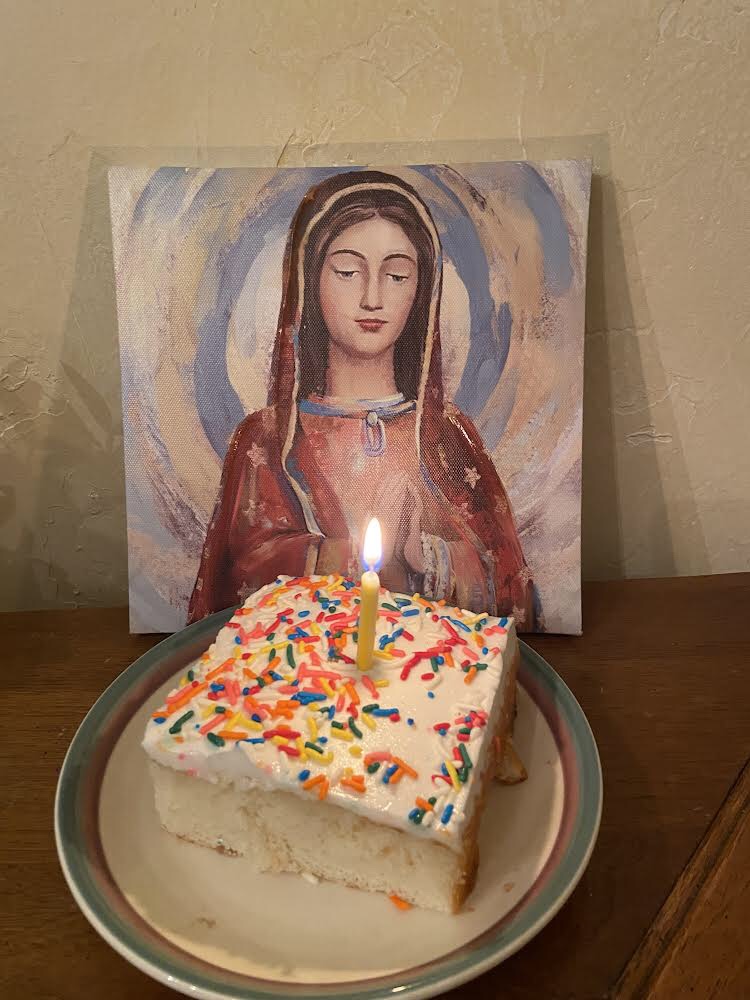

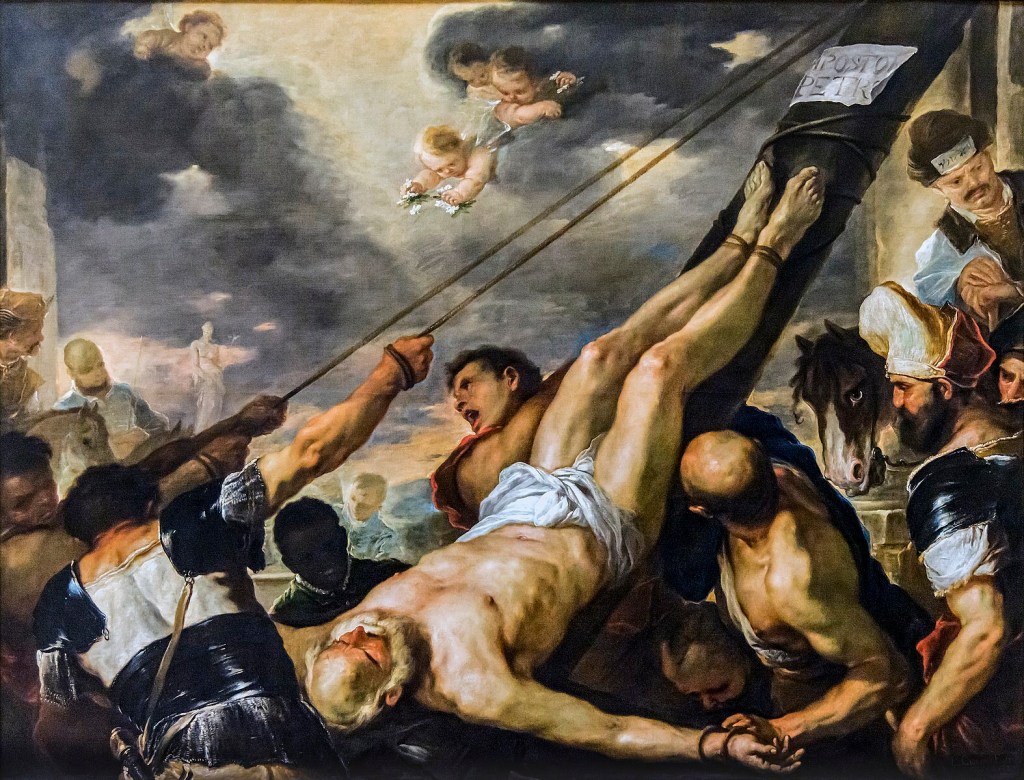


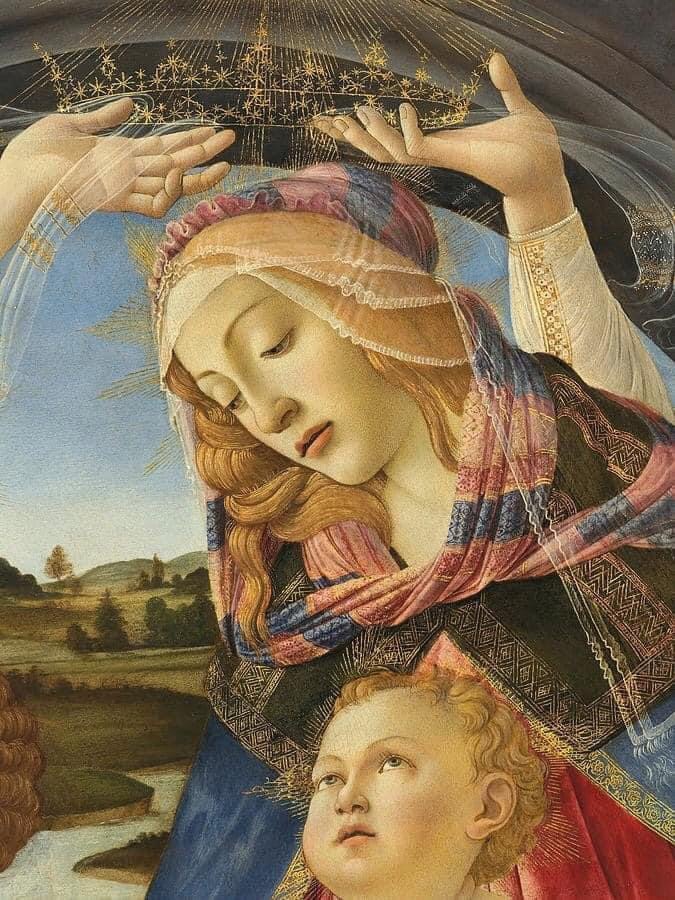
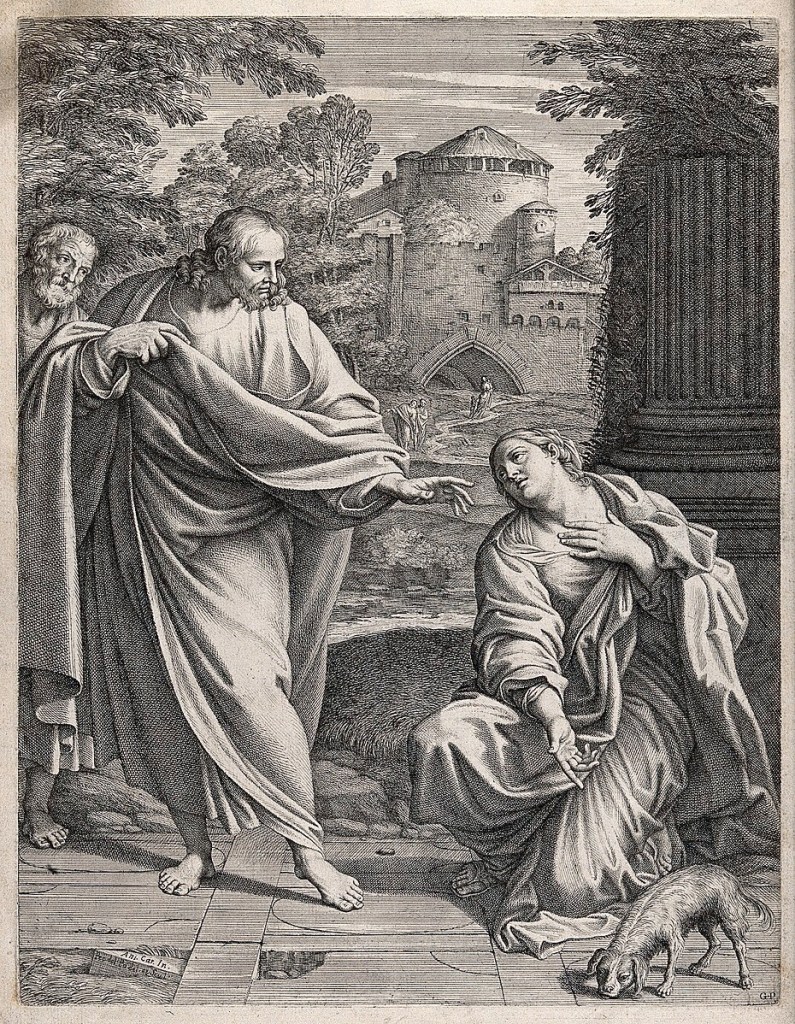

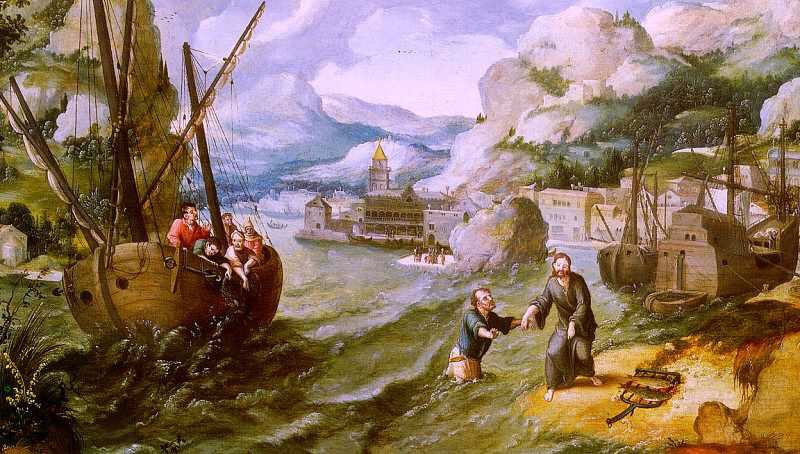
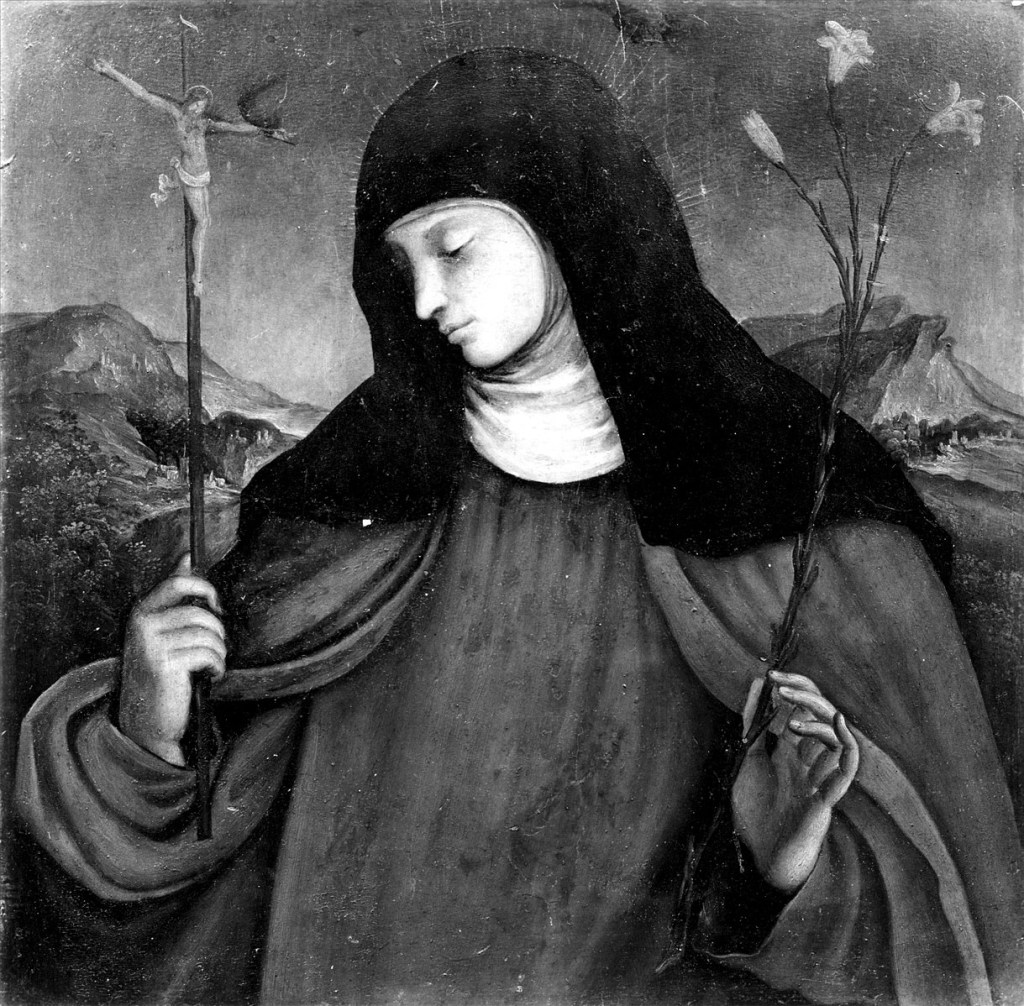


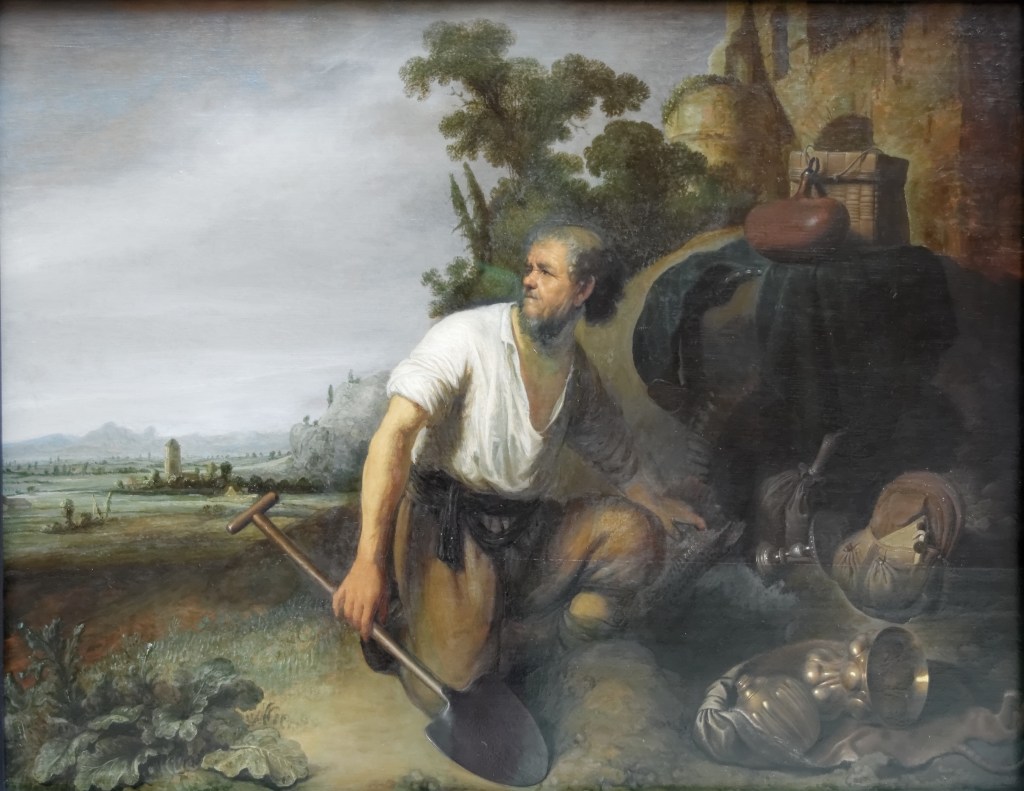

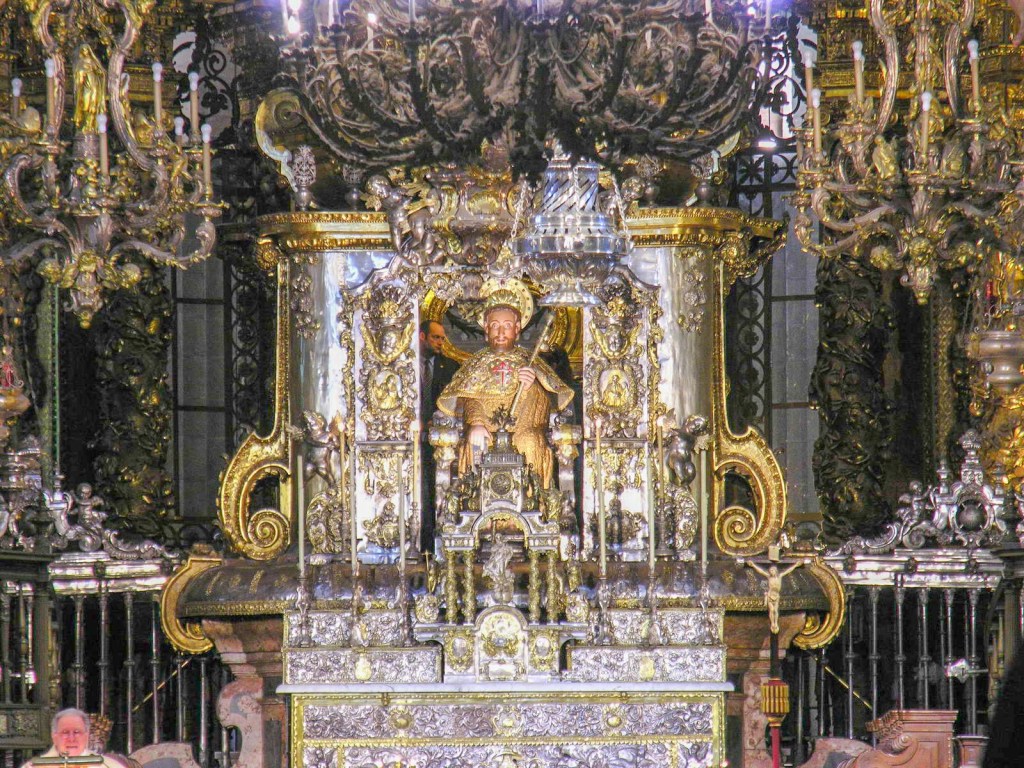


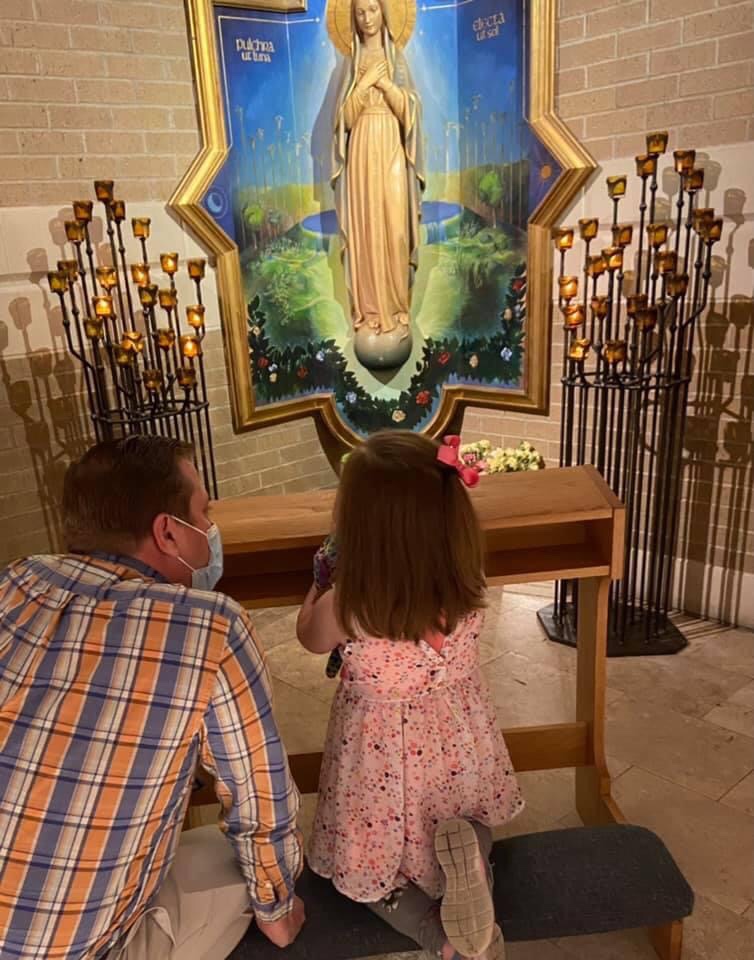


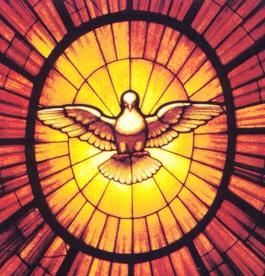
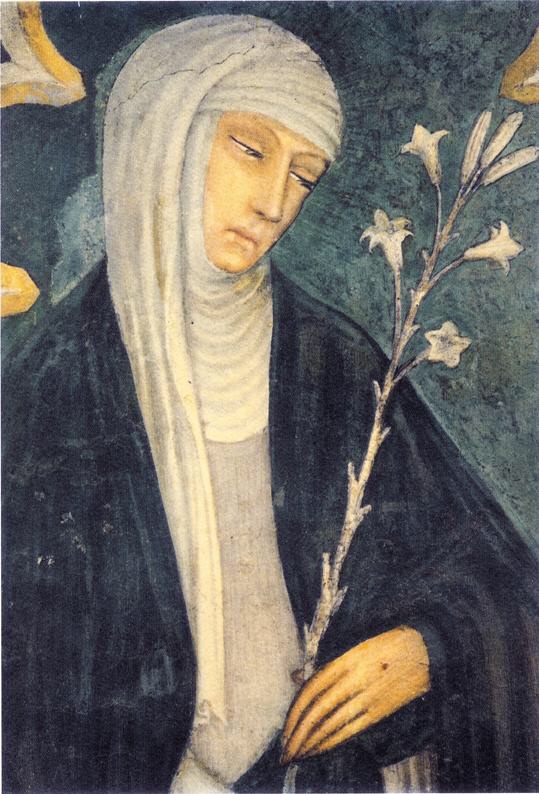
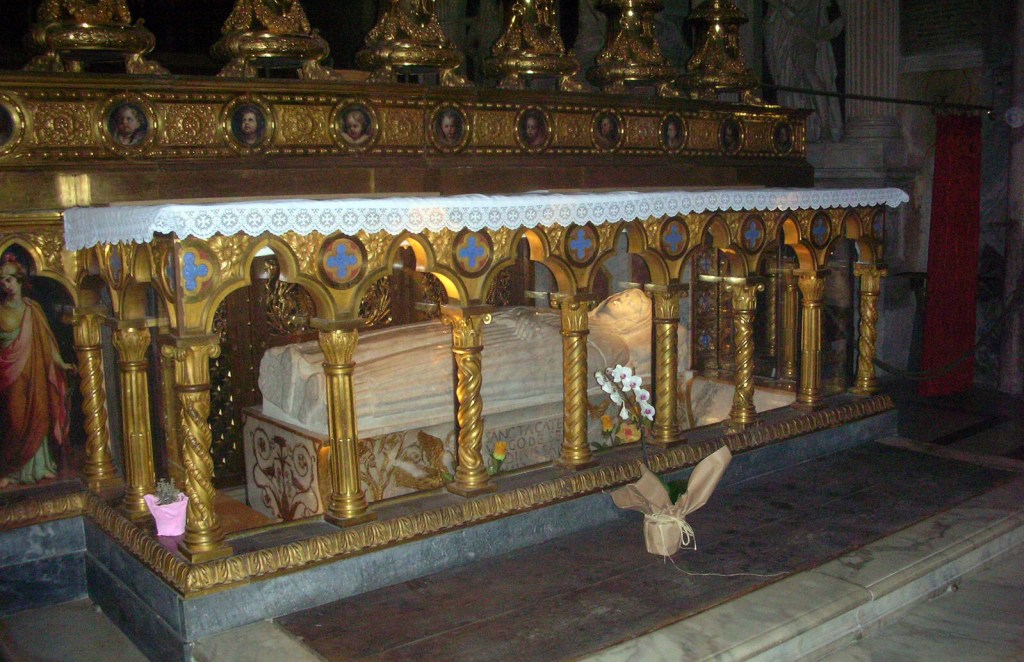


 StreetEvangelist


_woman_asks_Christ_to_cure_Wellcome_V0034860.jpg)


