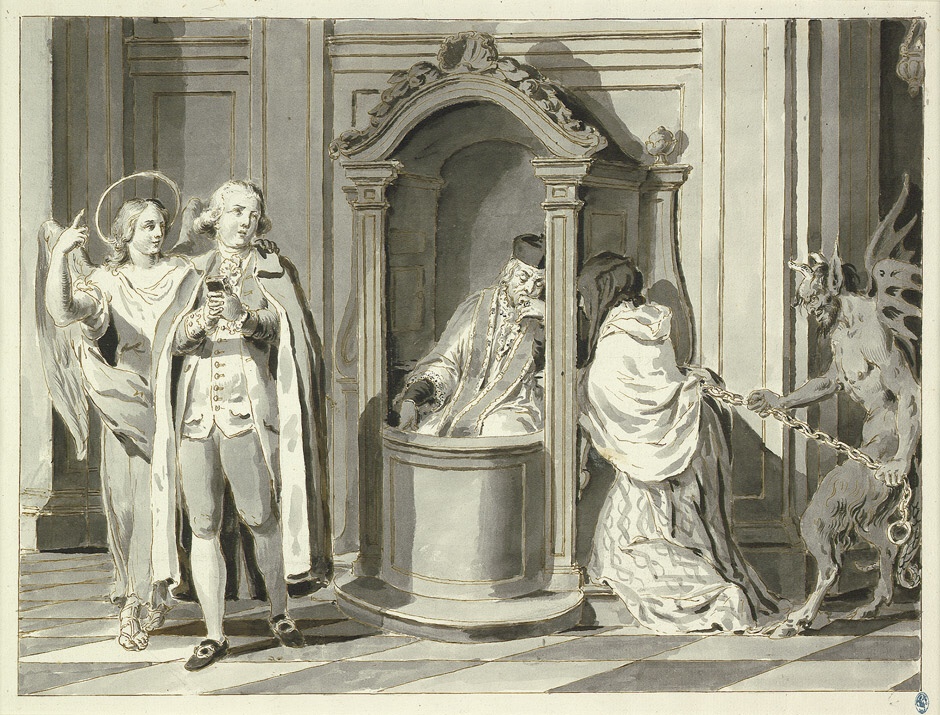
For us Catholics, the Sacrament of Healing known as Reconciliation or Penance is a beautiful sacrament to behold. In the drawing by Pietro Antonio Novelli, there is a picture of a penitent confessing sins to a priest being held by the chains of the devil. The other drawing to the left is of a penitent being led by an Angel having just received the words of absolution. These words are a true blessing in which the priest says the following, acting in persona Christi or in the place of Christ “God, the Father of mercies, through the death and resurrection of his Son has reconciled the world to himself and poured out the Holy Spirit for the forgiveness of sins; through the ministry of the church may God grant you pardon and peace, and I absolve you from your sins in the name of the Father, (+) and of the Son, and of the Holy Spirit.” Amen!
For many, the confession of sins is akin to a root canal. Many Catholics question the need to go to such a beautiful sacrament of healing when they can just confess their sins directly to God. For myself, I struggled with such questions where going to the sacrament was most challenging.
It wasn’t until I discovered the Examen by St. Ignatius of Loyola that made the practice of doing an examination of conscience easier. I’ve discovered that many times, my sins and turning away from God’s love impacted those around me. After all, how could I love others if I didn’t allow for God’s love to be with me each day when turning to a selfish act and away from a selfless and loving God in Christ Jesus. Asking for the Holy Spirit to enter into each day and reflect upon the day with the Examen is a powerful practice.
From the Jesuit Institute (https://jesuitinstitute.org/Pages/Examen.htm) the basics of the Examen are as follows:
1 Give thanks
Spend a few moments in gratitude for the gifts and blessings of the day.
2 Ask for light
Ask God to enlighten you, showing where he has been at work and present in your day through events, people and places.
3 Examine the day
Review the moments of the day, noticing what has led to consolation and what has led to desolation and my reactions to these events, people and places (see below on consolationand desolation).
4 Seek forgiveness
Ask God’s forgiveness for the times when you have acted, spoken or thought contrary to his grace and calling for you.
5 Resolve to change
Decide what in your behaviour or attitude you will try to improve tomorrow.
St Ignatius’ use of the concepts of consolation and desolation are critical to understanding and practising the examen.
Consolation is when something is deeply and genuinely good for us, good for our souls, leads us towards God and away from our selfish preoccupations.
Desolation is when something is not good for us, when we are wrapped up in ourselves, and careless of God’s gifts and grace working in us, when we substitute other things in place of God.
Why go to Confession? As Msgr. Richard B. Hilgartner notes from the USCCB article, The Sacrament of Penance and Reconciliation: Forgiveness in Four Easy Steps, it is more than our saying we are sorry. “In every relationship, there comes a time when something goes wrong and one person or one group hurts or offends the other, and the relationship is damaged. Whether it is a personal relationship between family members or friends or a more structured relationship between an individual and a group or organization, some process of healing or repair is required to restore the relationship. Sometimes it takes as little as an apology—”I’m sorry”—but in some cases, a more significant act or gesture to demonstrate good will or an attempt to make up for the harmful action is required.”
The four major actions of this sacrament that Msgr. reminds us of are the following: 1. Confession of Sin, 2. Contrition (sorrow) for Sin, 3. Satisfaction (Penance & desire to avoid sin) 4. Absolution. Monsignor also describes the two types of movements in this Sacrament: “Essentially there are two “movements” in the sacrament: our movement toward God and God’s toward us.” (https://www.usccb.org/beliefs-and-teachings/how-we-teach/catechesis/catechetical-sunday/sacramental-forgiveness/teaching-aid-hilgartner#)
This is such a profound reflection to consider for the reason to partake of this beautiful sacrament. How do we desire to move toward God’s grace and be forgiven? How will we allow God to move us toward our ontological destiny of sainthood? (All Christians are called to be saints, officially canonized or not for which by a heroic and virtuous life lived for others are a model of imitation) How will we ensure the eschatological journey we are on continues to be toward heaven as our final destination?
When preparing for Confession and doing an examination of conscience, we can start by looking at the 10 commandments and see if we have broken any? For example even the 1st of acknowledging God as the one God can be one many of us have broken. Have we given God our undivided attention or worshipped other things in life putting God as second place? The following is a good link for such preparation https://www.ncregister.com/info/confession-guide-for-adults?gclid=EAIaIQobChMIuJO7pZ_DgQMVTDfUAR3TwA23EAMYASAAEgJC1PD_BwE.
If we haven’t participated in the sacrament of Penance or Reconciliation in 30 years or even two weeks, it is not too late to come and be healed. The parable of the Pharisee and Tax collector is a good gospel to meditate upon from Luke chapter 18. We should all be like the tax collector in saying “O God, be merciful to me a sinner” (Lk. 18:13).
With the season of fall upon us where leaves will begin to change color and we think about the preparation, fast and recognition of All Hallow’s Eve before the celebration of All Saints Day, what will our response be? Will we make an attempt to want to be counted among those holy and saintly figures or be left behind by the sin that wishes to chain our soul to earthly matters?
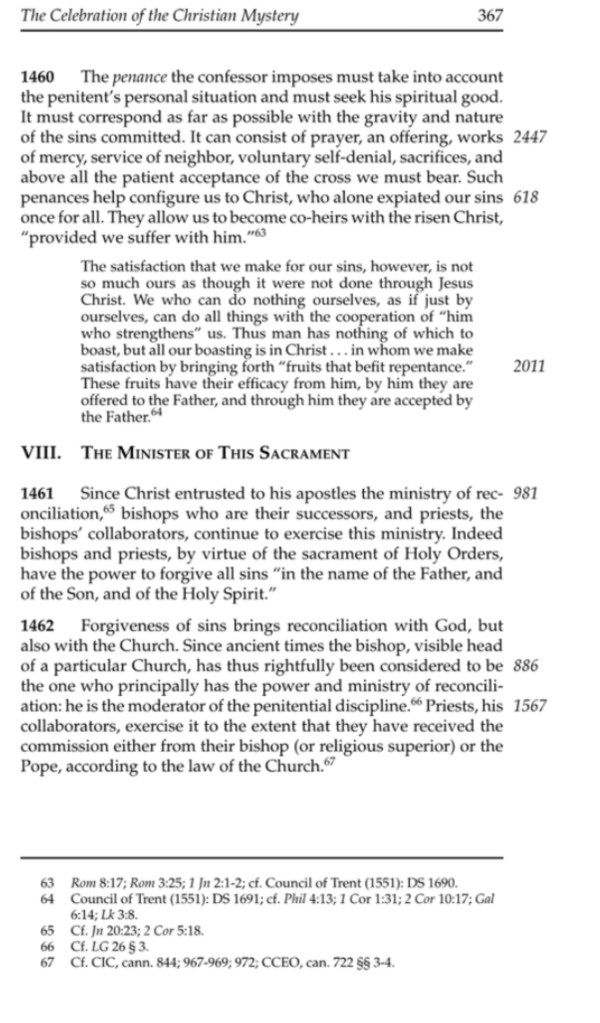
The following is from the Catechism of the Catholic Church Second Edition:


 StreetEvangelist