
From a homily on Matthew by Saint John Chrysostom, bishop (Hom. 65, 2-4: PG 58, 619-622), Roman Breviary
The sons of Zebedee press Christ: Promise that one may sit at your right side and the other at your left. What does he do? He wants to show them that it is not a spiritual gift for which they are asking, and that if they knew what their request involved, they would never dare make it. So he says: You do not know what you are asking, that is, what a great and splendid thing it is and how much beyond the reach even of the heavenly powers. Then he continues: Can you drink the cup which I must drink and be baptized with the baptism which I must undergo? He is saying: “You talk of sharing honours and rewards with me, but I must talk of struggle and toil. Now is not the time for rewards or the time for my glory to be revealed. Earthly life is the time for bloodshed, war and danger.”
Consider how by his manner of questioning he exhorts and draws them. He does not say: “Can you face being slaughtered? Can you shed your blood?” How does he put his question? Can you drink the cup? Then he makes it attractive by adding: which I must drink, so that the prospect of sharing it with him may make them more eager. He also calls his suffering a baptism, to show that it will effect a great cleansing of the entire world. The disciples answer him: We can! Fervour makes them answer promptly, though they really do not know what they are saying but still think they will receive what they ask for.
How does Christ reply? You will indeed drink my cup and be baptized with my baptism. He is really prophesying a great blessing for them, since he is telling them: “You will be found worthy of martyrdom; you will suffer what I suffer and end your life with a violent death, thus sharing all with me. But seats at my right and left are not mine to give; they belong to those for whom the Father has prepared them.” Thus, after lifting their minds to higher goals and preparing them to meet and overcome all that will make them desolate, he sets them straight on their request.
Then the other ten became angry at the two brothers. See how imperfect they all are: the two who tried to get ahead of the other ten, and the ten who were jealous of the two! But, as I said before, show them to me at a later date in their lives, and you will see that all these impulses and feelings have disappeared. Read how John, the very man who here asks for the first place, will always yield to Peter when it comes to preaching and performing miracles in the Acts of the Apostles. James, for his part, was not to live very much longer; for from the beginning he was inspired by great fervour and, setting aside all purely human goals, rose to such splendid heights that he straightway suffered martyrdom.
Saint James the greater, the first apostle to be martyred and killed by the sword by King Herod Aggripa as described in Acts chapter 12 verse 2 is a saint to reflect on. While this “son of thunder” may have had a short temper and been eager to follow Jesus, his commitment and faith even unto martyrdom and dying for Jesus is remarkable. Saint James is the patron saint of Spain (the tomb of Saint James was relocated to Compostela) and of pilgrims. It is believed that James was called “greater” because he was most likely older and the first disciple to follow the call of our Lord Jesus compared to the other James (Mk. 15:40). (https://faith.nd.edu/s/1210/faith/interior.aspx?sid=1210&gid=609&pgid=15679&cid=31728&ecid=31728&crid=0#:~:text=James%20the%20Greater%20is%20patron,John%2C%20and%20cousin%20to%20Jesus).
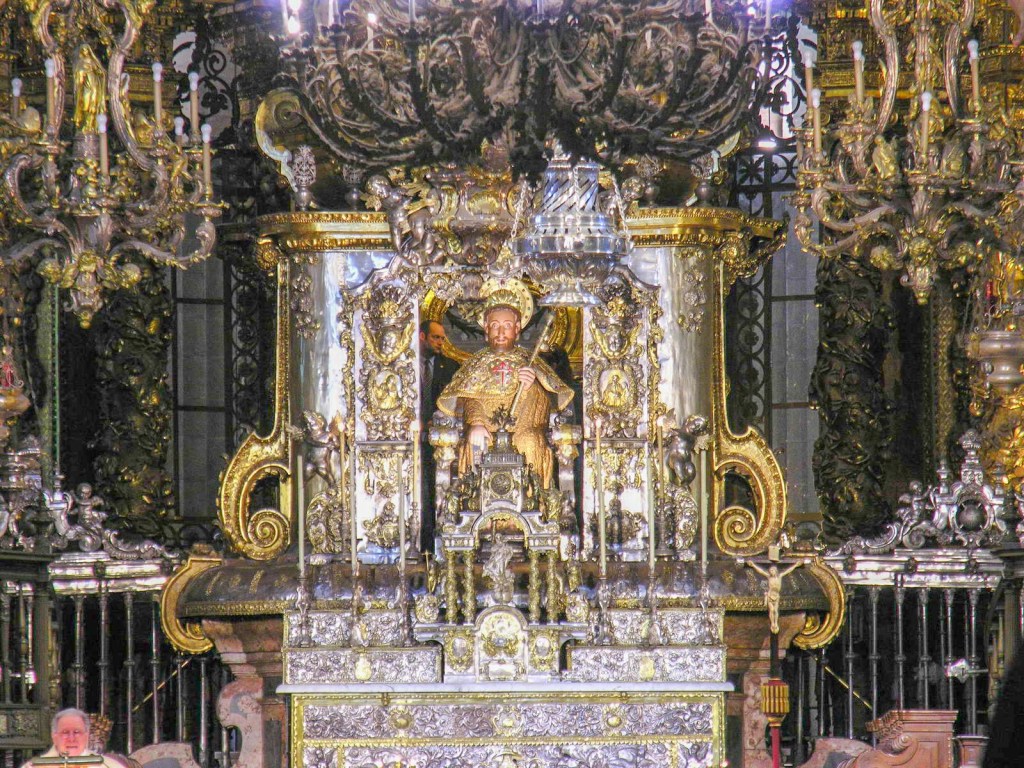
Saint James the greater, pray for us.
 StreetEvangelist
